

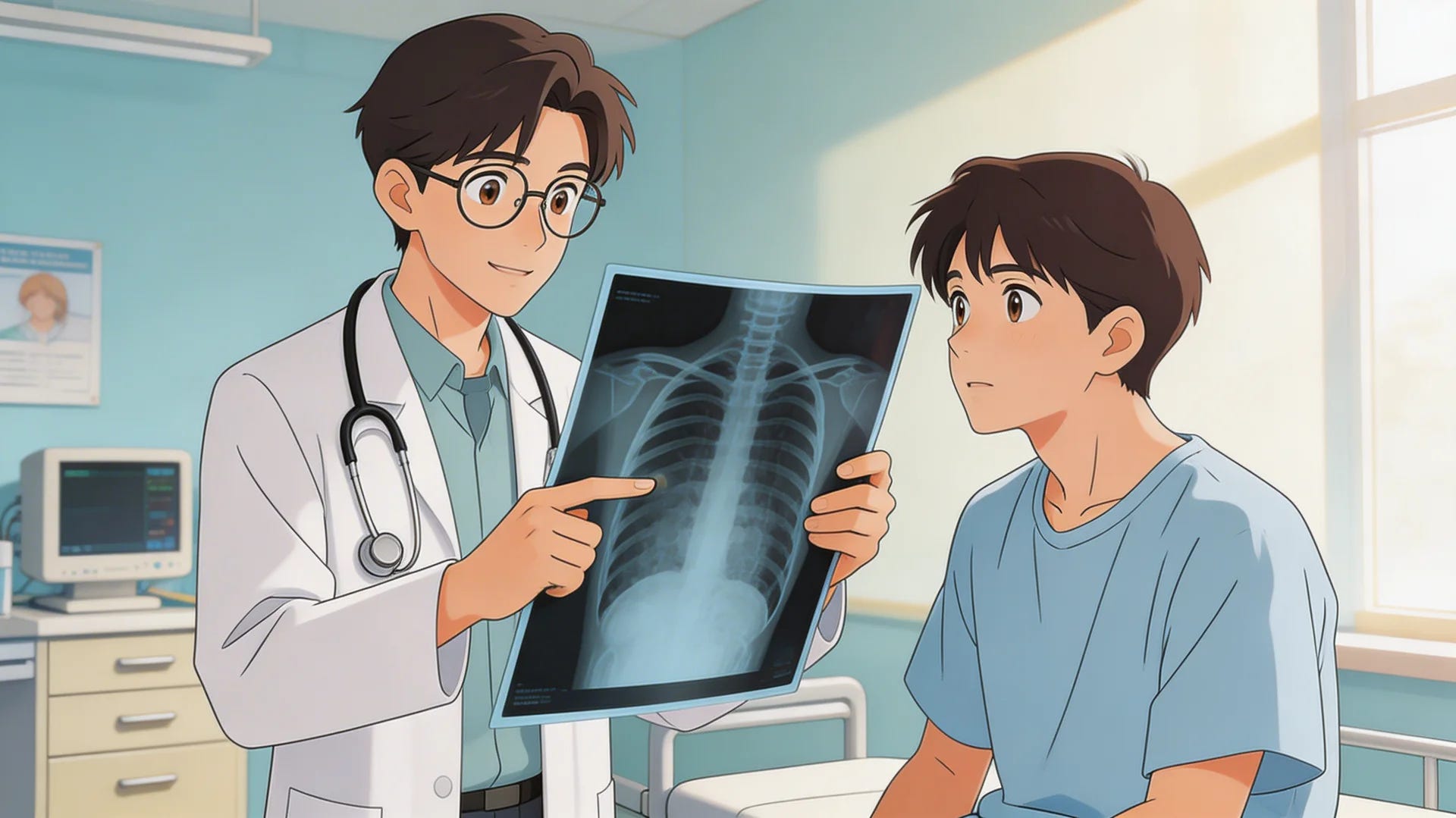
A family member recently hurt their hip by falling off their bike.
I was talking to them and they were telling me how they were temporarily taking Oxycodone (aka ‘Oxy’).
I was like…. what? Man get off that shit and just wear your mouthguard (that I’d given them awhile back).
I could feel their eyes roll in the tone of their voice as they said something like “Ken… you and your mouthguard. I’m going to see a doctor tomorrow about the injury to my hip.”
To which my eyes rolled.
My head was screaming… “What the hell is a doctor going to do for your hip? NOTHING USEFUL is the answer!!!”
Today i wanna breakdown my logic vs. the logic member of this family member (who probably represents your average Joe Blow) and let you be the judge of who is more logical.

We were brainwashed to think a doctor can help us
Ever since we were little children we were brainwashed to think doctors are these amazing saviors.
Especially in the US (where I grew up).
There have been tons of hit TV series glorifying them like House, Grey’s Anatomy, ER, Scrubs, etc.
The doctor comes in time and again and saves the day.
But is that the reality?
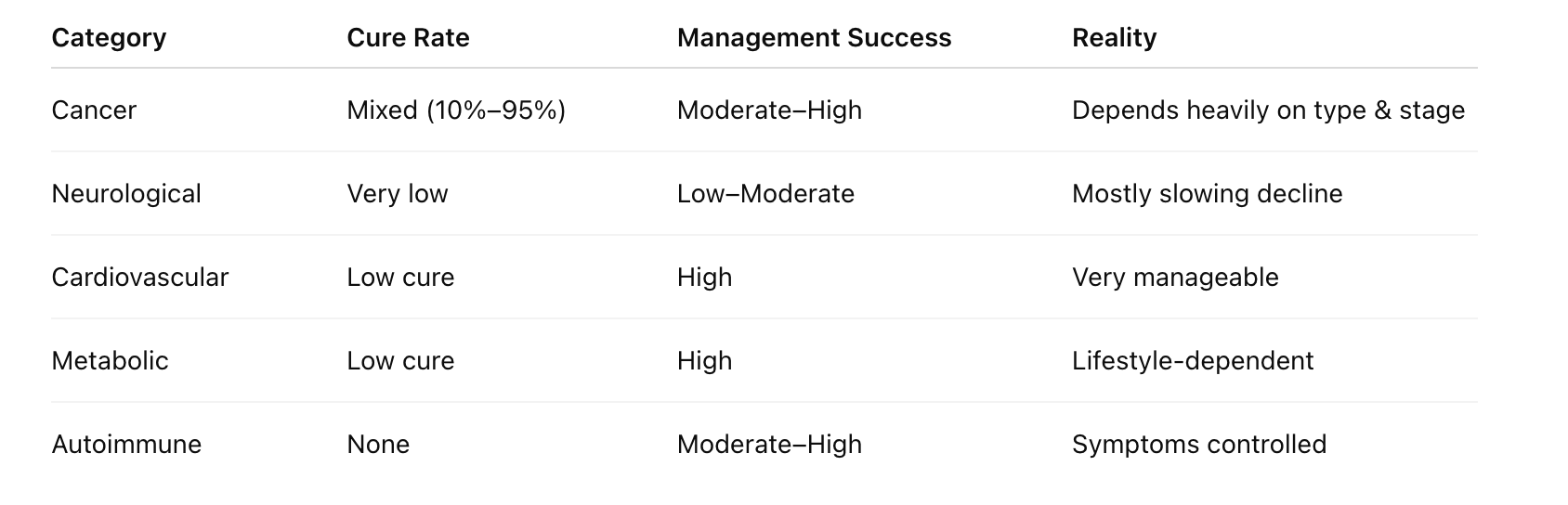
I can see how they are useful against accidents, but how about chronic conditions? What is their actual success rate against chronic conditions?
I will tell you… it is PITIFUL.
They ‘manage’ these conditions rather than cure them. Because the reality is they never cure anything as you see in the chart below.
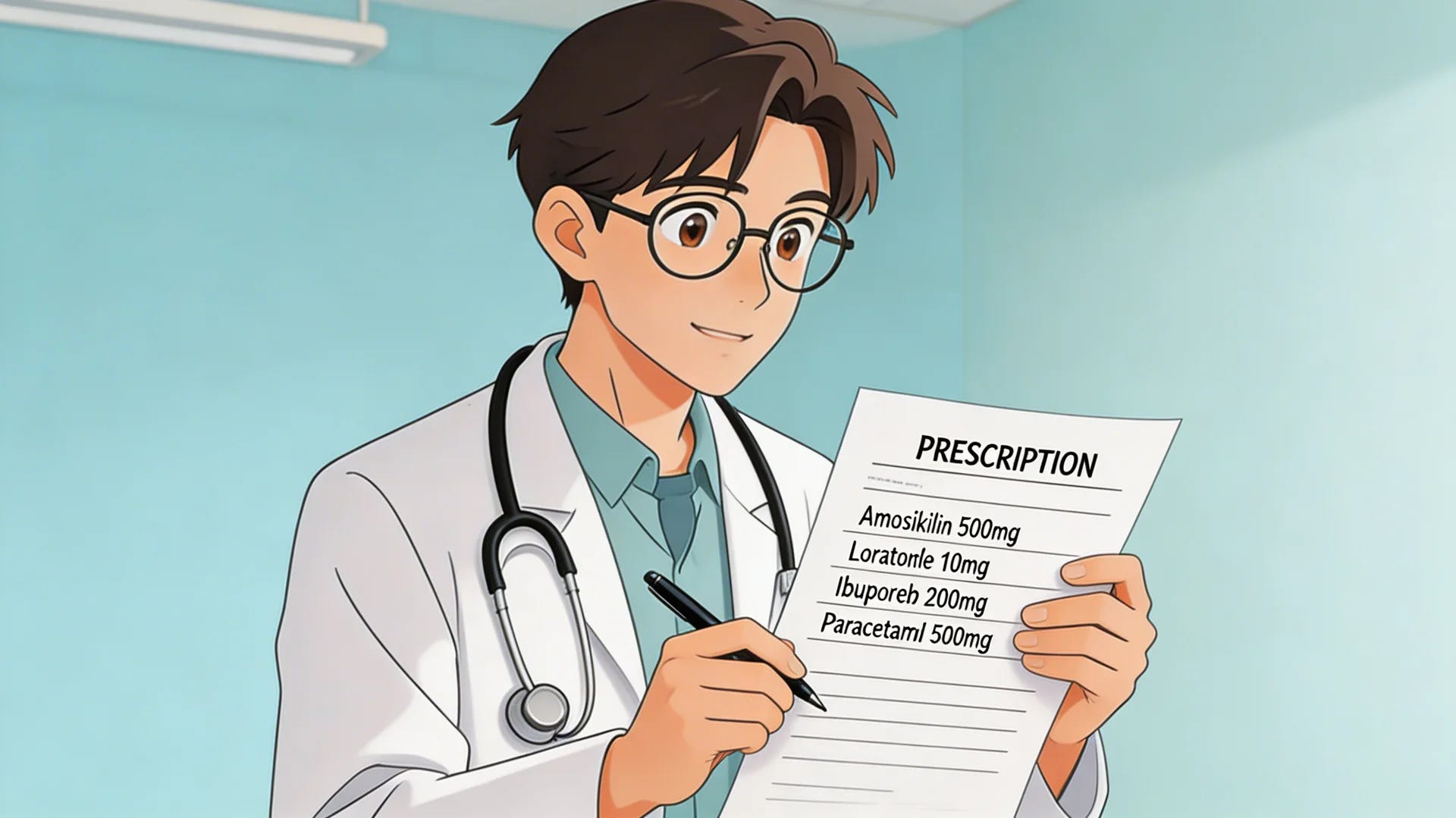
What tools does the doctor actually have at their dispoal?
Well let’s see…
A doctor’s “toolkit” can be broadly grouped into a handful of intervention categories. Each one works on a different layer of biology (chemical, structural, electrical, behavioral, etc.):
1. 💊 Pharmaceuticals (Chemical Interventions)
Drugs that alter biochemistry in the body
Examples: antibiotics, statins, chemotherapy, antidepressants
👉 Best for:
Infections
Hormonal imbalances
Symptom control
👉 Limitation:
Often manage symptoms rather than fix root structural issues
2. 🔪 Surgery (Structural Interventions)
Physically removing, repairing, or replacing tissue
👉 Examples:
Tumor removal
Joint replacement
Heart bypass
👉 Best for:
Clear, localized problems
👉 Limitation:
Invasive, and doesn’t always address underlying causes
3. ⚡ Device-Based Therapies
Machines or implants that modify body function
👉 Examples:
Pacemakers
Insulin pumps
Deep brain stimulators
👉 Best for:
Electrical or mechanical dysfunction
👉 Limitation:
Often lifelong dependency
4. 🧬 Biological / Advanced Therapies
Using living systems or genetic material
👉 Includes:
Immunotherapy for Cancer
Stem cell therapy
Gene therapy
👉 Best for:
Targeting disease at a deeper biological level
👉 Limitation:
Still early-stage, expensive, not universally effective
5. 🧠 Behavioral & Lifestyle Interventions
Changing inputs into the system
👉 Examples:
Diet, exercise, sleep
Stress management
👉 Best for:
Type 2 diabetes
Cardiovascular disease
👉 Limitation:
Requires patient compliance (biggest bottleneck in medicine)
6. 🧑⚕️ Physical & Rehabilitative Therapies
Restoring function through movement or training
👉 Examples:
Physical therapy
Occupational therapy
Speech therapy
👉 Best for:
Injury recovery
Neurological rehab
7. 🧠 Psychological / Psychiatric Interventions
Treating cognition, emotion, and behavior
👉 Examples:
Therapy (CBT, etc.)
Psychiatric medications
👉 Best for:
Mental health conditions
Chronic illness coping
8. 🛡️ Preventive Medicine
Reducing risk before disease occurs
👉 Examples:
Vaccines
Screenings (colonoscopies, mammograms)
Risk factor management
👉 Best for:
Catching diseases early or avoiding them entirely
They don’t understand the underlying physics that are at the root cause
Have a good look at this list above.
What is similar about all of them?
They are not ever actually solving anything. Especially when you apply those tools against chronic conditions.
Rather they are pretty much always managing symptoms.
And why is that?
Well i’d argue that it is because they don’t understand that there are some basic physics at the core of how the human body works. And those physics are tied to the teeth.
The skeleton & skull inflate or deflate based on these physics.
When it deflates everything inside gets crushed and twisted and disease is the result.
When it inflates all of those things reverse…. and you start to CURE disease at its root cause.
Not manage symptoms.
You are fixing the root cause!

Let the body heal itself!
So when a person has a chronic condition or a structural issue with their body my advice is typically as follows “let your body’s own ability to heal take care of it!”
And by that I don’t mean just sit idly by twiddling your thumbs.
Rather apply biomechanics by wearing your mouthguard as much as you can and stretching the body/skull such that it ‘inflates’.
Because it is by inflating that you solve these structural issues at their root cause.
If we relate this back to my family member with the injury to their hip…. lets compare the mouthguard against going to a doctor and what ‘standard of care’ would say to do:
step 1: Diagnose the injury (cost in US ~$5k)
take X-rays, sometimes CT/MRI
step 2: Surgery (cost in US $20-50k)
Fixation: screws/plates to hold the bone together
Partial hip replacement (hemiarthroplasty)
Total hip replacement
step 3: Medical stabilization (cost in US $10-30k)
Pain (analgesics)
Blood clots (anticoagulants)
Infection risk (antibiotics if needed)
step 4: Rehabilitation (cost in US $2- 15k)
Physiotherapy, etc
So all in…you’re talking about $50-70k in medical costs! No wonder why medical insurance in the US is so astronomical and Medicare is running out of funds!
It is because they are doing all of this useless shit!
When all you actually need is <$100 for a mouthguard. And some patience to let the body do what it knows how to do better than any doctor in the world….
…heal itself!
Closing thoughts
So to close… I’m trying to get you to question the logic of going to your doctor the next time you have an injury or illness.
What can they really do that helps?
Are they addressing root cause? Or are they charging you a boatload of money to manage some symptoms?
I gave up my medical insurance here in Thailand over three years ago now. I only have accident insurance. I did it as soon as I felt secure that i fully understood these biomechanics.
And note that it’s not that expensive out here… I can easily afford it.
But I don’t pay for it because I consider everything they do in that damn hospital for chronic conditions to be absolutely useless.
When i’ve told a few friends this they thought I was a heretic. And told me how they’d used their insurance just recently to do some scans or get an expensive surgery, etc.
As if this was a proof of the ‘value’ of such insurance.
One guy talked about how he’d just had a big expensive surgery and went on to tell me how he still has some sores/pains and feels tired each day. He was eight years younger than me (ie. 40 yrs old).
I listened to him…and thought to myself:
“hmmm I’m about to turn 49 and i have zero aches/pains, i haven’t been sick in 5+ years, I work 12-14 hour days constantly for over 1.5 yrs like i’m 22 years old again, and i’m pretty much happy 24-7.”
So am I the ‘heretic’ or is he ‘brainwashed’ by a system that was never designed to fix anything?
I guess you’ll have to decide for yourself ;)
Hi Ken, I agree with you on topic insights, for tmj symptoms is the cases. As your work in strategy reviv was well designed product. I'm quite interested about your journey. How did you start in the industry? In China, I went to dentists and found there are standard industry process to treat however never discuss about root causes or open discussion treatment successful cases rate nor progress monitored. They took CT,OPG film, mouth guards, operation plan with no detailed discussion. My personal research has found hospitals are more commercial process orientated than to cure patient. Hope with Reviv improvement cases can help to cure more.
I remember going to a GP about the eczema on my hands. I asked what I could do about the issue and she told me that it was completely irreversible—only manageable—and that I would have eczema for the rest of my life, and that my chances of getting severe autoimmune issues down the track has risen substantially. Essentially, she wanted me to continuously renew a prescription for a steroid cream that I would have to use indefinitely.
Not long after all of this (in 2021) I started the carnivore diet and completely reversed the issue within 2 weeks, I haven't had any signs of eczema since. Fast forward to now and I am on Day 119 of the Reviv process and I essentially have model-like hands now with zero effort—also I have no signs of autoimmunity whatsoever. So much for being a "lifelong condition." Day by day I appear to be only getting better and better.