


Not long ago a reader wrote to me suggesting i have a look at ‘memory champions’.
It wasn’t a field i’d ever really investigated or even heard about.
But still, I wasn’t surprised that they have competitions for memory.
And so the person’s question was whether I think biomechanics were the key to having a great memory.
Based on my own experience with memory it definitely sounded logical. And so I decided i’d investigate it more and make it a topic for an article.

My experience on memory
Let’s first start out with some context.
In 2014, my memory completely evaporated after a TMJ dentist filed down my teeth. I went from being a normal, functioning executive to essentially a “dimwit hermit” within months.
I was 37, working in a high-pressure role at Lazada (sort of like Amazon) in Vietnam, and my brain just refused to cooperate.
I couldn’t retain anything. I had to bring my laptop to every meeting and type everything as people said it - the only way information would stick. If I presented, I’d write everything out and read it word for word.
My memory seemed GONE.
It was pretty terrifying. My wife was pregnant, we’d just moved to Vietnam, and I was reporting to a tough ex-McKinsey CEO. I eventually requested a demotion - dropping two levels. It was humiliating, but I was in survival mode and I didn’t care.
But then in 2015 as I was dabbling with these biomechanics for the first time… my memory started to improve.
There was a point in 2016 where it felt like my memory was better than at any point in my adult life. I stopped writing things down, whereas a little over a year earlier I was literally writing EVERYTHING down.
Then it all started to drop again and my memory seemed to be worsening in early 2017. It was very frustrating.
This happened several more times over the following four years till I finally figured out how this stuff works in late 2021.
Each biomechanical collapse seemed to deteriorate my memory. Each correction through oral appliances seemed to bring it roaring back.
The connection was clear to me… but the question in my head was… “Does it work like this on everyone?”
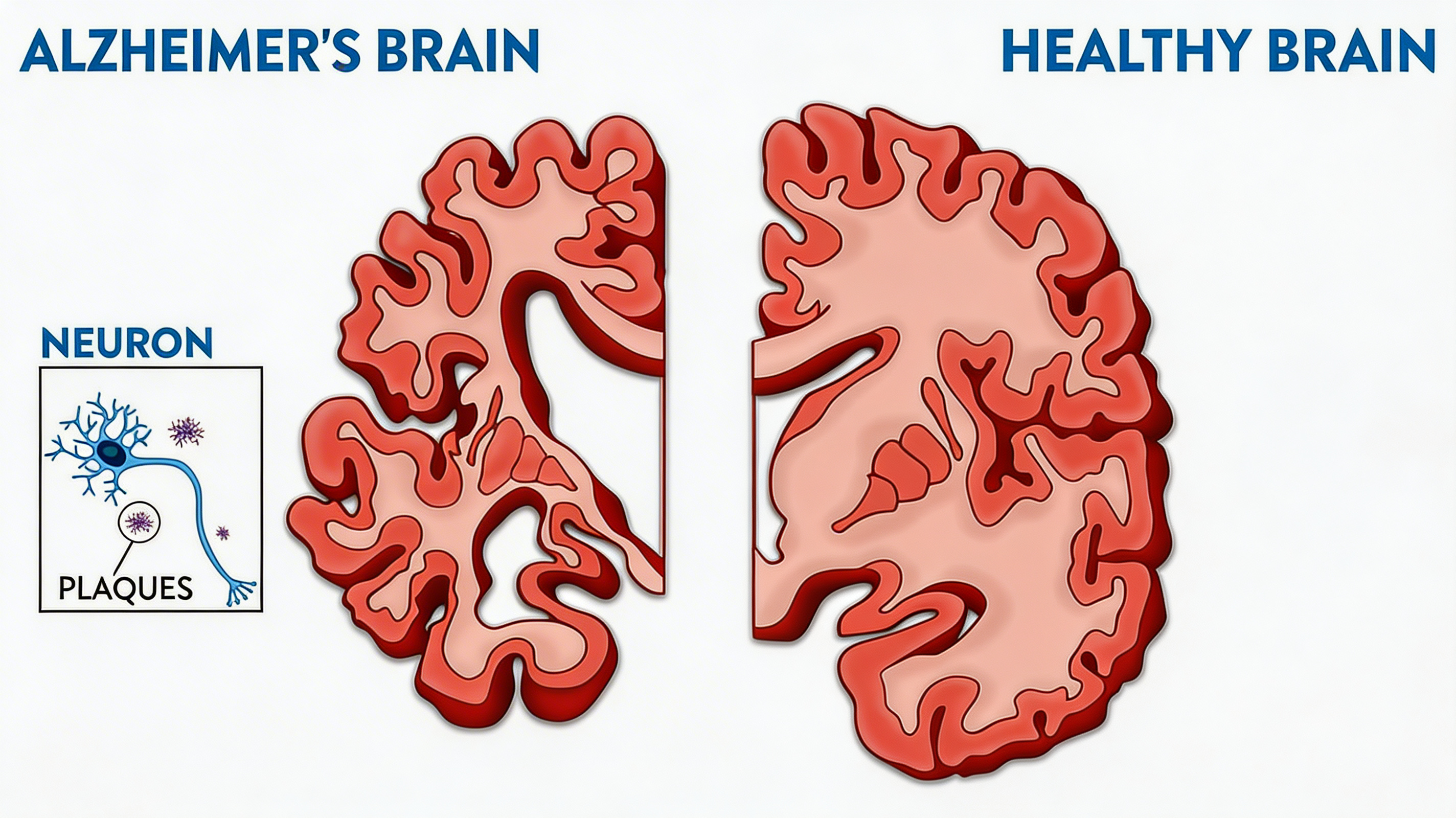
So is memory almost a direct function of biomechanics?
I believe memory is largely a direct function of skull structure and brain compression.
When the skull “deflates” due to poor biomechanics - dental extractions, orthodontics, teeth grinding, or dental work that flattens the curve of spee - it compresses the brain inside.
Research shows neurological disease patients consistently have reduced brain volume on MRI scans. Alzheimer’s, Parkinson’s, MS patients all show smaller brains. The medical establishment attributes this to the diseases themselves, but what if it’s backwards? What if the compressed brain is the root cause?
My decade long experience has led me to the hypothesis that the skull operates like a balloon - it can inflate or deflate based on these dental biomechanics I talk about.
When you’re ‘collapsing’, the skull compresses inward, squeezing the brain.
But it inflates with proper biomechanics, for example restoring vertical dental height through something like a mouthguard. And then the brain gets more space and functions better. Memory, focus, processing speed, clarity - all improve as compression reduces.

Let’s look at the leading memory champions
The World Memory Championships test abilities like memorizing shuffled card decks, random number sequences, and pages of names. What’s particularly interesting is the geographic distribution of top performers.
Look at this excerpt from chatgpt below. The current #1 and #2 champions of the world are from Mongolia.

I mean… not to be condescending but when is Mongolia ever #1 in anything? Pretty much never!
And yet Mongolia consistently produces world-class memory athletes despite being a developing nation with limited resources.
This is statistically improbable in my view unless structure plays a major role.
Because one thing that Mongolia does have is well structured people. I saw this myself when I visited Mongolia in 2005.

Mongolia’s population has had far less exposure to orthodontics, dental extractions, and cosmetic dental work compared to developed nations. And they are more or less a ‘Generation 1’ country as i describe here:

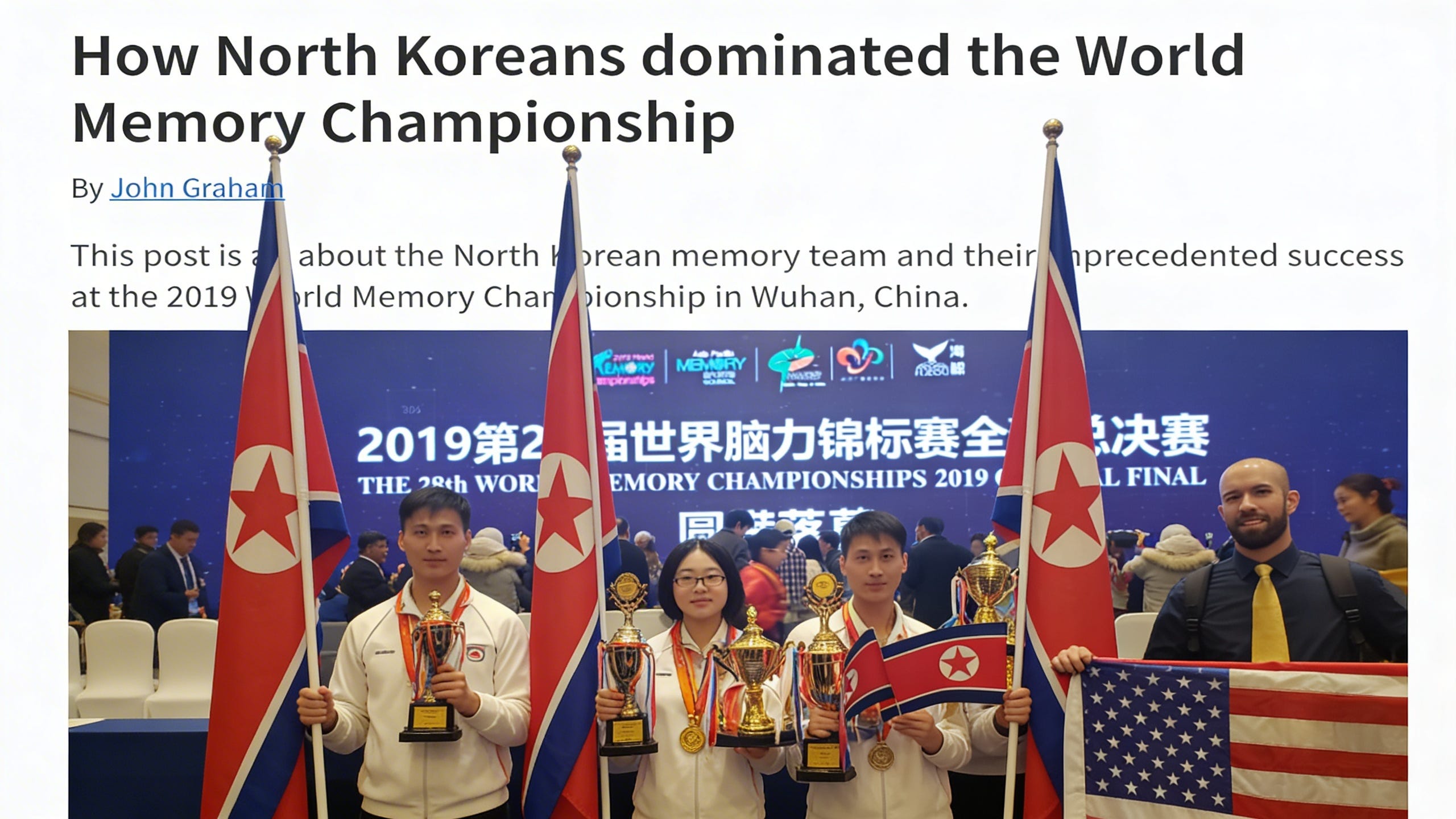
But it’s not just Mongolia… as I was browsing I noticed that North Korea dominated the world championships in 2019.
And you know if North Korea is dominating something… then something strange is definitely happening! lol
What is North Korea good at?
Well they are very good at being very undeveloped! Hahaha
Which results in the fact that orthodontic rates are likely in the vicinity of just 1%.
Compare this to developed countries like the US where orthodontic rates among teens is often already up above 60%.
Developed nations dominate most other sports and competitions because technology and training often supercede structure. The NBA is an example of this. Most of the best basketball players are still Americans despite the fact that people in Africa have far better structure.
But these developed nations most likely do not dominate memory competitions because the key differentiating factor is likely structure, and not training techniques.

I don’t think memory is ONLY biomechanics however
I do also wanna play devil’s advocate here a bit though.
I don’t think memory is ‘only’ biomechanics. Because if that was the case then you should consistently see the best structured people winning the memory championships.
And that is not what you see.
For example with this North Korean team above the two ladies to the right are far from having perfect structure. And yet they probably beat many hundreds of other women who have far better structure than they do.
So i do think that things like genetics and training play a role.
And I don’t wanna come off like a ‘crazy’ who just thinks structure dictates absolutely everything.

Closing thoughts
I think we can safely assume memory is highly correlated with biomechanics and skull structure.
The physical space and health of your brain directly impacts memory formation, storage, and recall.
And so as you improve your structure through the biomechanics of a mouthguard, I would expect a lot of you to experience improved memory. I know I have.
Also, I feel like sometimes I will remember things that I’d forgotten about for a long time. As if improving my structure had opened a pathway to a memory that had been blocked for a long time. This has happened a number of times when dreaming.
Anyway those are my thoughts. I’m very keen on hearing from others that go through this process to see if they concur.
Excellent post! I'm glad I made the suggestion for this topic. I concur with your analysis. Extensive brain training (especially using mnemonic devices) is a sine qua non for memory champions—but I've always been intrigued as to what other factors could be playing a significant role in their memorisation abilities. Having better structure would certainly facilitate more training time & furnish them with a larger mental bandwidth. World-class chess players and/or e-sport contestants could be another fun topic to write about!
It’s not completely related to the topic but watching videos and pictures from Iran these days I see beautiful and well structured people there. And I thought it could be probably from food and habits differences they have from the developed countries.