

This is one of those things that sounds almost too simple to be true.
But once you see it, you can’t unsee it. And I’ve run enough experiments to be quite confident about it.
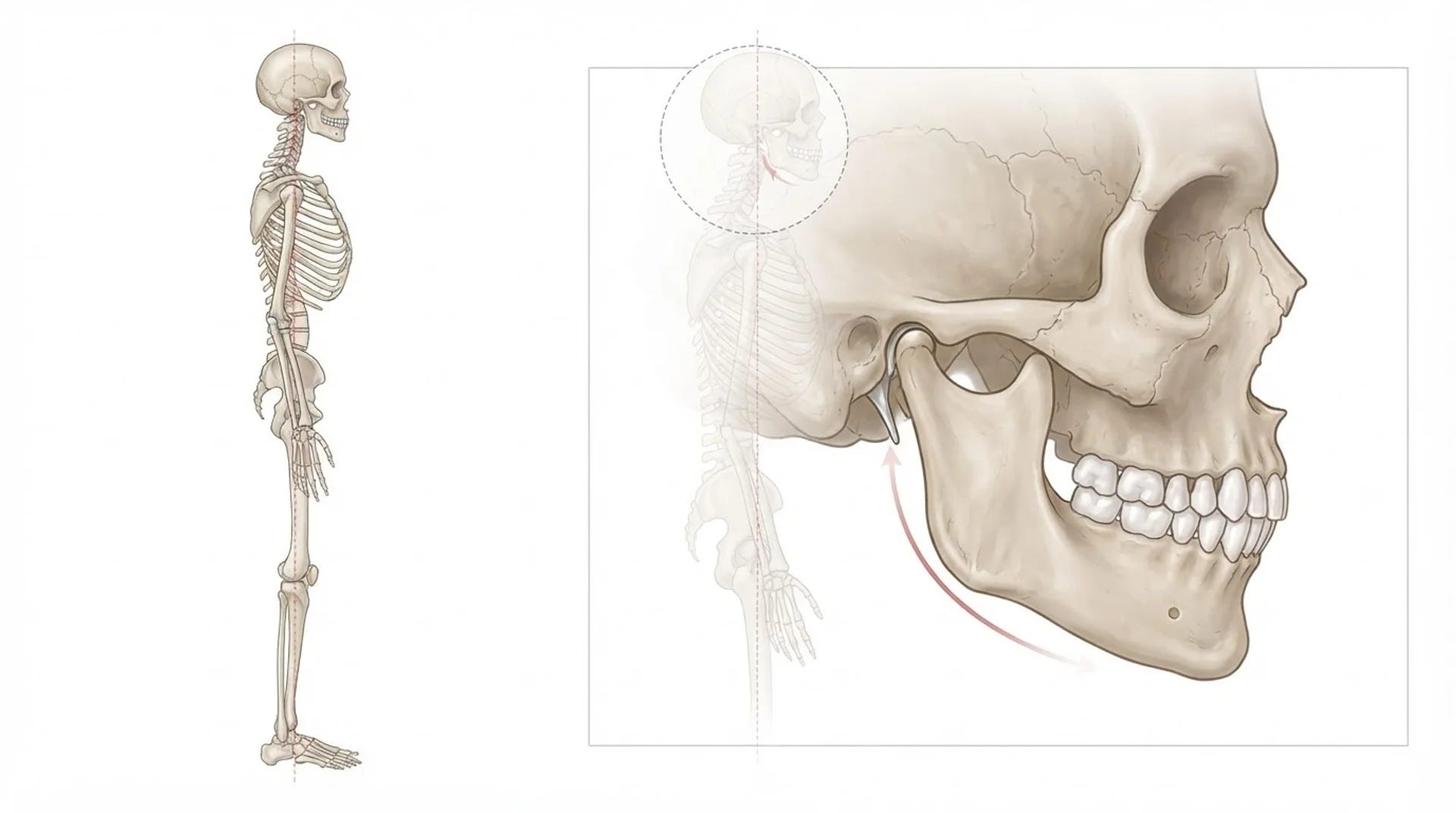
Your skeleton and your bite are not two separate systems. They are part of the same skeletal system.
And if you don’t understand that connection, you will spend years doing exercise and bodywork that delivers almost zero lasting change in my experience.
How the bite relates to the skeleton
Here’s the basic principle. Anything that changes in the skeleton will reflect in the bite — meaning the way your upper and lower teeth come together will shift, even if only subtly.
Why? Because your bite is not just a function of where your teeth sit. It’s a function of your teeth position, your jaw position, your skull’s position on the neck, and how the entire skeleton is arranged beneath all of that.
Every single one of those variables feeds into how your upper and lower teeth make contact when you close your mouth.
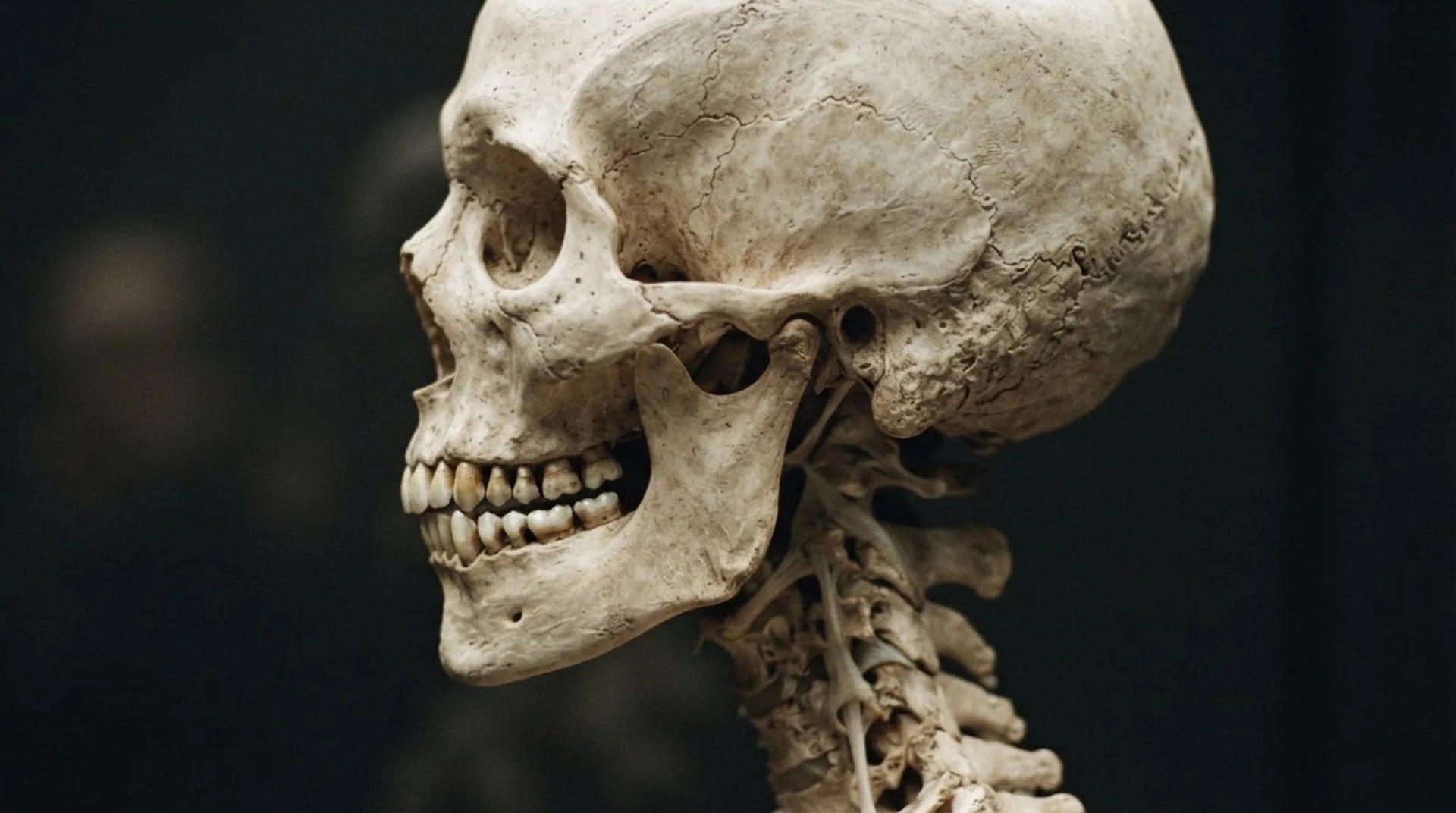
Think about what that means. If your spine shifts — even slightly — during exercise, that shift travels up through the neck to the skull, to the jaw, and ultimately changes the relationship between your upper and lower teeth.
The bite is essentially a readout of your skeletal position. It’s one of the most sensitive feedback mechanisms in the body, sitting right at the top of the entire musculoskeletal chain.
This also means the relationship runs in both directions. Do something to your body and it changes your bite. Do something to your bite and it changes your body. They are locked together.
It’s like a two-way mirror
This bidirectional relationship is worth sitting with for a moment because I don’t think most people have ever considered it.
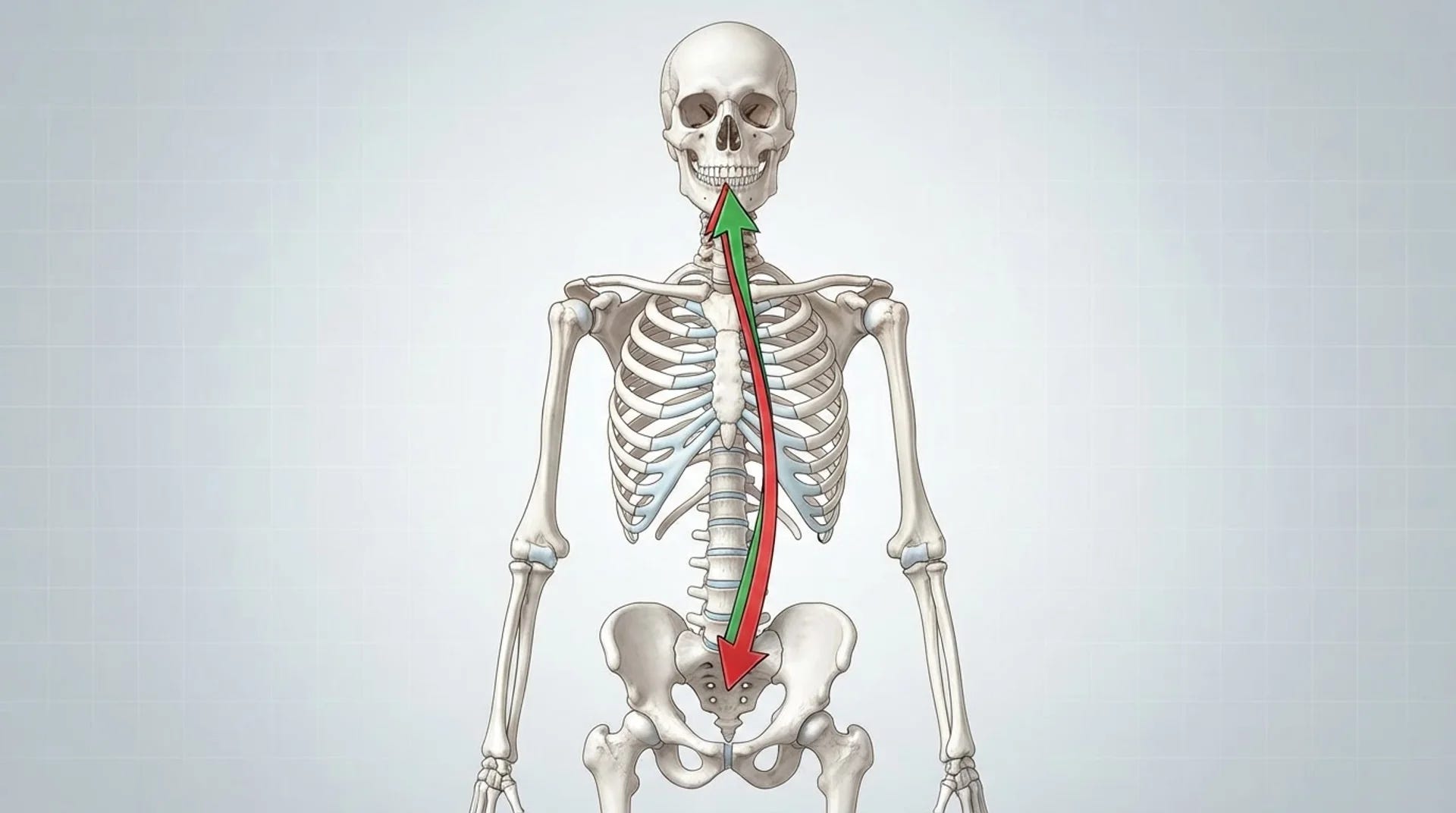
When you exercise — when you stretch, lift, move — your skeleton shifts. Even temporarily, it shifts. And that shift shows up in the bite. The mirror reflects the body back through the teeth.
But it also works the other way. Change the bite and you change the body.
Orthodontics is the most obvious example of how this goes wrong. When braces move teeth and flatten the curve of spee, the jaw and skull have no choice but to reorganize around the new geometry.
The spine compensates. The posture changes. The whole skeleton adapts — downward. The mirror reflects the teeth back through the body, and the body deteriorates in response.
A flat mouthguard does the same thing in reverse in my experience. Remove the old habitual occlusion, give the jaw a neutral surface to land on, and the skeleton starts organizing upward. The body responds to the new bite geometry the same way it responded to orthodontics — except this time the change is positive.

Your bite is changing your entire life
Here’s the part that should genuinely surprise you: your bite has been changing your entire life, in ways you’ve never noticed.
How do I know? Because your skeleton has been changing. The two things move together — always.
Every shift in your spine, every change in your posture, every subtle postural deterioration you’ve accumulated over decades has been registering in your bite simultaneously. You just didn’t have articulating paper in your mouth to see it.
Most people assume their bite is static — the teeth are where they are, and that’s that. But the bite is a living readout of a living skeleton. It shifts constantly.
The question is just whether those shifts are moving you toward inflation or collapse.
How I learned about this connection
I discovered this empirically through experiments I was running in 2017 and 2018, during an extended period where I was obsessively tracking my own bite changes.
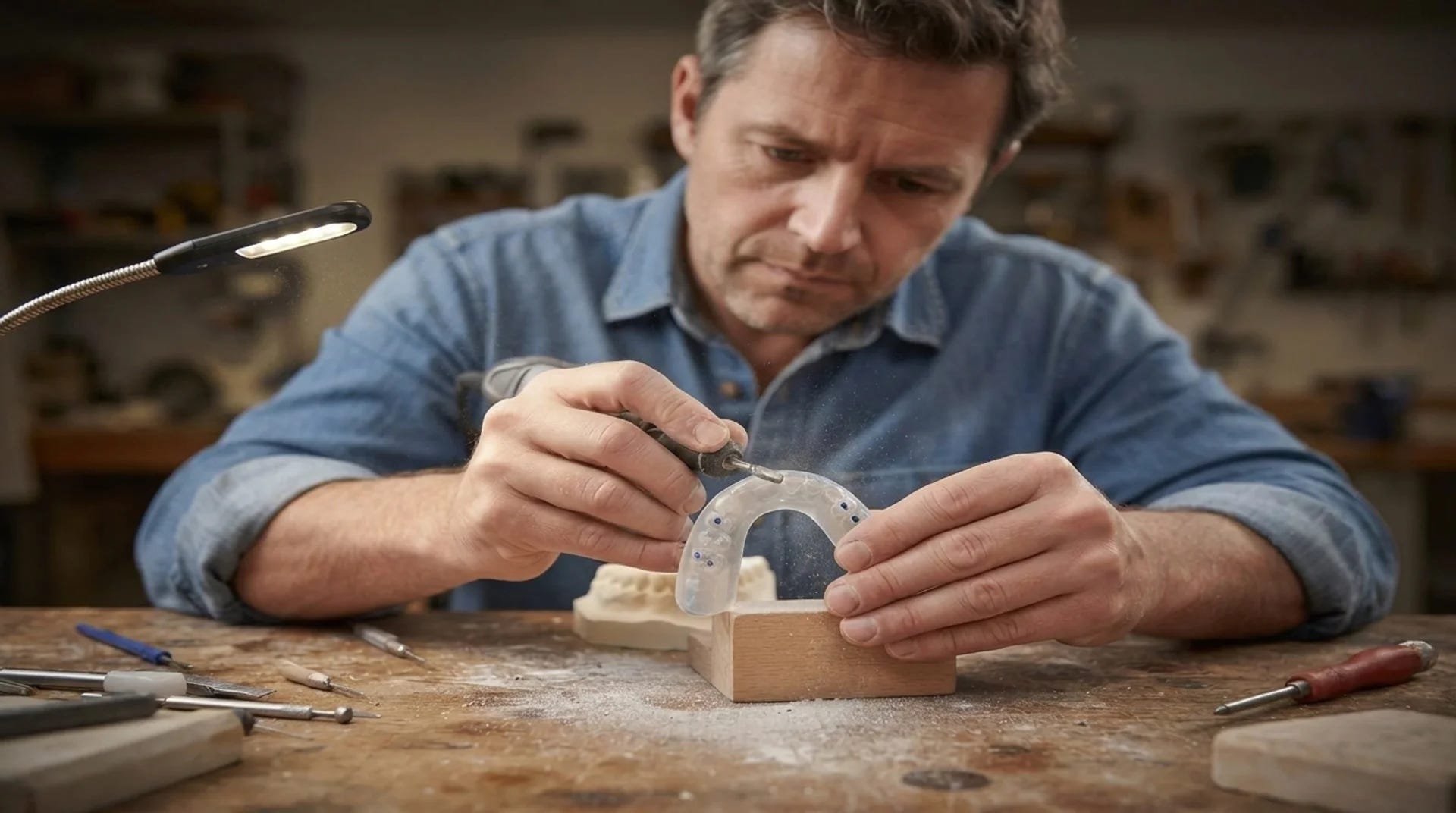
At the time I had a lower flat plane splint — essentially a flat acrylic surface that sits on the lower teeth.
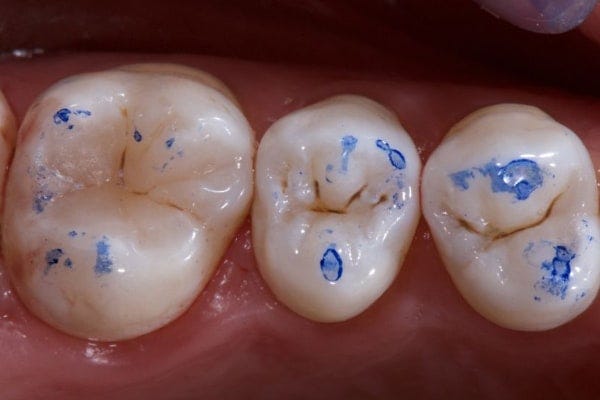
Using articulating paper, I would bite down onto the splint and it would leave ink marks wherever my upper teeth were making contact. I’d then use a dental drill to grind down any heavy spots until all four back teeth on either side were leaving even, balanced marks. That was my baseline — a perfectly even bite registration.
Then I’d go and do exercise. Hard exercise, sometimes yoga, sometimes other movement. An hour or two of real effort.
Afterwards I’d put the splint back in and check the contacts again with the articulating paper.
They had changed. Spots that were there before were now missing. The contact pattern had shifted, sometimes significantly.
This told me something important: the exercise had moved the skeleton, and that movement had reflected in the bite. The jaw and spine had repositioned. And that repositioning was visible, measurably, in the contact pattern on the splint.
Here was the problem though. A couple of days later, without wearing any mouthguard, I’d check the splint again.
The contacts were often even again. Exactly as they were before I exercised.
I repeated this experiment numerous times to make sure.
You can validate this connection yourself
You don’t need a dental drill or a custom splint to see the basics of this relationship.
You can buy articulating paper on Amazon for a few dollars — it’s the same paper dentists use.
Put a strip in your mouth, bite down a few times, and look at the marks your upper teeth leave on your lower teeth.
Take a photo. Note which teeth are making contact and where.
Then go and do some exercise. Something meaningful — not a gentle walk. Come back and bite on the paper again.
The contact pattern will have changed. Guaranteed. Spots will have moved or disappeared. New contacts may have appeared.
What you’re seeing is your skeleton having moved — and that movement expressing itself through the bite. It’s your body telling you that exercise did something. The skeleton shifted (probably toward a better position).
The problem is what happens next.
What this connection actually means
Without something supporting the new position in place, the bite — and the skeleton — reverts.
Within a couple of days usually (in my experience).
The way the upper and lower teeth are shaped to fit together is likely the culprit. You see even though your skeleton may have changed a bit… the way your teeth are shaped didn’t change. They still fit together best the ‘old way’.
So whatever the exercise achieved, the body undoes it.
This is why yoga leaves people feeling good temporarily, then tight again.
Why osteopathy gives relief that fades within a week.
Why massage, stretching, and every other form of bodywork seems to require constant repetition with no cumulative gain.
It’s not that these things don’t work — they do work, in the moment. The skeleton moves. The body improves. The bite changes. But without a mechanism to support the new bite position, the old occlusion takes over and resets everything.

A flat mouthguard solves this problem
Here’s why: when you wear a flat surface on your teeth — something that removes your existing occlusion and replaces it with a neutral plane — the teeth no longer snap back into their habitual contact pattern.
The old occlusion that pulls the jaw and spine back to their collapsed position has been removed. So when exercise moves the skeleton into a better position, the mouthguard gives that new position somewhere to land and stay.
When I started wearing a rubber mouthguard at night alongside my exercises, the contacts on my tracking splint stopped reverting. The changes held. And then they compounded — each session of exercise building on the last, instead of resetting back to zero.
In my experience, there is no point in exercising for structural change if you’re not wearing something that allows the skeleton to hold its gains. You’re pouring water into a bucket with a hole in the bottom. The exercise works. The bucket just can’t hold it.
A flat mouthguard is the bucket with the hole sealed.

Closing thoughts
Someone in our community recently DM’d me and asked if it was worth wearing a mouthguard even if they didn’t have any major health issues and were relatively happy with how they looked.
I asked them… “hmm. Do you exercise?”
And they answered that they exercised regularly and spent about 10 hours per week either in the gym or doing yoga.
So my response was… “I guess i’m saying that in my view… you are throwing those 10 hours down the toilet if you’re not wearing something flat between your teeth that holds your gains.”
This sounds like heresy today I know.
I don’t think it’ll sound like heresy in 10-20 years.
The few times I’ve worn the mouth guard while working out, I’ve definitely experienced a huge amount of change within my body. I’m going to continue to do this more frequently to see what changes. I’m looking for changes specifically under my jaw line & neck, but also all the way through my torso into my hips. Slight curve there.
Wow! This is SO true!! My bite is SO off and so is my scoliosis. Because of all of my dental issues and worsening scoliosis I'm well aware of how easily the teeth move.
Great article, Ken! You're really onto something!