

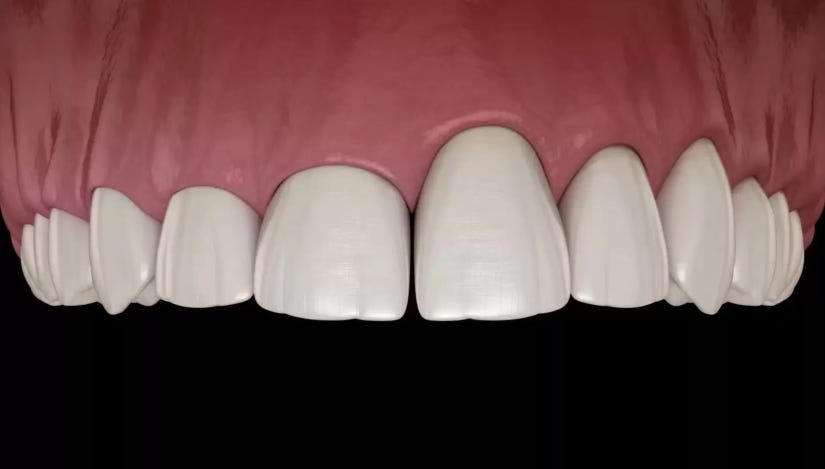
Most people assume the amount of tooth they show above the gumline is just genetics. Some people have “long teeth,” some people have “short teeth,” end of story.
I don’t think that’s true.
I think most people are walking around with teeth that never fully erupted to their correct height — and most people also have arches that never widened to their correct shape.
Both of those things are connected, and both of them start correcting once you go through this biomechanical process in my experience.
What does a healthy gumline look like?
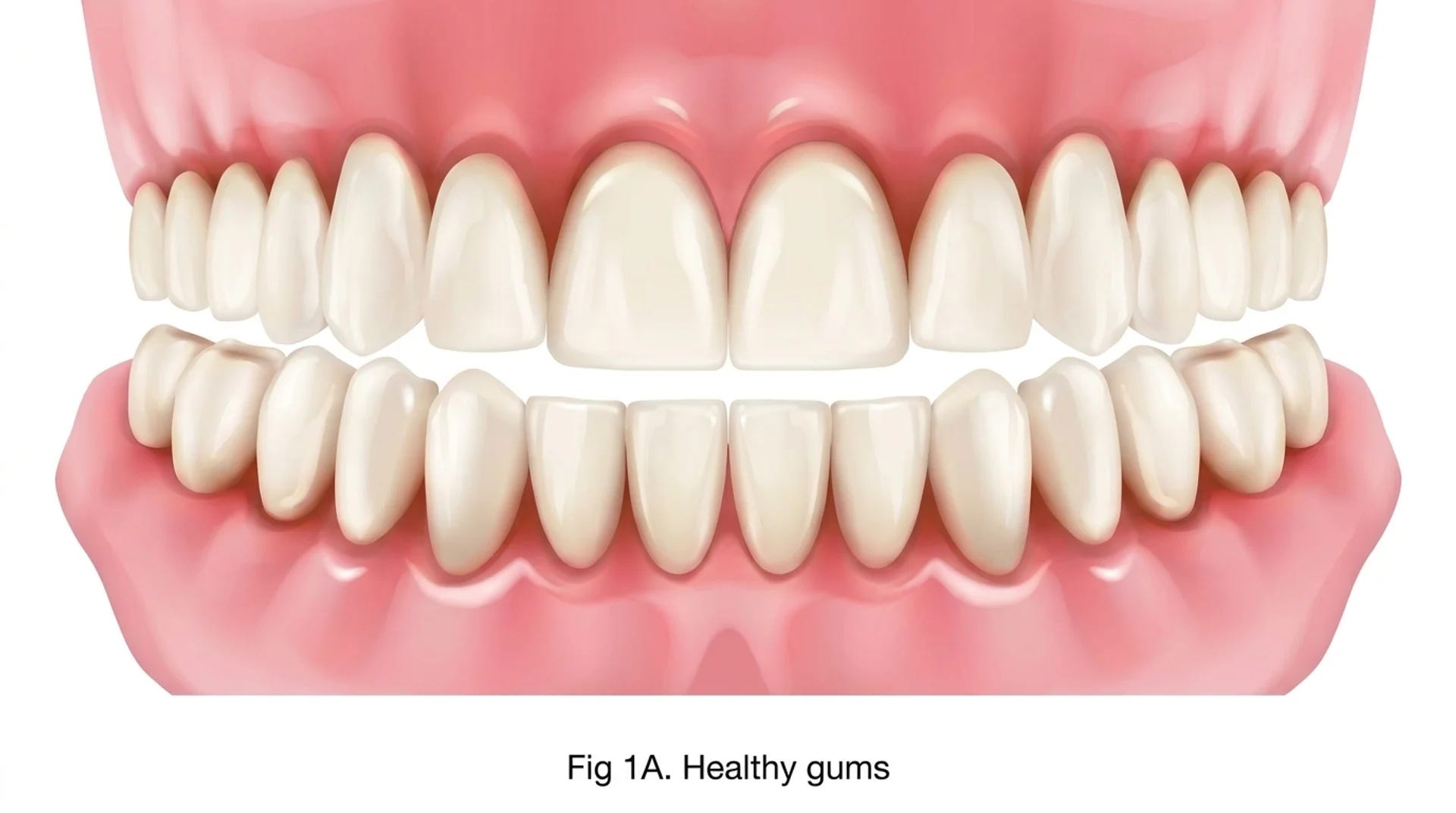
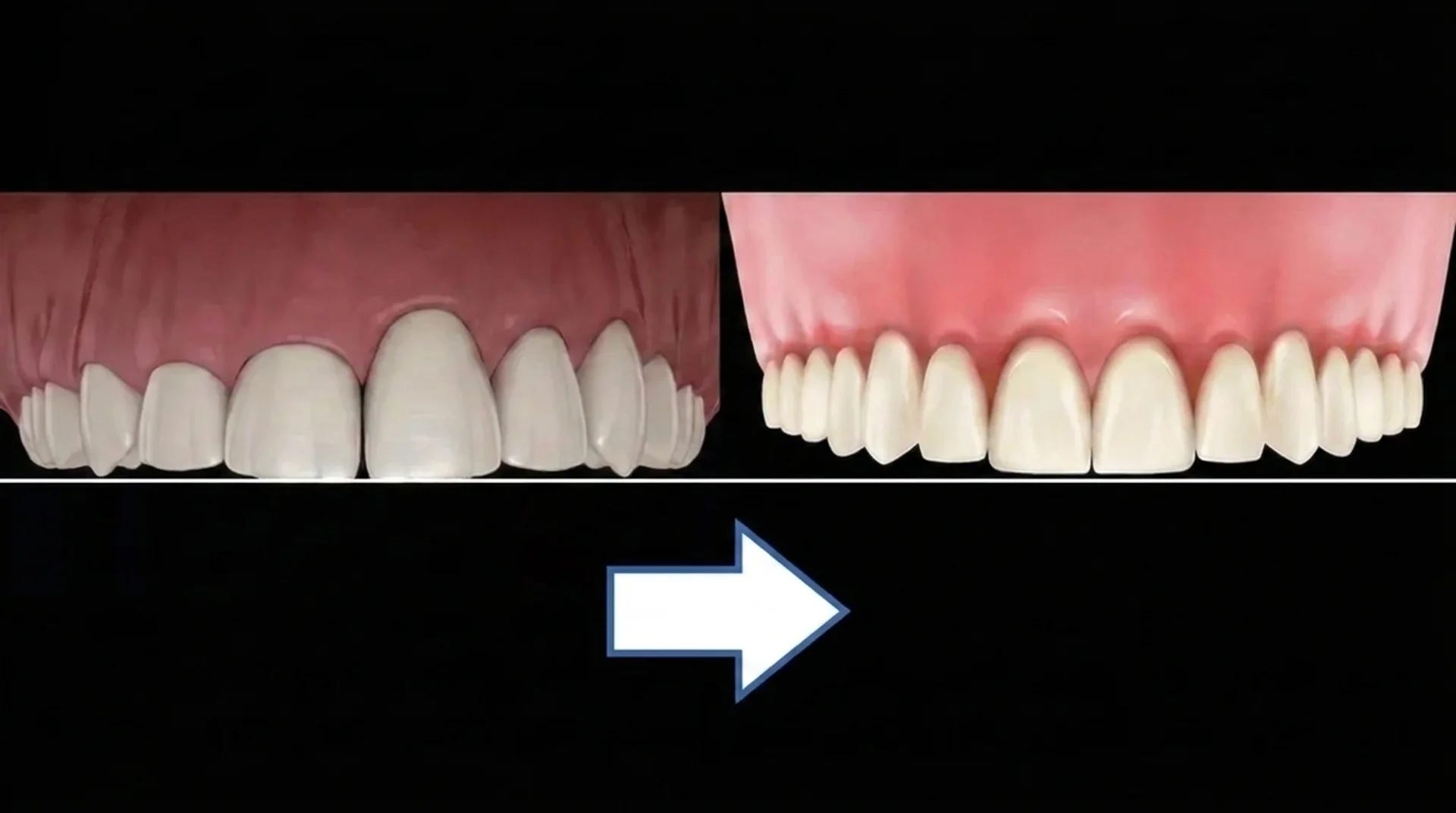
If you Google search for what a healthy gumline looks like you will probably land on something like this picture above.
What do you notice about the picture above? Well:
The gumline is quite even on both the upper and lower teeth
The exposed part of the teeth are quite long. Especially when you compare to the image at the top of this article.
And so I think it is safe to assume that if you have correctly biomechanically developed then that is what your gumline would look like.
You would have what looks like pretty long, well extruded teeth and an even gumline.
The teeth don’t fully extrude with malocclusion
Teeth don’t just erupt once in childhood and then stay locked in place forever.
Eruption is a continuous, lifelong process — teeth are always making small adjustments in position to try to maintain contact with their opposing tooth.
This is well established in dentistry. It’s called continuous or passive eruption, and it’s the same mechanism responsible for why teeth appear to “grow” slightly as people age.
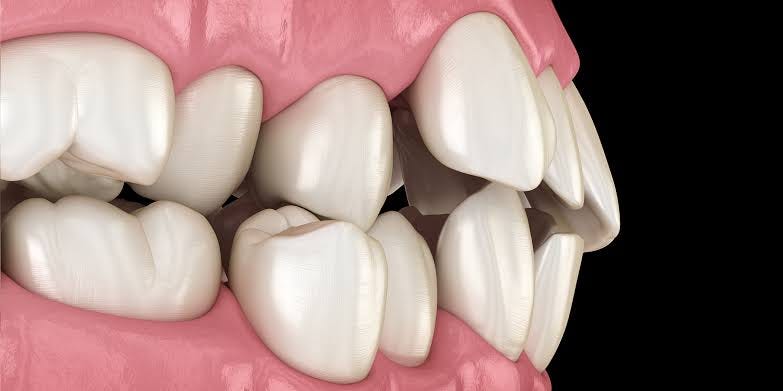
Here’s the problem. When someone has a malocclusion — a narrow arch, a deep bite, teeth that are crowded or rotated or that meet each other in a compromised way — that abnormal contact pattern interferes with the tooth’s ability to fully extrude to its natural, correct height.
The tooth essentially stops moving once it makes contact with whatever it’s meeting, even if that contact point is not where the tooth was actually designed to end up. It settles for “good enough” instead of “correct.”
This is why so many people have a gumline that looks bunched up, uneven, or like it’s swallowing a large portion of the tooth. It’s not that their teeth are naturally short. It’s that the teeth never finished the job of erupting into the position they were supposed to reach.
Arches never develop to their correct width either
The second half of the problem is arch width.
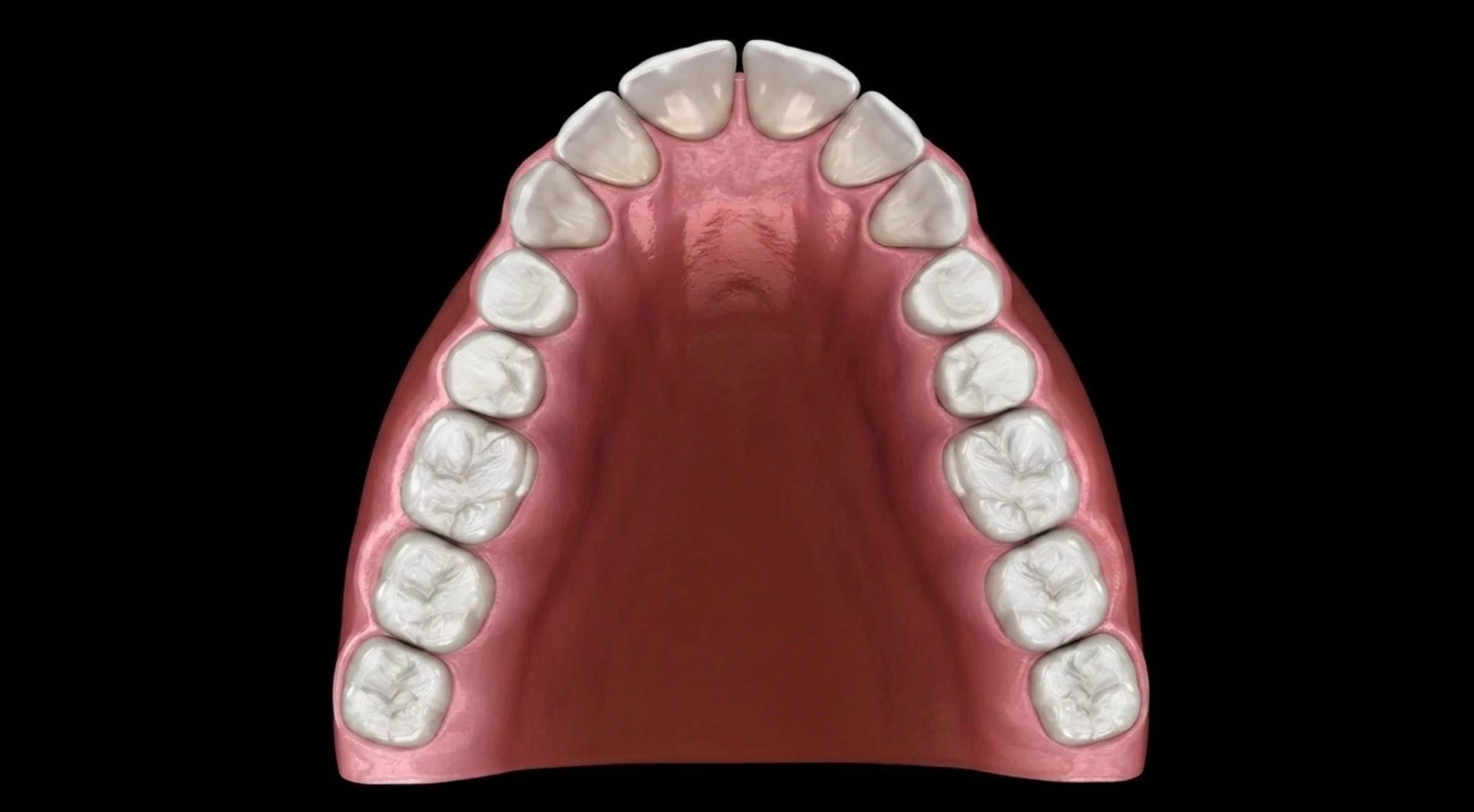
In a lot of modern mouths — and this is something orthodontic literature on arch development has documented for decades — the upper and lower arches never expand out to the wide, U-shaped form that represents the biomechanically correct target.
Instead they stay narrow and sometimes V-shaped. Crowding, narrow smiles, and the “collapsed” look to the lower third of the face are downstream of this.
Narrow arches and under-erupted teeth are not two separate problems in my view.
They’re the same problem, showing up in two places.
A narrow arch changes how the opposing teeth meet, which changes the path of eruption, which stops the tooth short of its full height.
Fix the arch width and you remove the obstacle that was preventing full eruption in the first place.
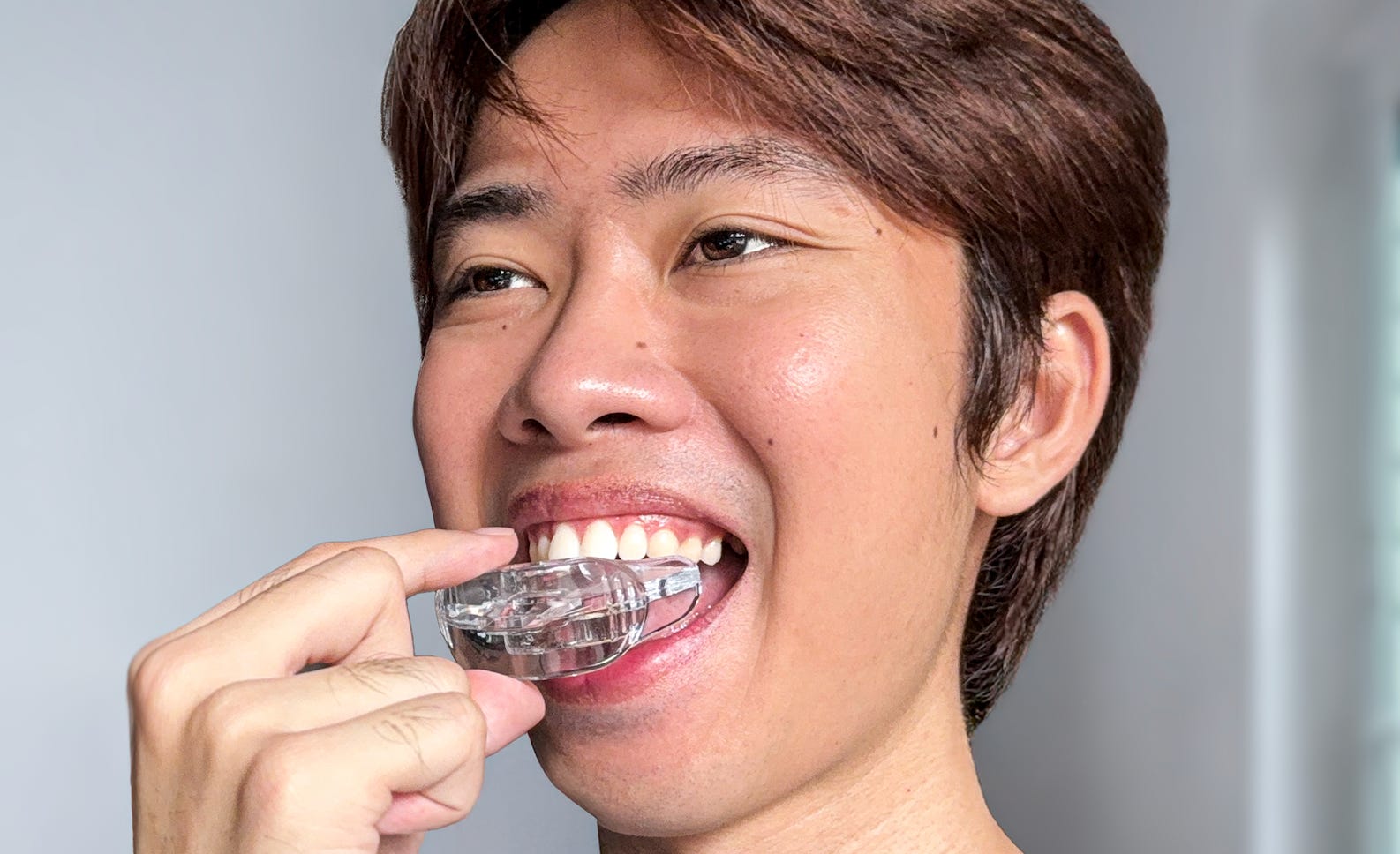
What the mouthguard process does
This is where the flat mouthguard process comes in.
By removing the person’s habitual malocclusion — the old, narrow, restrictive bite pattern — and replacing it with a neutral surface, you take away the thing that was capping eruption short.
The teeth are no longer meeting each other in the old compromised position. They’re free to keep doing what teeth naturally do: erupt toward a stable, functional contact point. Also they tend to untwist and upright with this process as well.
And because the mouthguard ‘inflates’ the skull through the doorjam effect… your arches widen (proportionally to the changes in your skull).

So with this process, you get both corrections happening simultaneously: the arches widen out toward their proper shape, and the teeth extrude further out of the gums to reach the height they were always supposed to reach.
But it takes time and you need to be patient.
How that impacts the gumline
The visible result of this is a gumline that becomes noticeably more even over time.
Instead of teeth looking short, stubby, or buried under a ridge of gum tissue, you start to see a longer, more proportional tooth crown.
This isn’t cosmetic gum surgery. Nothing is being cut away. The tooth is simply doing what it was always trying to do, now that the obstacle has been removed.
It’s worth saying clearly: a healthy, correctly developed gumline is not one that hides most of the tooth. It’s one that exposes a good amount of tooth length, with a smooth, scalloped, even contour across the whole arch.
Sometimes folks that are early in this process interpret that as the gums receding. But typically the part that ‘receded’ (ie. newly exposed) was the part of the tooth that should have been exposed upon proper extrusion anyway.
In my view ‘true gum recession’ is defined by the part of the tooth that should not be exposed (eg. the roots) being exposed. Which typically doesn’t happen with this process if the person didn’t have underlying issues beforehand.
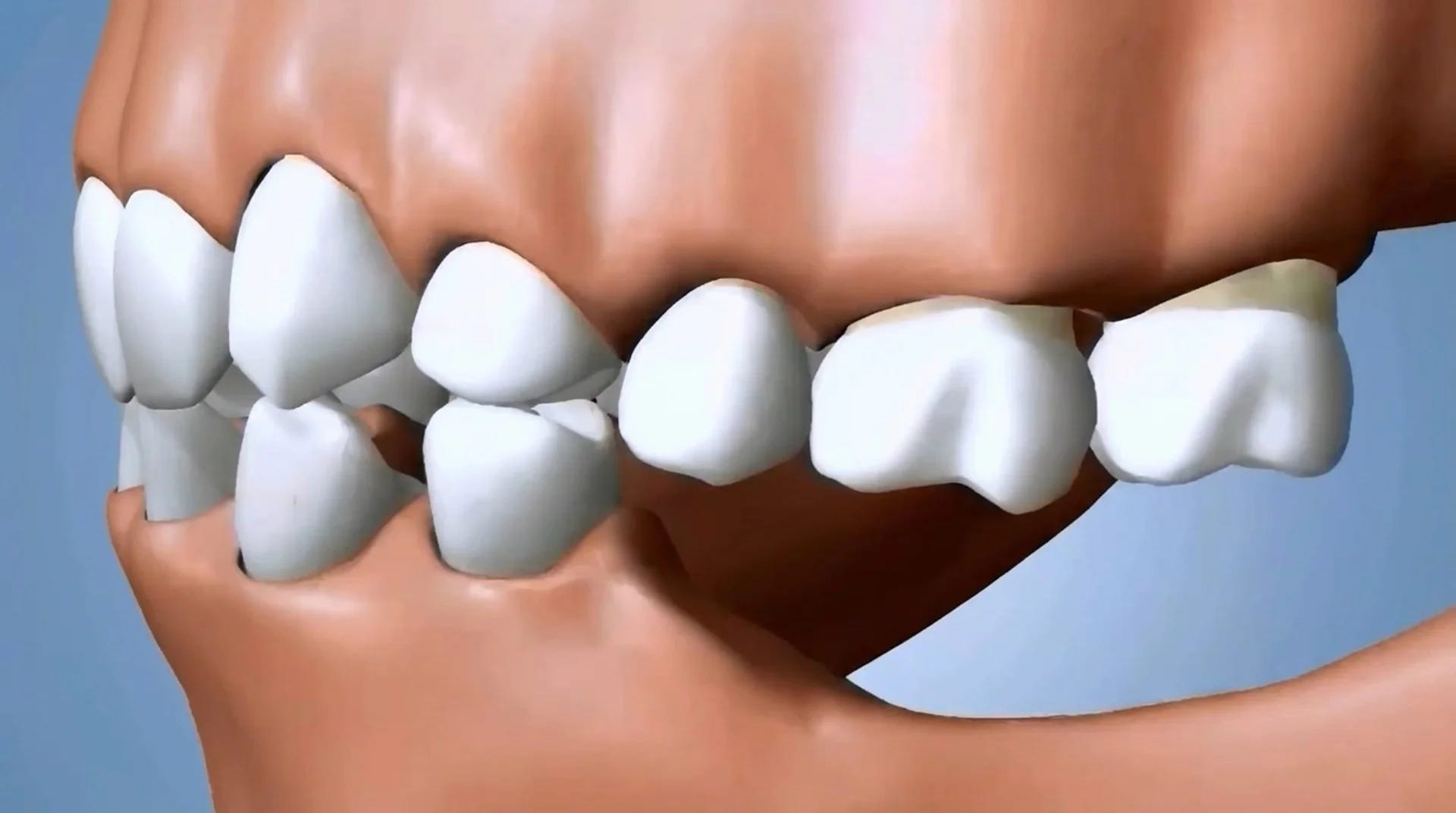
Does overeruption truly exist?
By the same token I kind of question whether ‘overeruption’ truly exists. Most of the pictures I see online of overruption are essentially:
some teeth did not fully erupt (eg. the front teeth in this pic above)
some teeth did come closer to fully erupting and they also tend to have a little bit of gum recession (which adds to the appearance of overerupting)
Why do I make this point?
This gets back to my point about the body being very ‘smart’. If we assume the body is very smart then it is not going to erupt a tooth beyond its normal length.
Rather the tooth is going to erupt to its genetically predisposed length and the teeth in front of them are going to look a bit short in comparison (because they didn’t fully erupt).
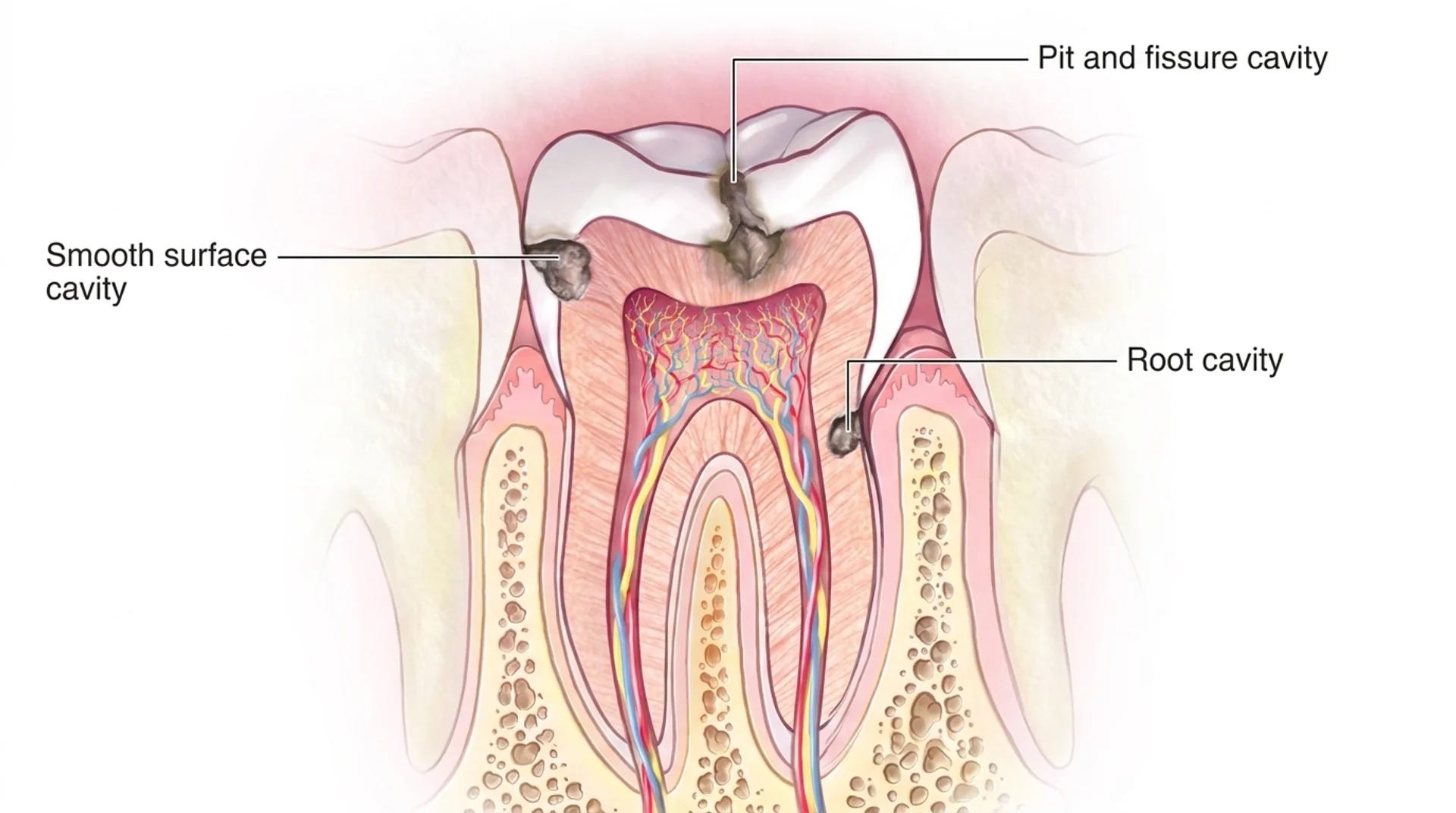
Sometimes cavities ‘appear’ with this process
I’ve had a couple of people tell me they noticed cavities with this process.
And it always seems to be at the location of what is called a ‘root cavity’ in the picture above (ie. it was slightly below the gumline).
And so if you think about what i’m saying with this process… and a tooth that is a bit short (with a root cavity) erupts… then it is logical that now that root cavity will be visible.
But it is likely not the mouthguard that put that root cavity there. Rather it was likely there the entire time but undetected as it was under the gumline.
In general my own personal experience with the mouthguard and that of many folks who have provided feedback is that your teeth stay cleaner naturally as the structure of your mouth improves with this process.
I’ve written about this before here:

Closing thoughts
People don’t usually think about their gumline as an unfinished process.
Most people think it’s just how their smile is. And how it should say.
But eruption is dynamic, arch width is dynamic, and both of them have likely been artificially capped by a bite that never let them reach their intended endpoint.
This biomechanical process removes the cap.
The arches widen. The teeth extrude. And the gumline becomes a more honest reflection of what your mouth was always supposed to look like — not the compromise it settled for.
But can that be a bit scary at times?
Yeah it honestly can.
And so you need to be mentally prepared for it.
I never said this process was easy.
But if you stick with it… my experience (and that of many others that have written to me) is that it is worth it.