

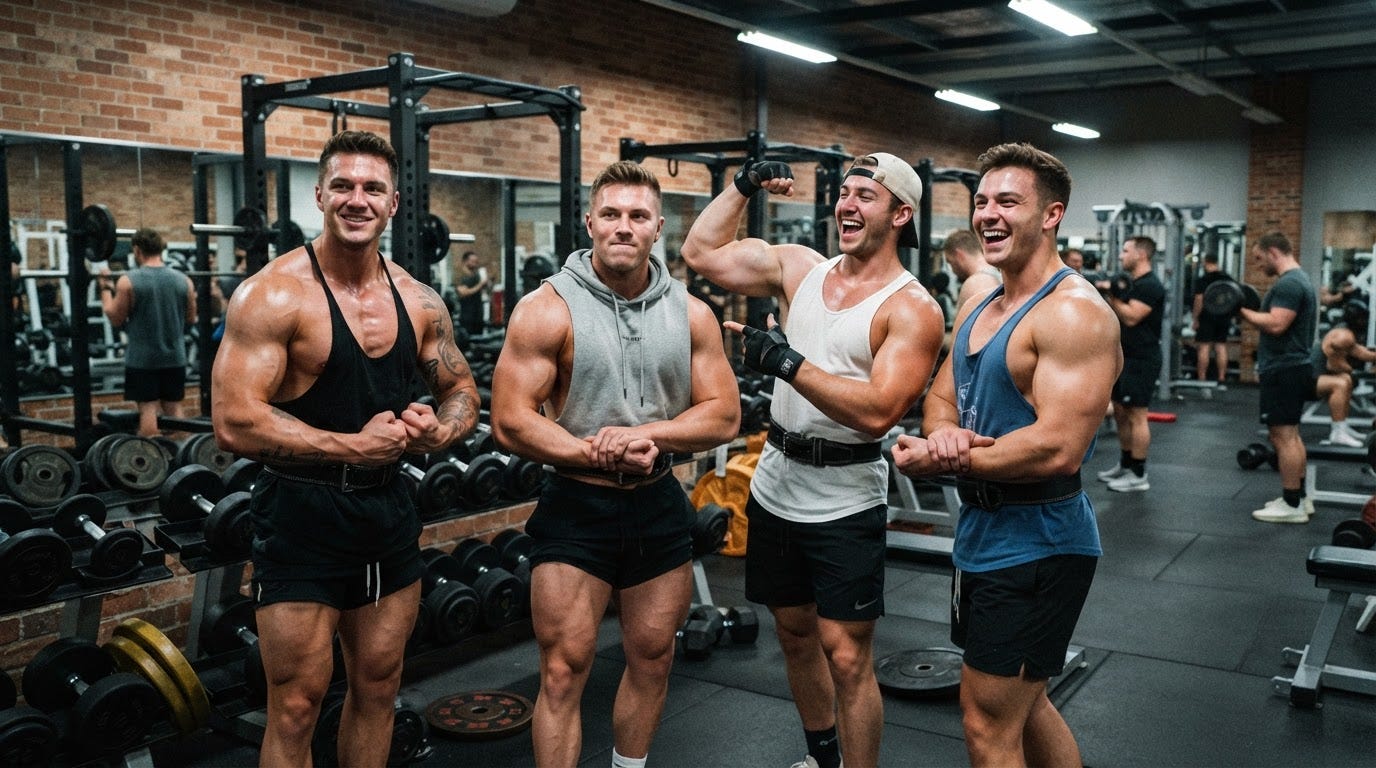
Something has always bothered me about the way most serious lifters look.
Yes they’re big.
But they often look a bit weird.
And they move a bit weird.
As if the muscle got added onto a frame that wasn’t quite straight to begin with.
When I figured out how these biomechanics worked… it all became clear.
Let me explain
Muscle doesn’t grow in isolation — it grows on top of a skeleton
The standard model of muscle building treats the muscle as the whole story.
Progressive overload, protein synthesis, recovery, repeat. And at a basic level, sure, that’s how muscle tissue supposably gets bigger.
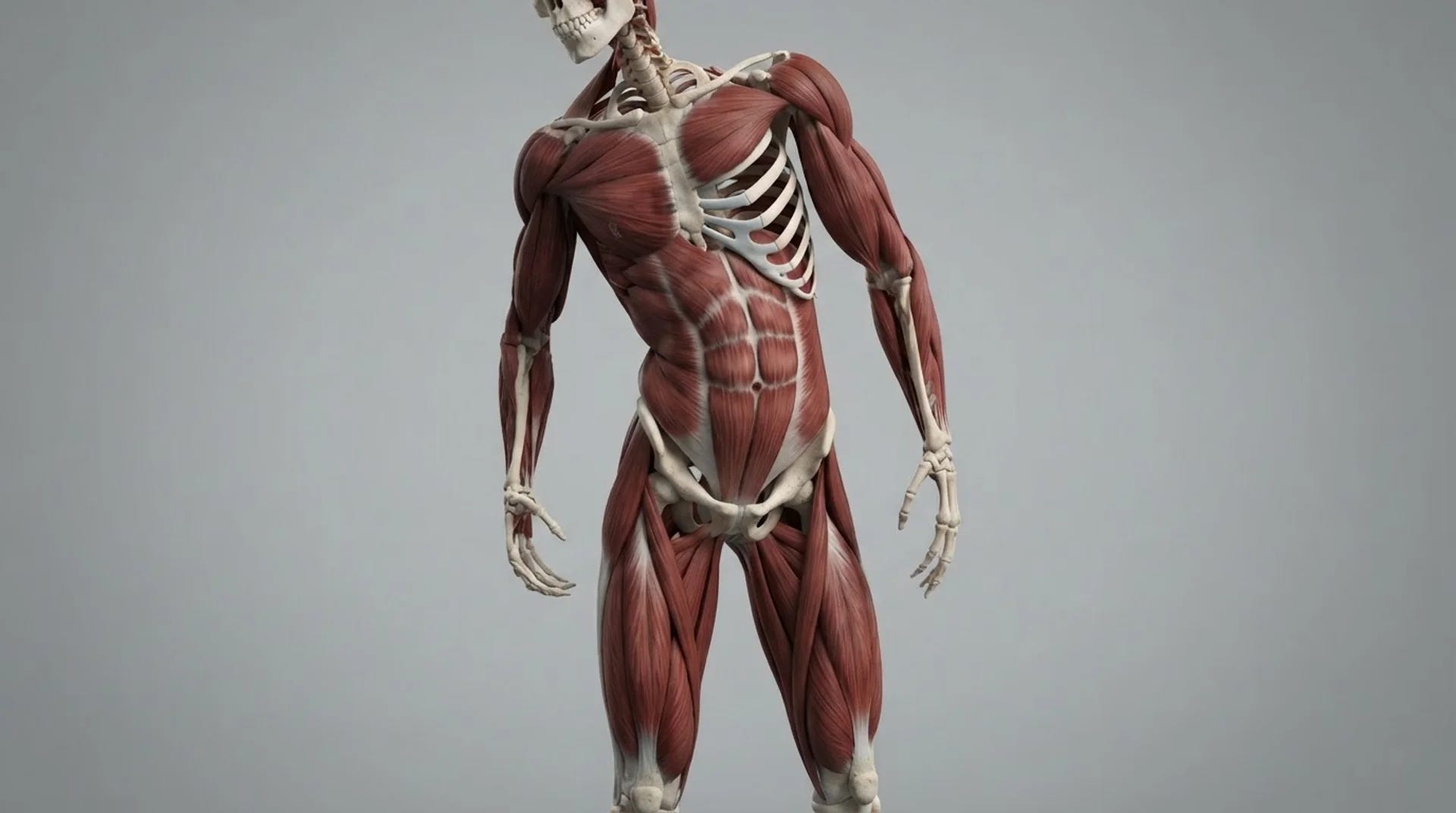
But muscle doesn’t exist independently of the frame it’s attached to. Every muscle in your body has an origin and an insertion point on bone, and it’s only able to sit at its correct length, in its correct position, generating force efficiently, if the skeleton it’s anchored to is actually in the right place.
If the skeleton is twisted, rotated, or collapsed — which is the condition most adult bodies are in — the muscles attached to it are being asked to function from a distorted starting position.
They can still grow. They just grow twisted, along with everything else.
Soft tissue is what allows the skeleton to actually correct
This is where I think the real key to muscle building has been missing from the conversation entirely.
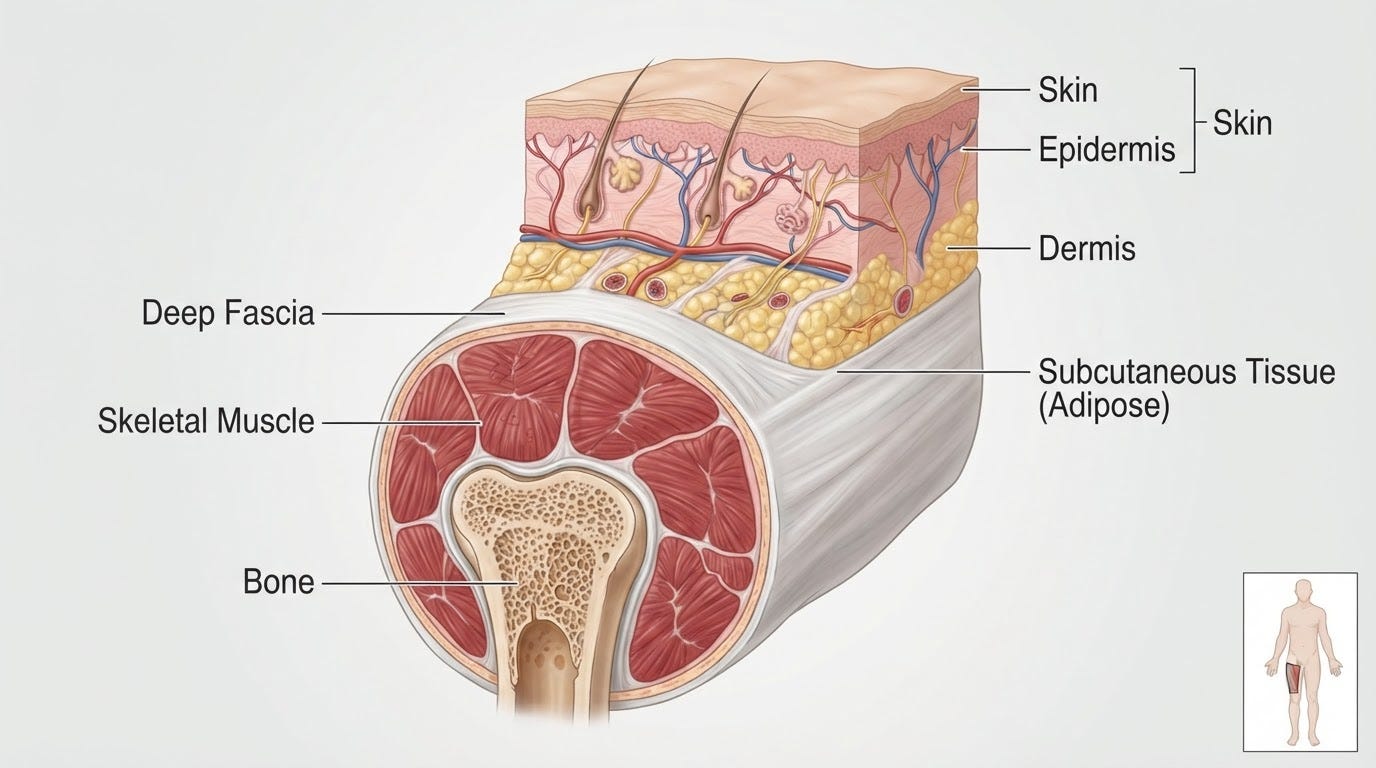
The soft tissue surrounding the skull and skeleton is what holds structural position in place — like the material of a balloon holding its shape under internal pressure.
When that soft tissue is inflating, the skeleton has room to move back toward its correct position. When it’s deflated and collapsed, the skeleton is locked into whatever twisted configuration the compensation pattern demands.
When the skeleton corrects because the soft tissue is inflating properly, the muscles attached to it get to revert back to their actual, natural length and position. And as a result that person will be far stronger.
Whereas a muscle that’s been sitting shortened or pulled at an odd angle for years, because the bone it’s anchored to has been rotated out of place, is not going to build clean, functional mass no matter how much volume you throw at it in the gym.
It’s going to build mass around the distortion.
And while those muscles might look big, the reality is that that person is probably not that strong.
My example
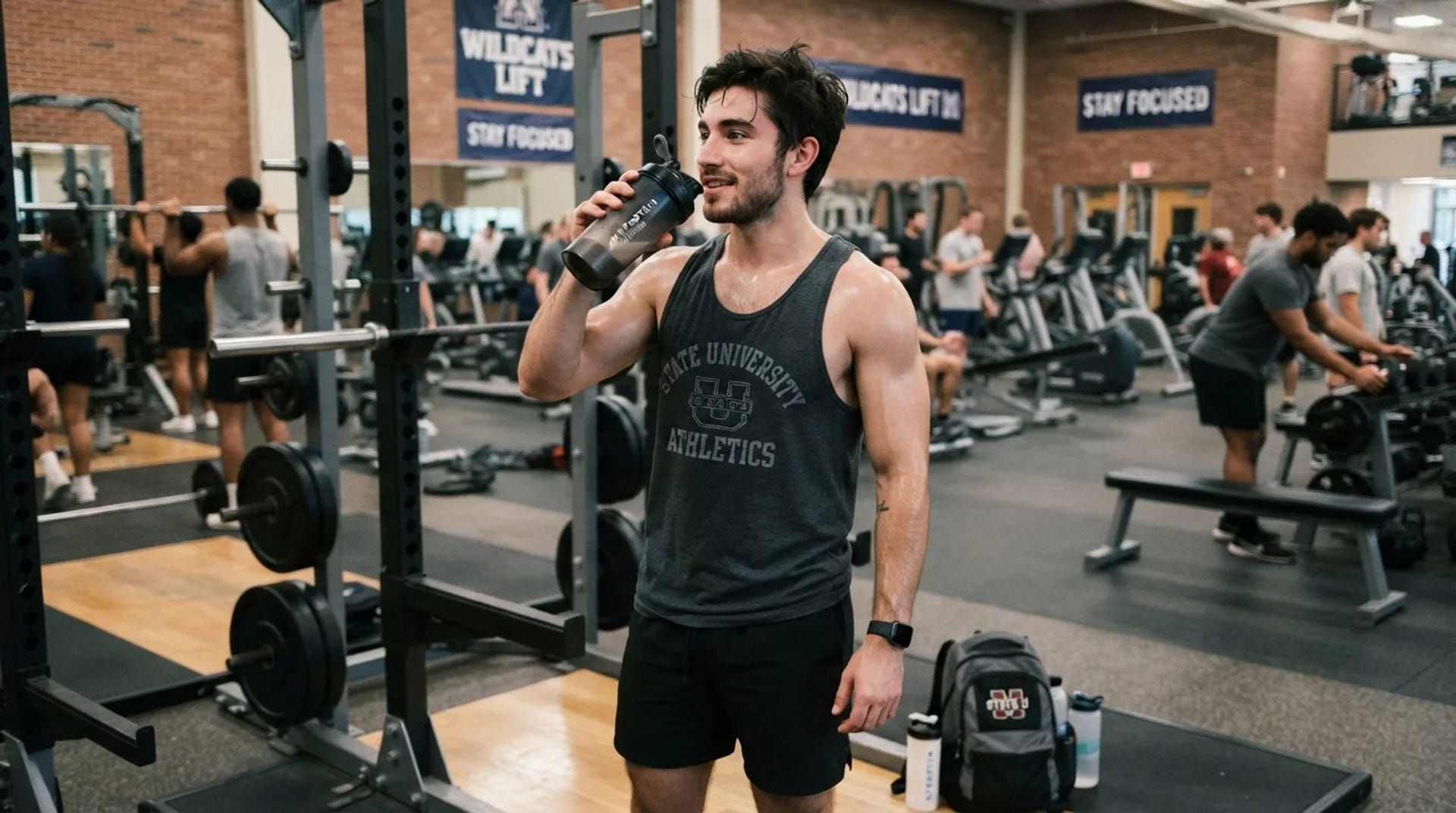
When I was in college I got really into going to the gym my freshman year. I was going 4-5x per week and taking the protein shakes, etc.
My muscles got a little bit bigger but then seemed to plateau.
From that point on it was as if i just got chubbier rather than putting on muscle.
Whereas my workout partner, a guy named Brian with great biomechanics, joined me only perhaps 1-2x per week and completely blew me out.
His body just put on muscle extremely easily and in a few months of work he looked jacked. This despite him not taking any of the protein shakes, etc.
You see the problem with my body was that it was twisted. And so effort did not translate into results.
I also remember that i didn’t feel particularly strong despite all that effort.
I contrast that with these days where I haven’t been to the gym in 5 years but if someone runs into me now they would likely feel as if they just ran into a brick wall. ie. they are the one that stumbles, not me.
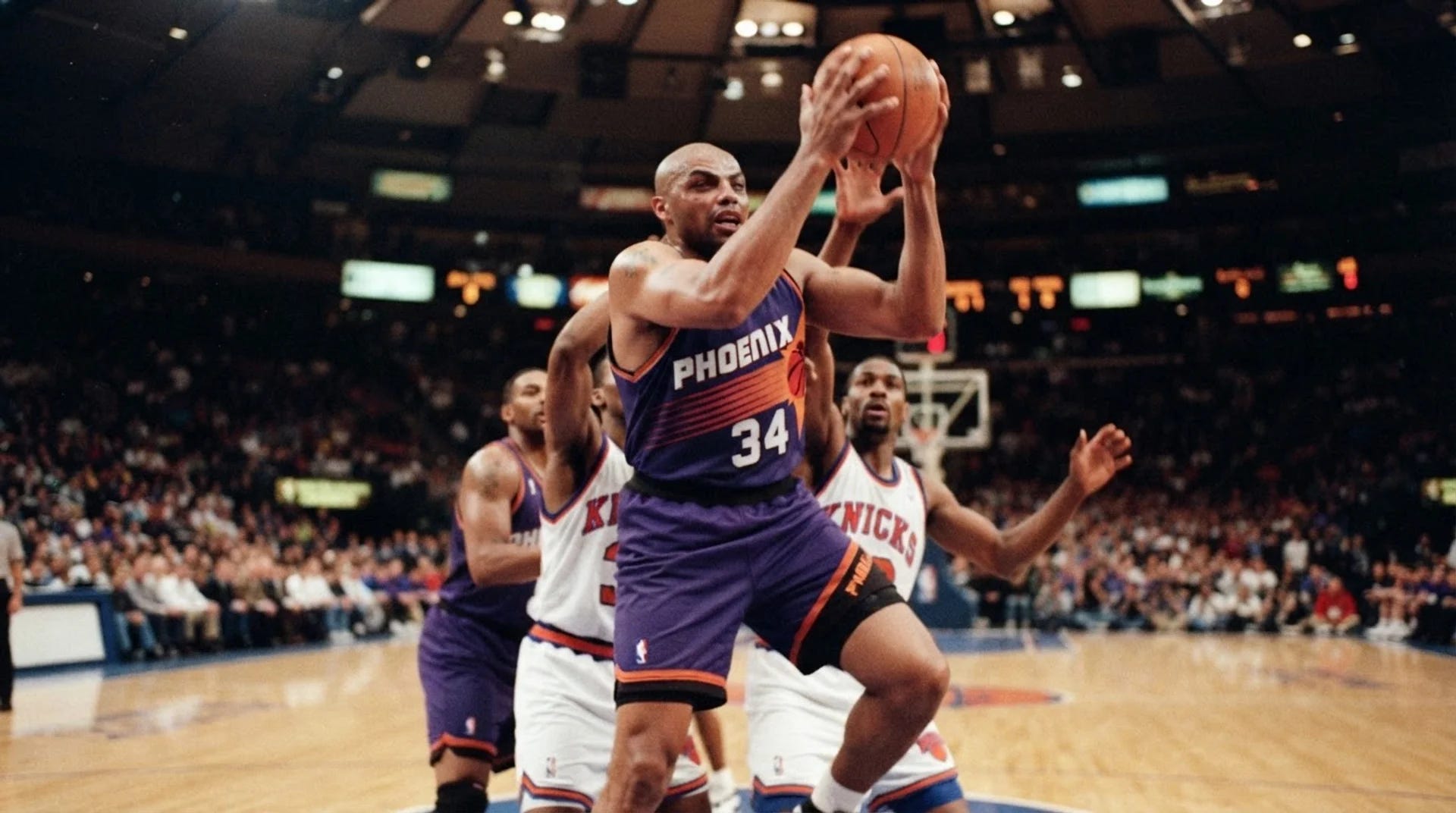
I just have solid structural strength and balance now. Despite the fact that I do not have much definition nor particularly big muscles. A bit like a young Charles Barkley or Shaq.
Barkley was one of the best rebounders in the league at a modest height of 6’6” while not being a very good jumper and hating to go to the gym. How?
The guy was naturally wide & structurally solid.
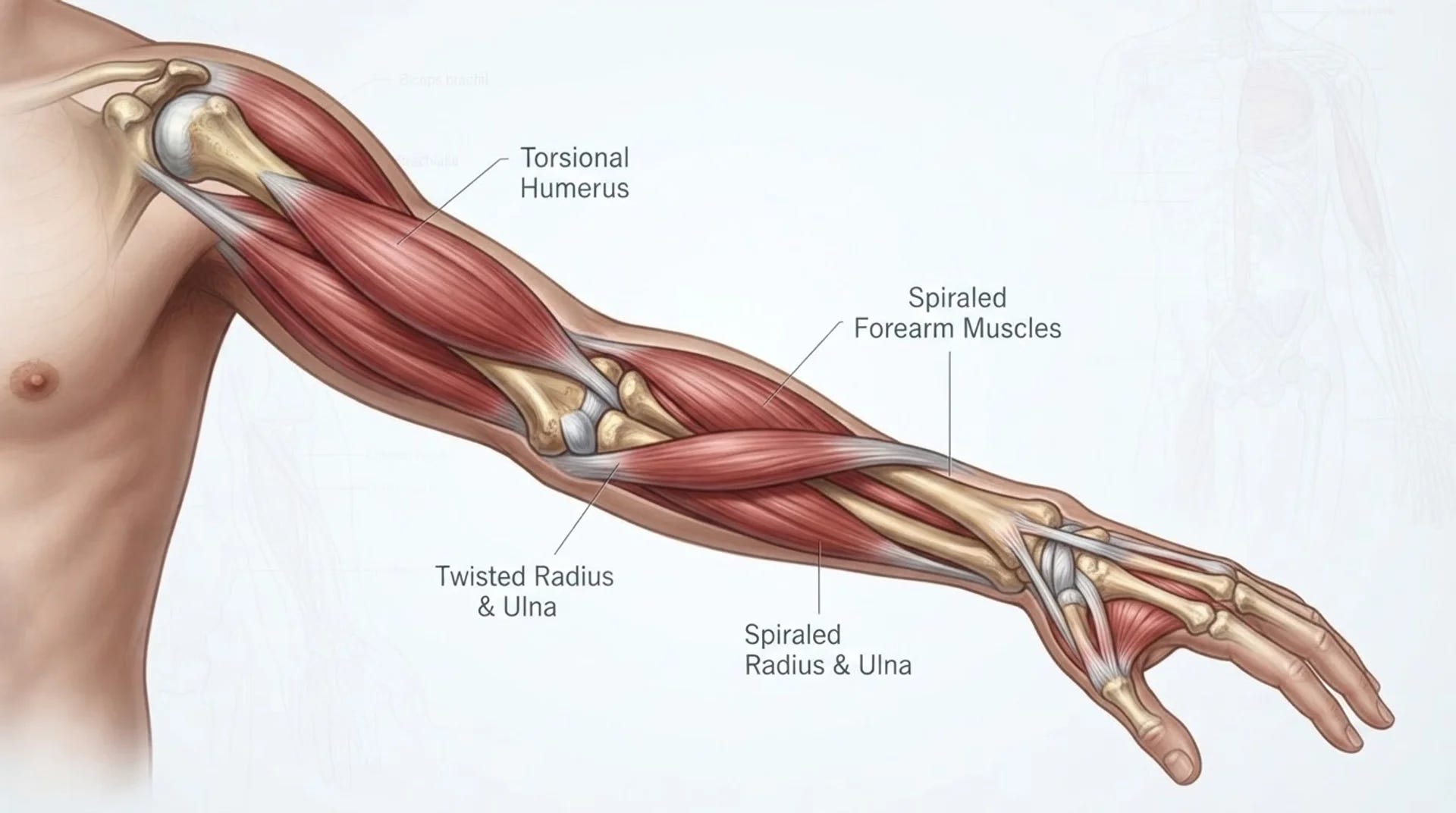
On a compensated body, everything is twisted
This is what all these gym bros don’t account for.
Most adult bodies these days are operating in a state of chronic compensation — the skull has deflated to some degree, the spine has adjusted around it, the pelvis has rotated to manage the imbalance above it, and every joint downstream is sitting slightly off from where it was designed to be.
It’s not a major visible deformity in most cases, rather it’s subtle. The person still looks like a relatively healthy person. Kinda like me in college.
But when you load a body like that with heavy training, you’re not building muscle on a straight frame. You’re building muscle on a compensated one.
And you’re probably twisting the frame further.
You might get a little bigger, sure.
But you get bigger in the shape your compensation pattern dictates, not in the shape your body was actually designed to take.
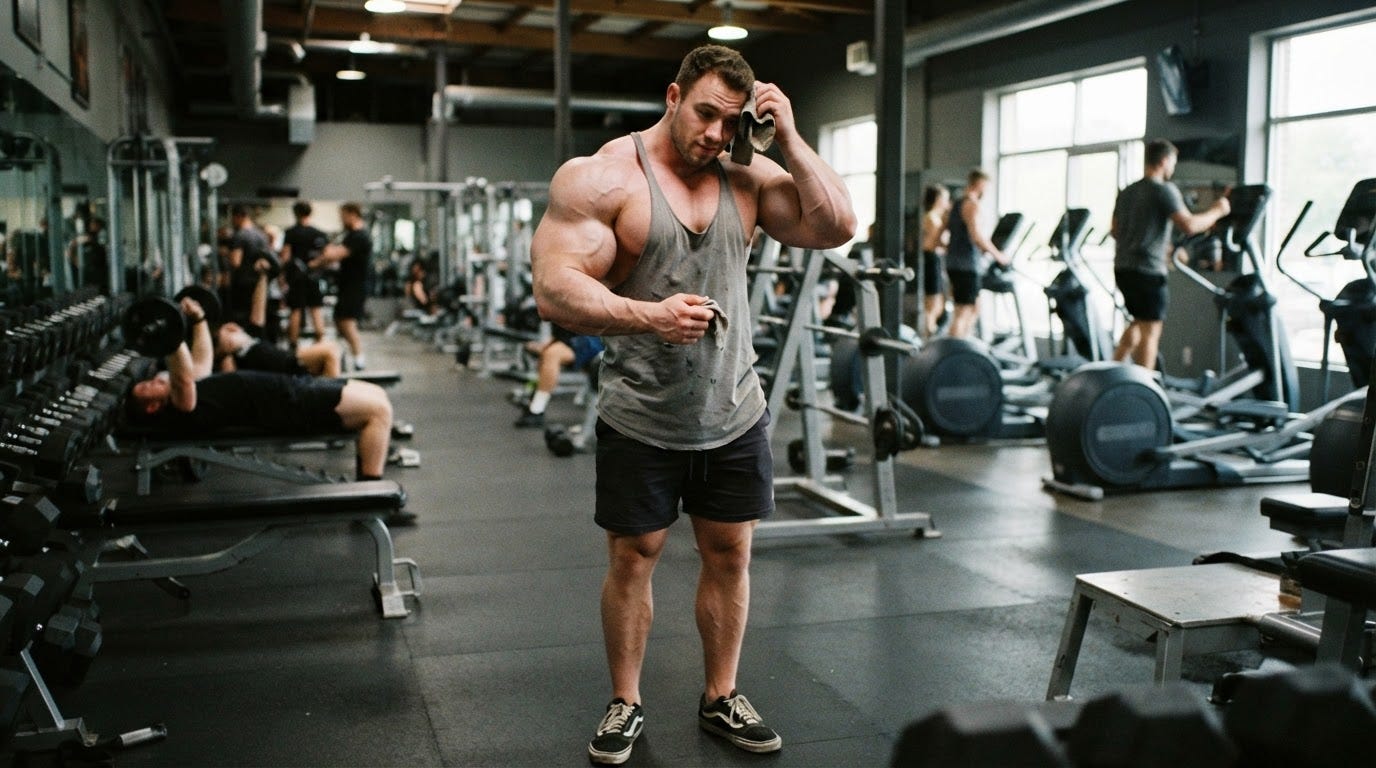
This is why a lot of serious lifters look a bit strange
I think this explains something a lot of people tend to notice about ‘gym bros’.
Guys who spend years in the gym, lifting seriously and consistently, often end up looking oddly rigid — inflexible, boxy through the torso, with a kind of asymmetry or stiffness to how they carry themselves that doesn’t quite look right.
Sure they’re pretty strong. But something about the proportions feels slightly wrong, and they usually move like it too — for example they walk a bit funny.
I think that’s the direct result of building a large amount of muscle on top of a skeleton that was never allowed to correct in the first place.
The muscle mass gets locked in around whatever twist was already present, and the more muscle you add, the more that twisted pattern gets reinforced and harder to unwind later.
What you should instead do
Rather then investing a ton of time in the gym, my experience tells me you first need to focus on straightening out the skeleton.
And the way you do that is by inflating the soft tissue with this biomechanical process. It inflates a bit like a balloon as I wrote here:

When you straighten out the skeleton I think a lot of good muscle mass starts to develop almost effortlessly.
Flexibility improves. Strength improves.
And instead of moving funny.. you’re moving more fluidly.
Your ability to play sports improves rather than getting hindered by inflexible muscles like what happens to a lot of the ‘gym bros’.

My extreme take
I actually don’t think the human body was designed to have to be able to touch weights at all.
Not if you take your biomechanics to the end.
Because it was designed for perfection. Like a brand new Ferrari.
You don’t start changing all the parts on a new Ferrari because the existing parts were designed to work extremely well together.
For example the minute you put bigger tires on you’re going to have tradeoffs in how the car handles. etc.
And so I quite literally never plan on picking up a weight again for the rest of my life. Simply because I think we’re gonna conclude one day that it was just never actually needed.

Closing thoughts
I think the fitness industry has spent decades optimizing the muscle-building side of the equation — sets, reps, protein, recovery windows — while completely ignoring the skeletal and soft tissue side that determines what shape all that muscle actually gets built into.
You can build pretty well around a good frame.
You cannot build very well on top of a bad one; you just build a bigger version of the same distortion.
Inflate the soft tissue, let the skeleton correct, and your body will move towards perfection over time. Because it was designed for it.
That’s the difference between getting bigger and actually getting better.
Such a good piece!
Gym bros often look like adult babies to me; often lacking masculine facial features and relying on chemicals to stay alert to work out - and consuming protein drinks with sweeteners like stevia, correlated with a decrease in fertility! 😢 🏋🏽♂️
Do you have any examples of modern men who have taken biomechanics to the end and are healthy and fit?
I feel like they’re probably in small villages in Europe and Africa and elsewhere ; men who haven’t faced soft modern foods, dental work or narrow shoes etc - curious if you have examples of men - or women - that you think of as “healthy” on all levels!
Thank you! 😊