

Youtube
I think I get at least 1-2 questions per day asking if it is ok to do braces while doing Reviv.
And so no it is not ok in my view.
But I think it’s important to explain in a bit more depth why braces are bad so that you understand the logic behind why I say it is bad.
What Do Braces Do?
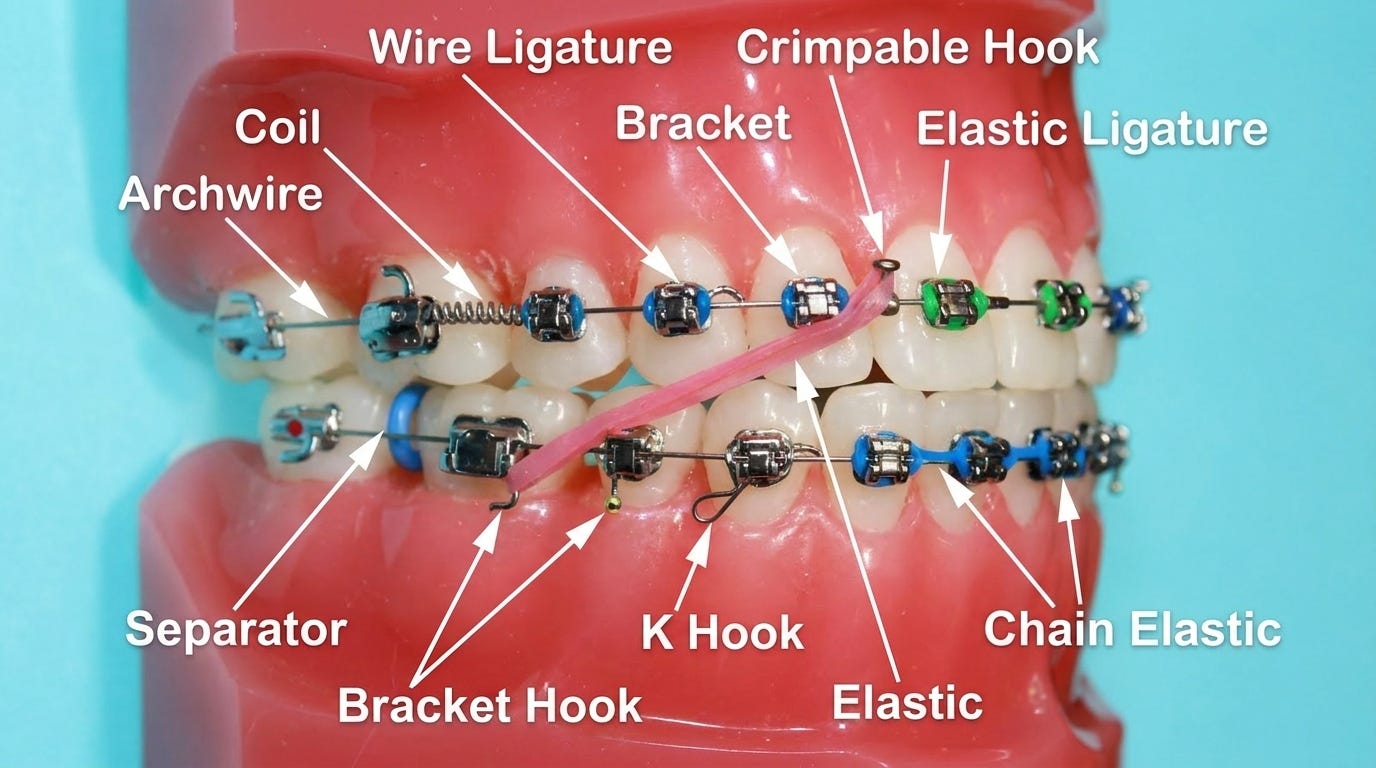
Braces work by applying constant pressure to teeth over time, gradually moving them into desired positions. This process involves several components working together:
Brackets attached to each tooth serve as anchors
Archwires connect these brackets and provide the directional force
Elastic bands often supplement this force, helping align the jaw and bite
The ‘belief’ is that this will then trigger bone remodeling - as pressure is applied to a tooth, bone cells called osteoclasts break down bone tissue on the compression side while osteoblasts build new bone on the tension side.
And this allows teeth to move through the jawbone.
This also alters the relationship between your upper and lower jaw.
What Are the Different Types of Braces?
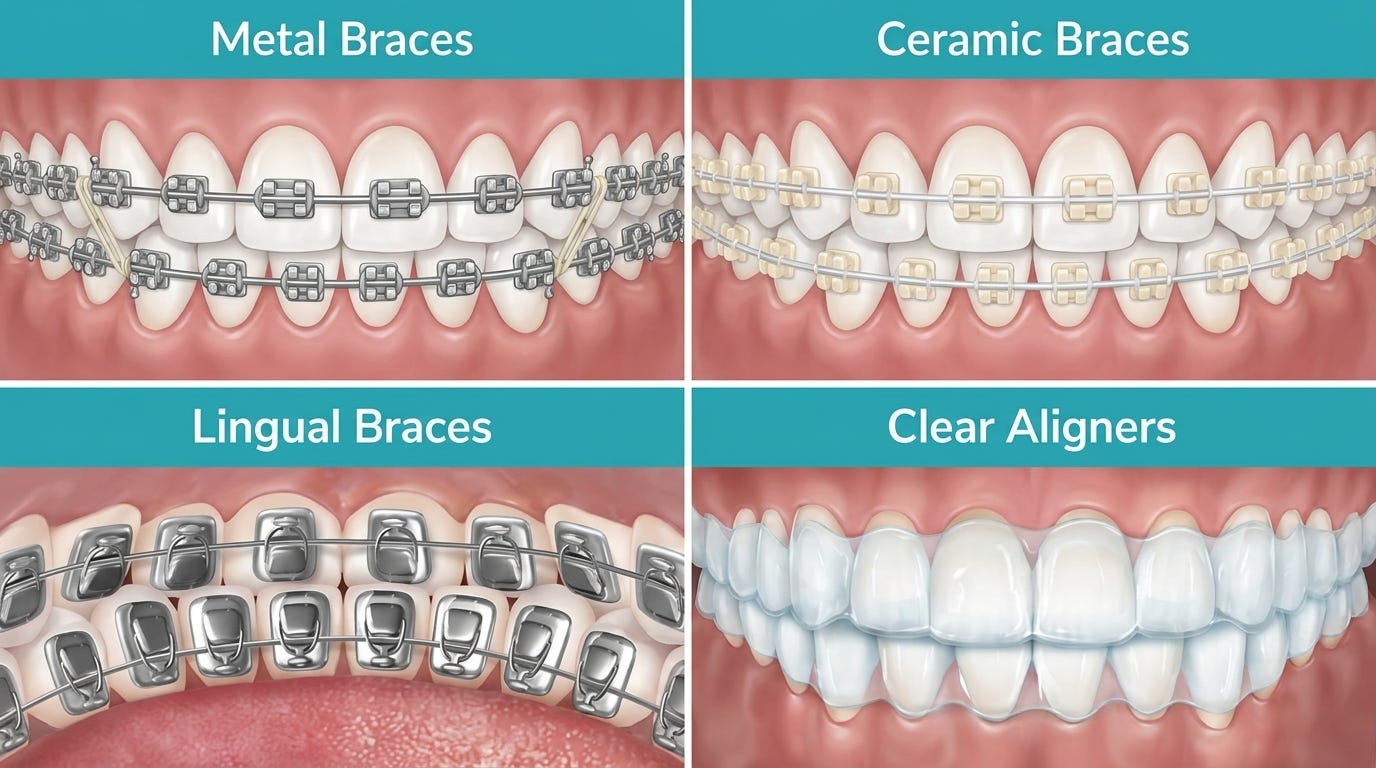
Modern orthodontics offers several options beyond traditional metal braces:
Metal braces: The traditional option using stainless steel brackets and wires
Ceramic braces: Function like metal braces but use tooth-colored or clear materials for a less noticeable appearance
Lingual braces: Attached to the back side of teeth, making them nearly invisible
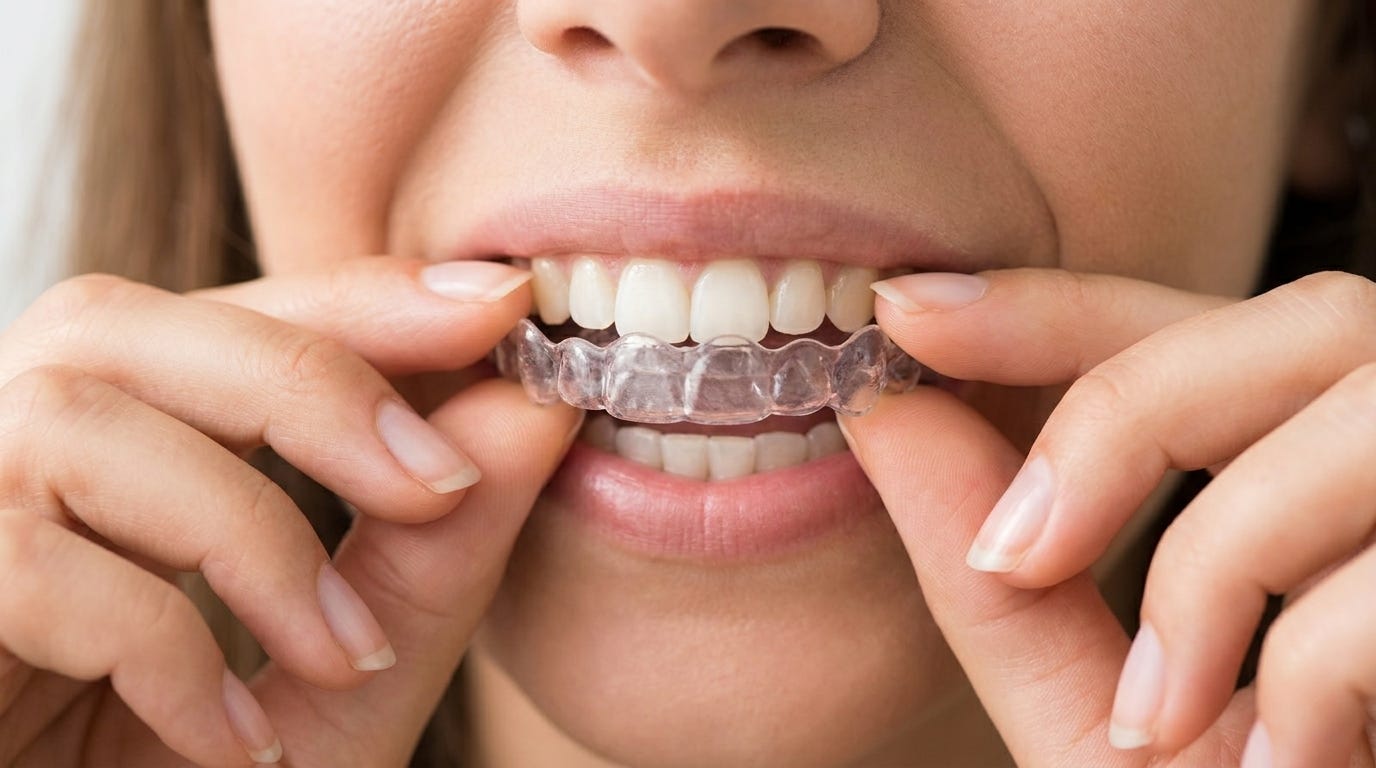
Clear aligners (like Invisalign): Removable plastic trays that gradually shift teeth
While clear aligners might seem like a more gentle alternative, they operate on the same fundamental principle - applying pressure to move teeth.
Are some braces better than others?
From a biomechanical perspective, they all present the same problem. They are unnaturally moving teeth to a place where the skull does not want them.
What Typically Happens When You Do Braces?
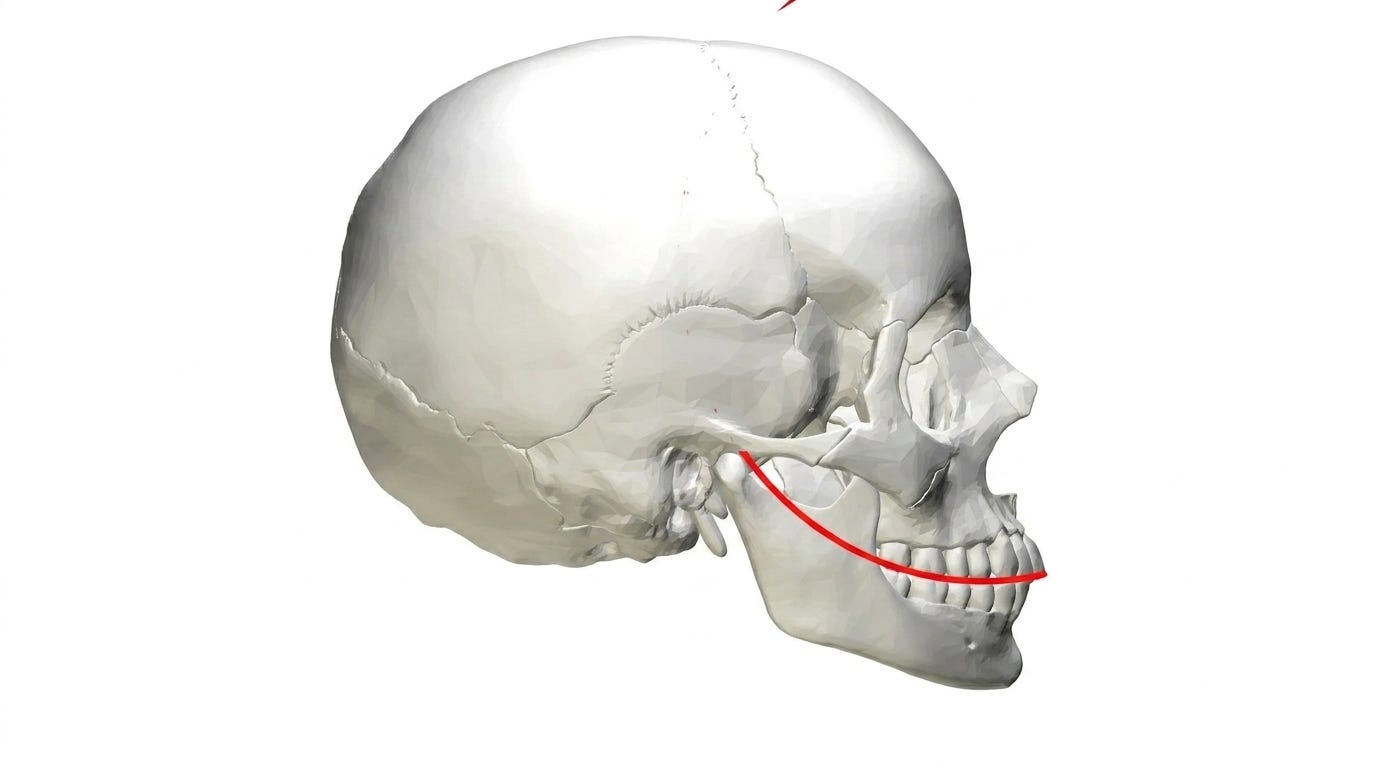
Braces will typically flatten the curve of spee that I talk about. But let me explain this a bit because you probably envision a more direct relationship than what I think actually happens.
It is not that the braces directly yank the back teeth down to flatten the curve.
Rather it is more that the braces are moving the teeth with complete disregard to how a healthy occlusion works. And this is something I explain at length in this article:

On a healthy mouth the jaw is supported in various ‘lingual’ positions by the jaw and the cusps of the teeth.
When you nod your head forward the jaw moves a bit forward and is supported. When you lean your head backwards the jaw goes backwards and the upper & lower teeth come together in a different position.
And even if your teeth are crooked beforehand these positions are most likely supported. Because they will have evolved naturally that way.
But dentists and orthodontists do understand this. Because when they put on the braces they just care about how the upper and lower jaw come together in a single rest position.
And they unwittingly screw up the other positions.
When you screw up the other jaw positions this then screws up the soft tissue. In a very similar way to how veneers or indexed splints screw it up.
And the result is biomechanical collapse (ie. skull collapsing inwards on the brain and deranging and skeleton twisting).
What typically happens after you wear braces
When you put on braces you will typically begin the collapse process as soon as the teeth are moved sufficiently to screw up the other jaw positions.
Then later on when you remove the braces you will typically wear a retainer.
This retainer holds the new position of the teeth, which no longer supports the healthy bite positions and rather locks a single bite.
As a result the person continues to worsen as they wear the retainer, which is often for years.
If the retainer is removed than the natural forces of the mouth will move the teeth over time to a place where there is more stability for the skull (ie. jaw positions will be better supported). But that entire time the person will be in biomechanical collapse.
The exception to my braces rule
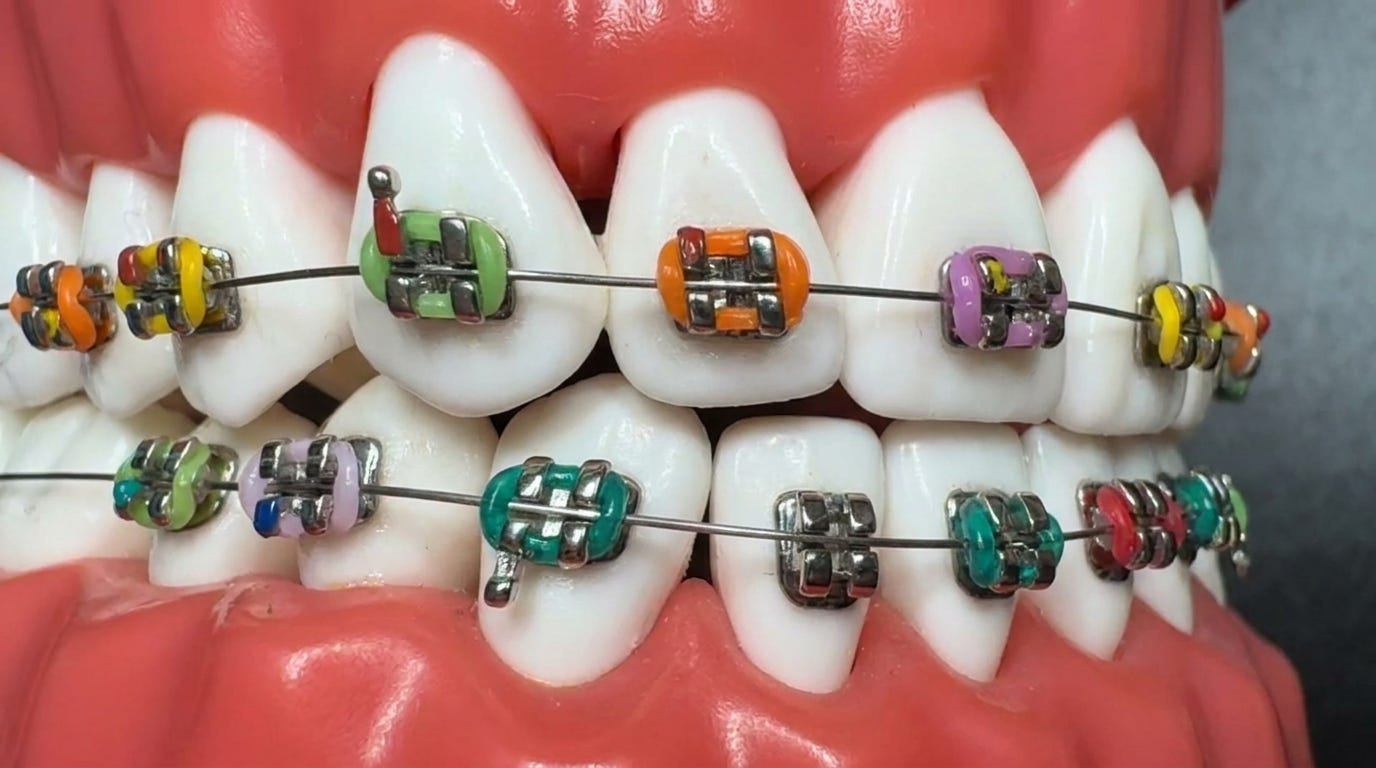
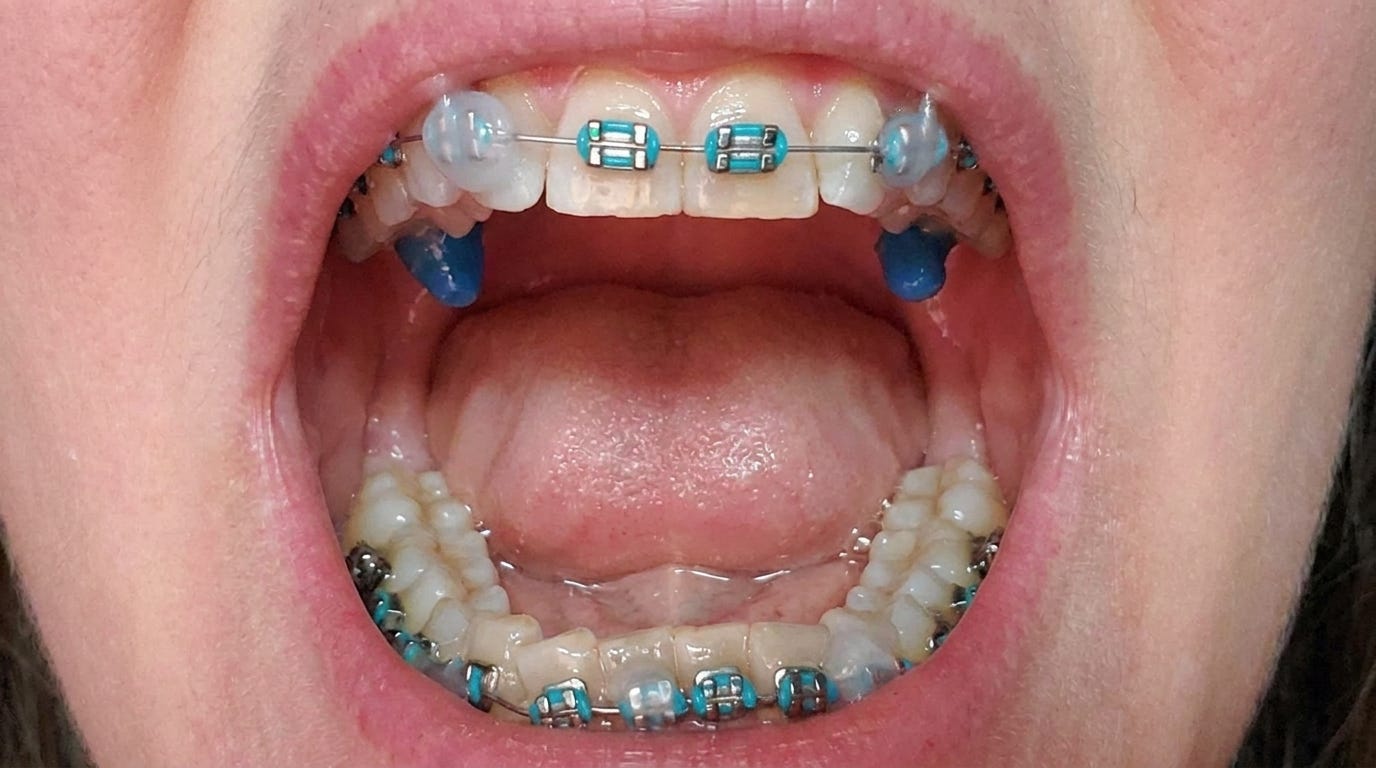
Some orthodontists use composite ‘turbos’ when applying braces. These are these blue things in the pic above.
When you use these you are essentially putting the bite on a single, flat contact. And flat contact with increased vertical abides by my two rules for reversing biomechanical collapse.
In a way you can view it as a sort of ‘hack’ that can subsitute for having the proper jaw positions supported by the cusps of the teeth.
And so I would not be surprised if the people that did braces with such turbos did not experience biomechanical collapse and perhaps even improved a bit while wearing them. Despite the fact that their teeth were being moved to the wrong position.
This is something I’d love to understand better in the years ahead as I don’t yet have enough exampes to look at.
Also note that once the turbos are removed… then this person will most likely be in biomechanical collapse until the skull achieves some new stability point.
Can You Wear Braces While Wearing a Mouthguard?
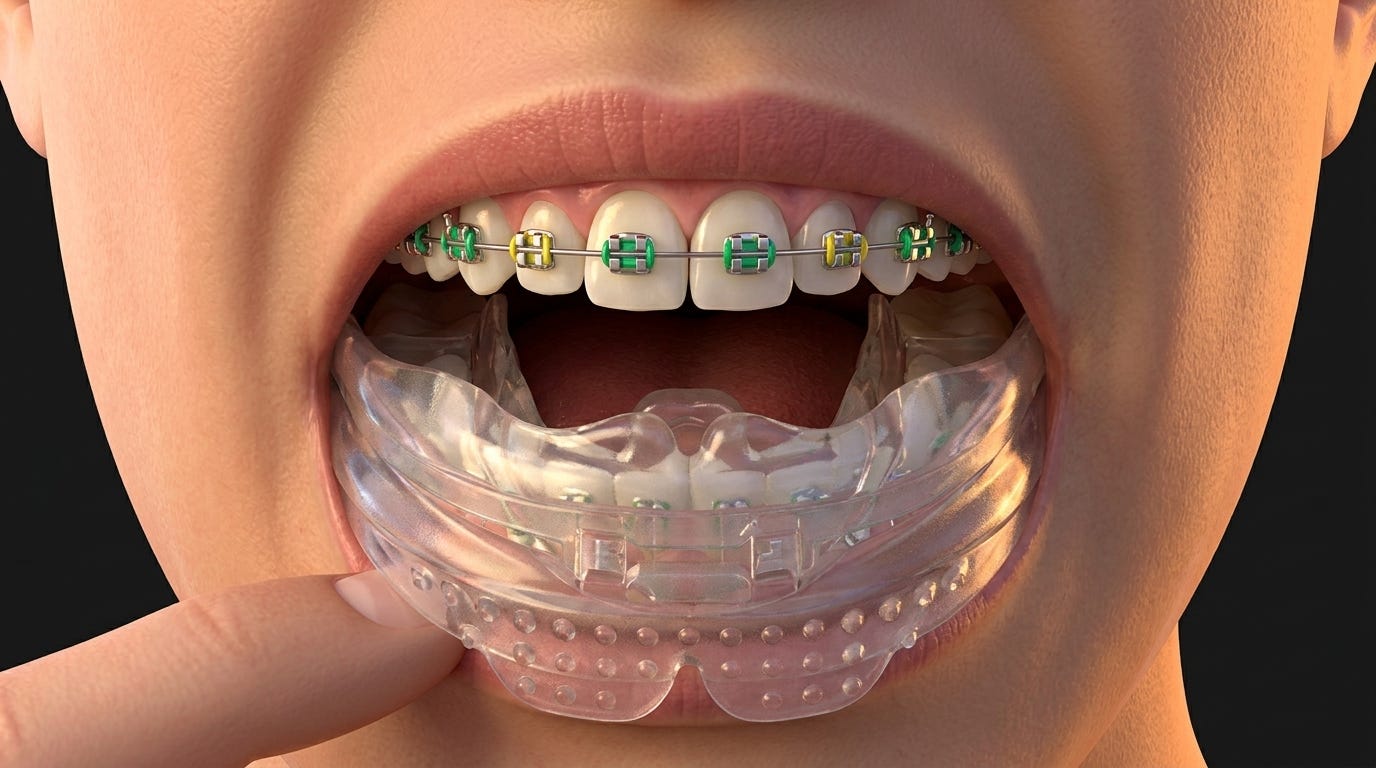
If you're considering Reviv it's important to understand that braces and Reviv work in fundamentally opposing ways.
Reviv aims to stretch the soft tissue surrounding the skull and jaw, allowing proper expansion and repositioning of cranial bones. The teeth ‘go for the ride’ as the cranial bones and jaw move to healthier positions.
Braces works the opposite way… by trying to apply force to the teeth and thinking that the bones and jaw will ‘go for the ride’. The problem is that the ride they will go for is the type that drives you right into a brick wall. lol
And so wearing braces while doing Reviv would be counterproductive - like trying to drive with one foot on the gas and one on the brake.
The opposing forces would likely negate any benefit and potentially create new problems. It’s a bit like wiggling a tooth loose in my mind. You’re applying forces from potentially opposing directions and therefore going to loosen the teeth. Not a good idea.
For those already wearing braces it’s better to just finish it or take them off before starting Reviv. And using Reviv instead of the retainer.
A number of folks in our community have taken this step and the ones I am aware of are all doing well.
Closing thoughts
Orthodontists have a fundamental flawed assumption. They believe that the human body is ‘stupid’.
Meaning they think that teeth are simply out of position and so they can move them without any major repercussions.
I take the opposite assumption.
I believe the human body is extremely smart, especially in how it compensates to keep us alive. And it puts the teeth exactly where it wants them to be because of various engineering reasons (eg. the stability of your skull and spine).
Thinking you can just move them around to make them look prettier is outright stupid to me.
My general rule is… “A tooth that is untouched by a dentist is exactly where the skull wants it to be. Regardless of how not pretty that is.”
And I literally think that braces as we know it today will be considered illegal in the next decade or two. Because it will cause some level of biomechanical collapse almost every time.

I had braces from age 10-13. I am 25 now. Looking at my childhood photos, my face changed almost immediately after getting them. My jaw looks narrower and assymetric. My eyes and cheeks are also drooping. My face look ever worse over time especially after removing my wisdom teeth. Can reviv fix how I look and reverse the damage caused years ago?
Great article, Ken! Regarding 'teeth are where they want to be'... so if they are wonky, it is because they are compensating for other structural problems, which must be addressed via Reviv etc in order for the teeth to then be willing to move to a more aesthetic location. I think your analogy of what goes along for the ride is perfect.