

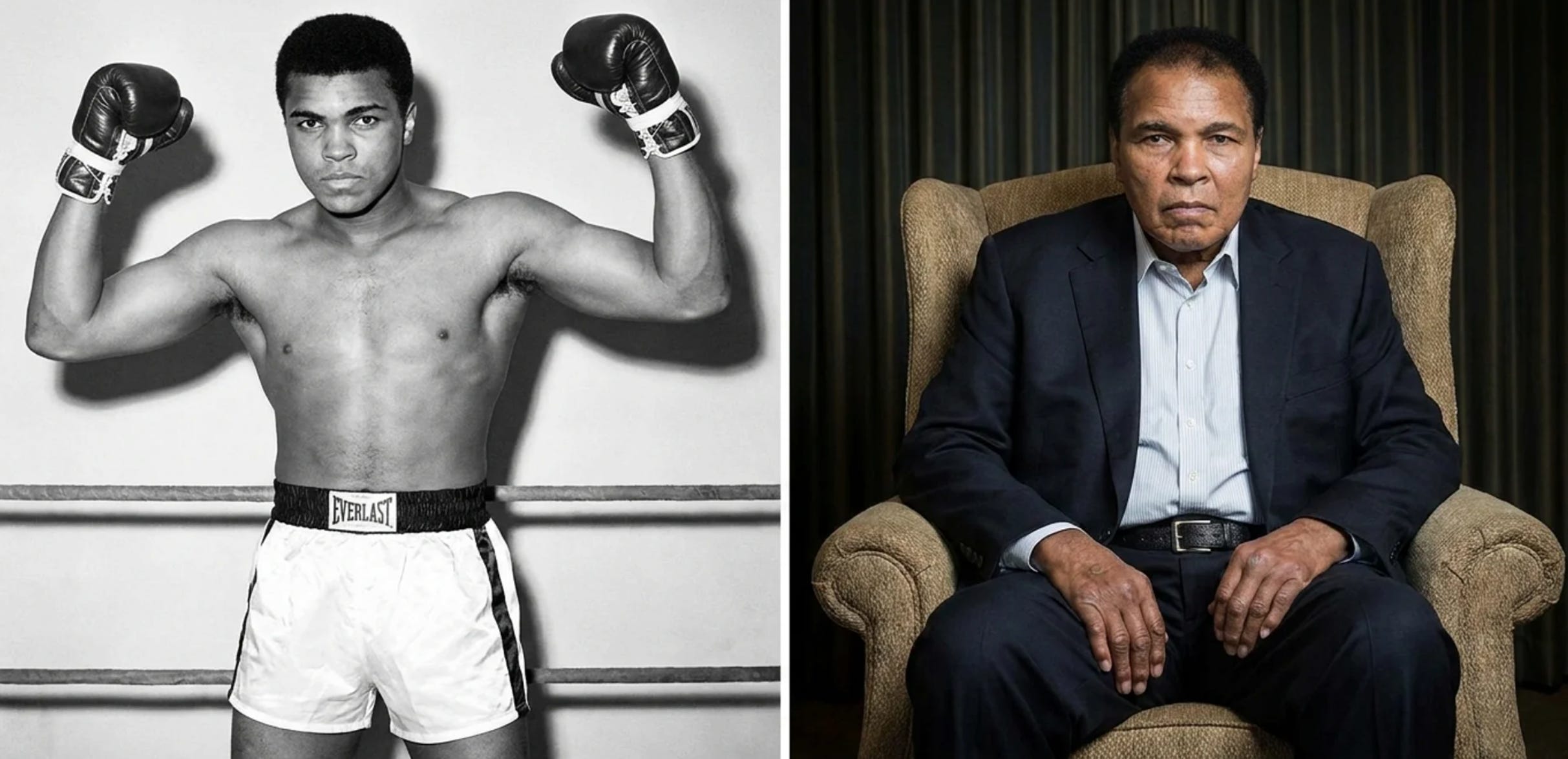
Muhammad Ali is one of the most studied athletes in history.
He was an amazing athlete when he was young and yet he was diagnosed with Parkinson’s (a neurological disease) at only age 42.
Something went obviously very wrong during those intervening years… so did he change his teeth?
Or was it as many concluded…. that he just got hit in the head too many times?
Or perhaps it was something else?
Let’s explore that question to see if we can shed any light on it.
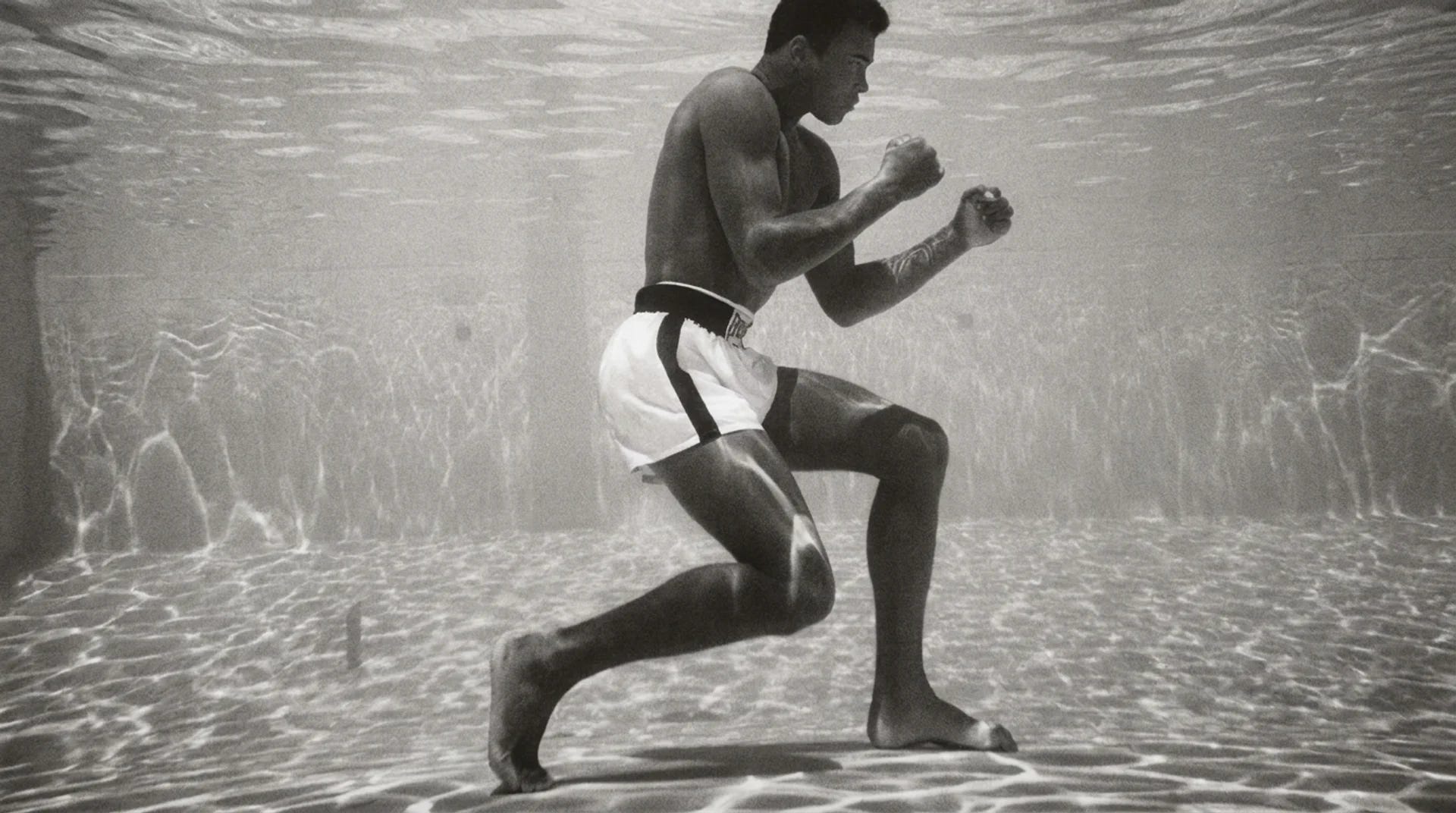
At the start of his career Ali had elite biomechanics
Before anyone talks about his decline, it’s worth remembering just how physically gifted Ali was at the outset.
He was famous for a combination that almost never exists in heavyweight boxing — blinding hand speed, footwork more associated with lighter divisions, and reflexes good enough that he could lean back from punches other fighters simply couldn’t see coming.
“Float like a butterfly, sting like a bee” is how he liked to describe it.
But no doubt he guy had superb biomechanics. That is the only way that you achieve that type of quickness and dominate a sport like boxing.
And not only that but his mental quickness also exhibited his gifted biomechanics. The guy could talk sh*t with the best of them.
With a famously poetic way of putting words together at times.
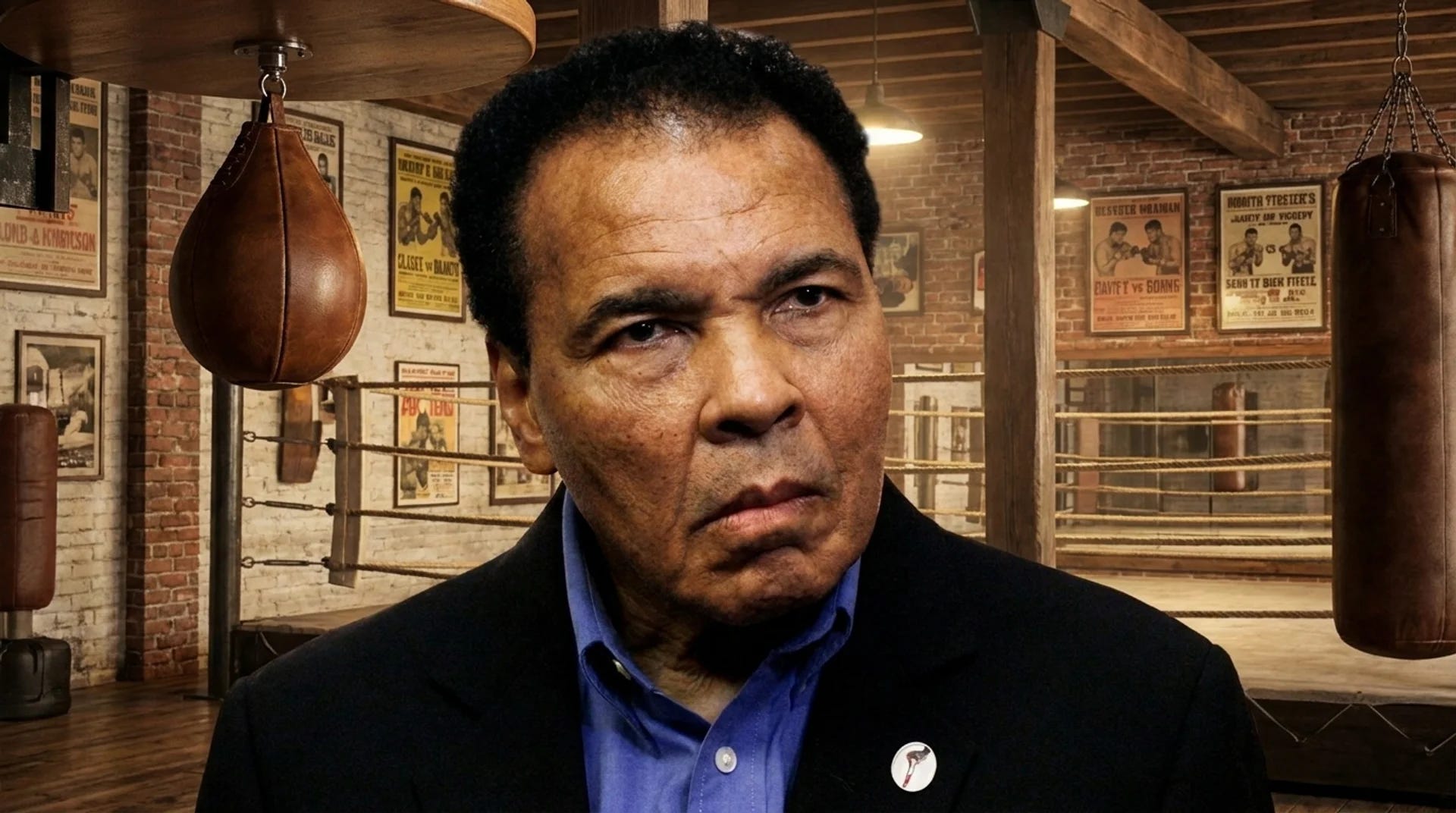
The Ali who left boxing was a different person entirely
By the early 1980s, he was a completely different person.
His speech had slowed. His movement had stiffened.
He was diagnosed with Parkinson’s syndrome in 1984, just three years after his final fight.
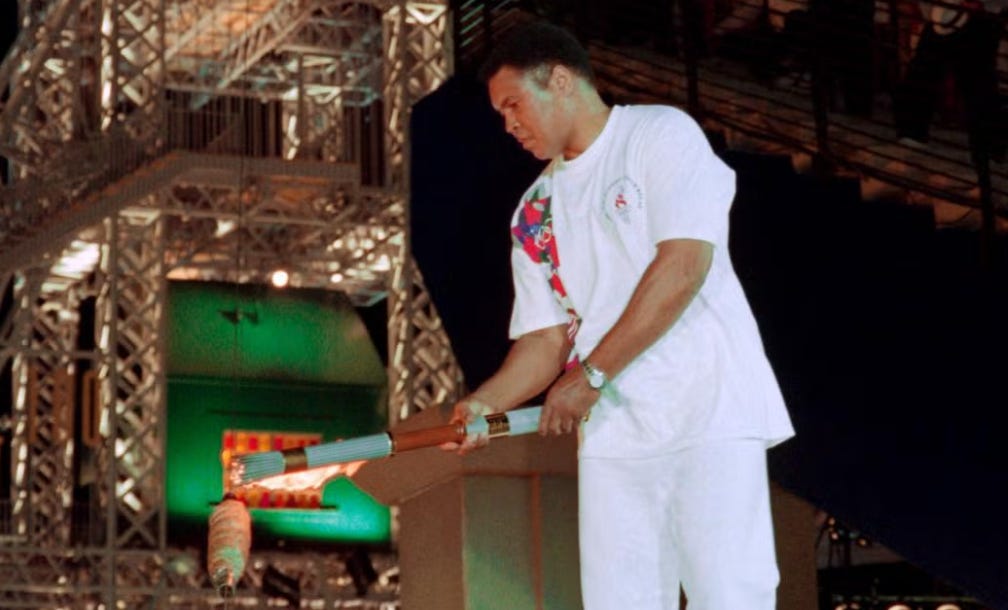
And the decline from there is well documented — the tremor, the mask-like face, the diminishing mobility that the entire world watched play out over decades, most visibly when he lit the Olympic torch in 1996, visibly shaking in front of a global audience.
The official story has always been Parkinson’s, generally attributed to the cumulative effect of thousands of punches to the head over a twenty-year career.
And I don’t dispute that repeated head trauma played a role in his neurological decline. But I don’t think it’s a complete explanation.
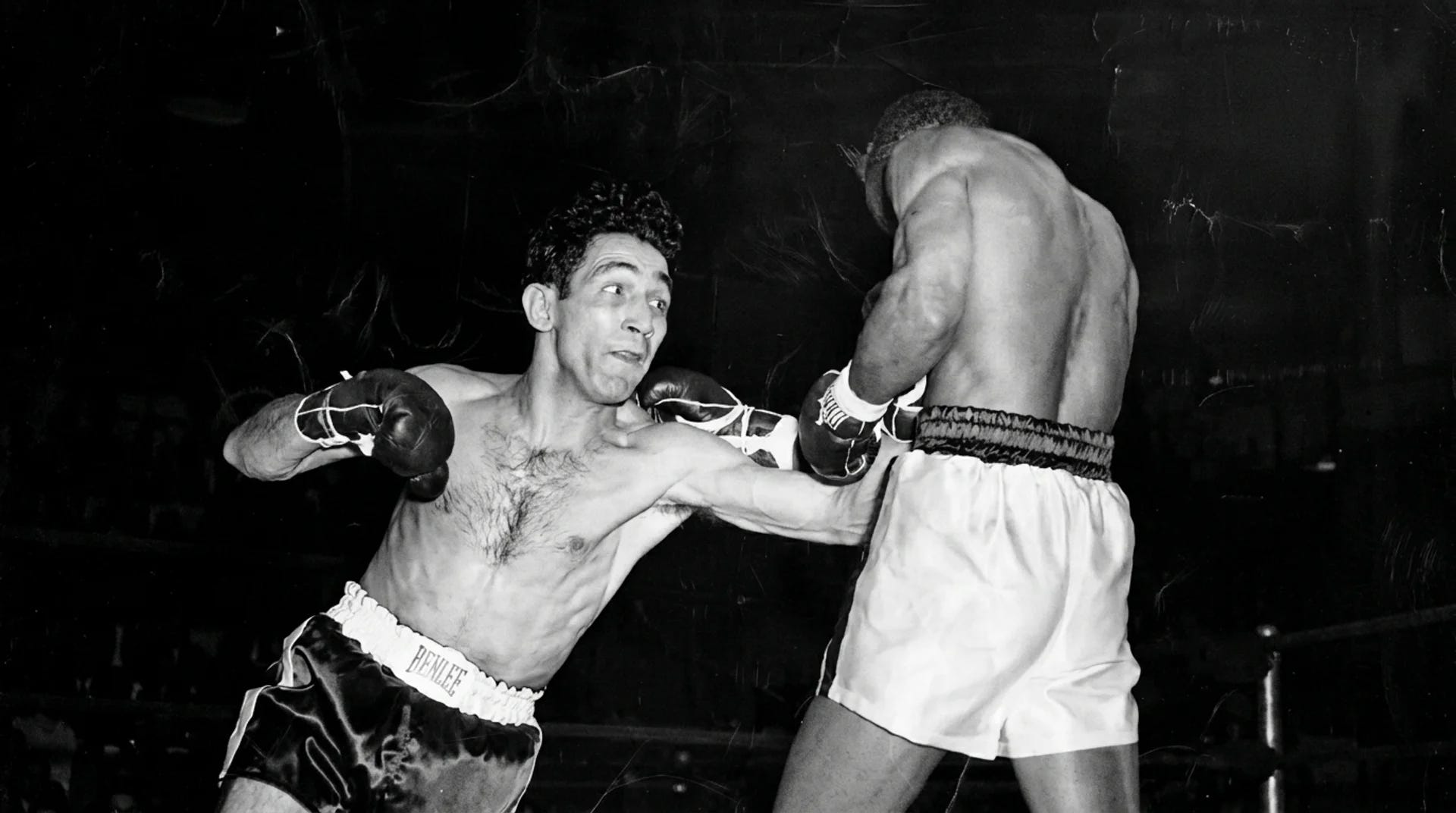
Willie Pep took far more punishment than Ali and aged well
If total blows to the head were the whole story, Willie Pep should have been in far worse shape than Ali.
Pep fought professionally from 1940 to 1966, racking up somewhere around 240 fights over his career — a number that dwarfs Ali’s 61 professional fights by a factor of four.
He fought constantly, sometimes multiple times a month, across more than two and a half decades in the ring. By sheer volume of punches absorbed over a career, Pep is one of the most battle-tested fighters in boxing history.

And yet Pep is remembered, for most of his life after retirement, as sharp, quick-witted, and articulate well into his later decades — doing interviews, telling stories from his career with total clarity, nothing like the visible, rapid neurological decline Ali experienced within just a few years of leaving the sport.
If cumulative head trauma alone drove Ali’s collapse, a fighter with four times the fight count and a career nearly ten years longer should have shown it far worse. But that didn’t happen.
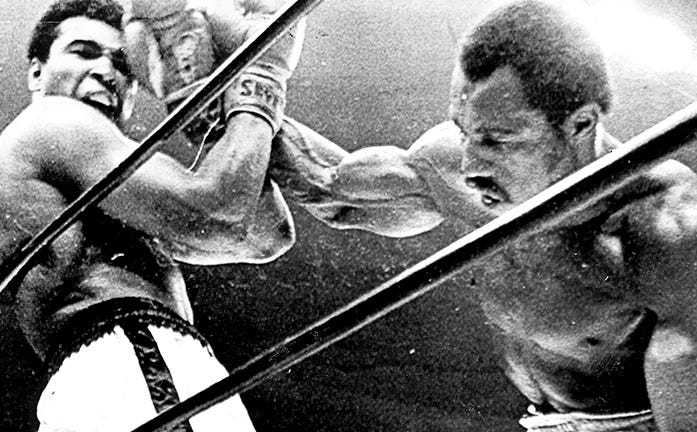
So what actually happened?
I don’t think there’s a single clear smoking gun, but rather a number of strong contributing factors.
Ken Norton broke Ali’s jaw in their first fight in 1973. Ali fought on with the broken jaw for the rest of the bout and lost a decision.
A broken jaw is not a minor thing — and likely shows that there were some structural faults beforehand that allowed the jaw to break.
Plus from what I understand fixing a broken jaw will typically change the bite afterwards. So I think you can safely assume that after his jaw was broken Ali was in a faster cycle of collapse as the bite had been unnaturally altered.
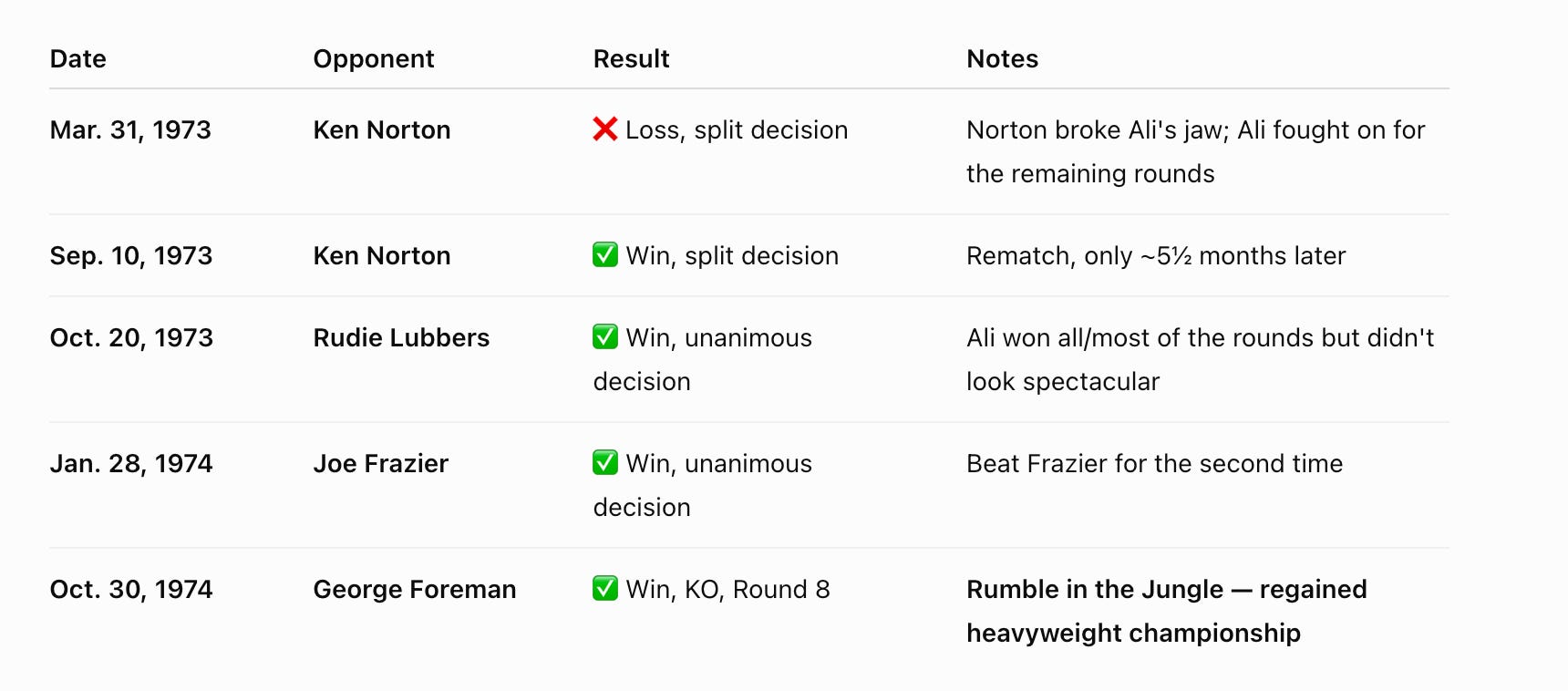
But that decline often takes a few years to manifest itself. And so he actually won his next few fights in the following couple years, but by 1976 he was already in clear decline.
So it likely took a few years for the structural deterioration to accumulate to the point of making it very difficult for him to perform at his previous level.
And do you know where this sounds familiar from? From a lot of the stories i hear of folks that did braces.
They rarely see a direct athletic impact in the first couple of years but it is the years after that in which the damage manifests itself the most in their performance/function.
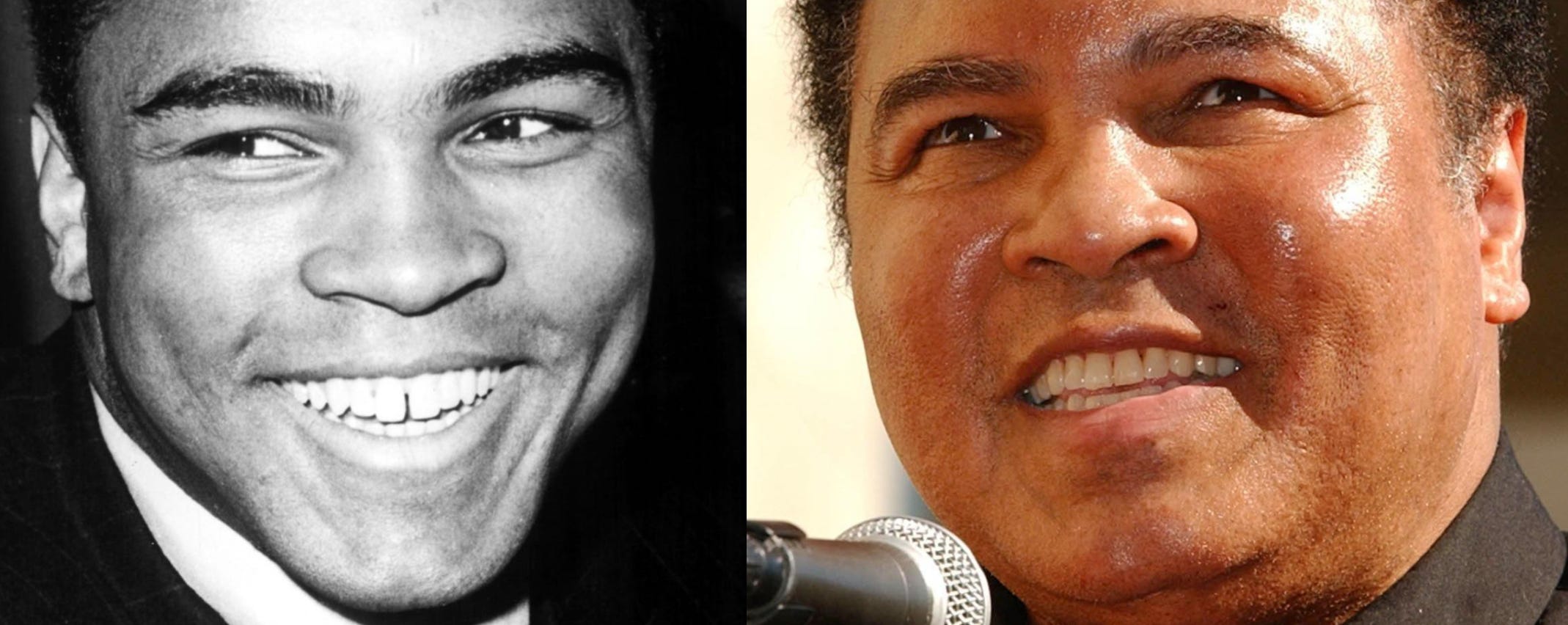
Ali’s changing bite
Then there’s the dental side of the picture.
Public photos of Ali across the decades show a major change in his smile and jaw alignment that go well beyond what you’d expect from simple aging.
When I look at the pics above I see a major flattening of the curve of spee.
But did it come because of some dental work that we don’t know about because it’s not in the public record? Maybe.
Or maybe it was just the ongoing decline after breaking his jaw and continuing to get hit many times on an unstable cranial foundation.
Also what role did the Parkinson’s play in changing his bite? Though in my hypothesis Parkinson’s is more likely a function of flattening the curve of spee rather than a cause.
And i’m confident that you’ll probably find that most folks that suffer Parkinson’s have quite a flat curve of spee.
Closing thoughts
With Ali I just don’t think there’s a single smoking gun that we can point to.
Rather there are a number of clues & questions we can point to:
Why was his jaw unstable such that Ken Norton broke it in the first place?
How did fixing the broken jaw change his bite?
How much damage did getting hit in the head a lot following his broken jaw do?
Did he have some dental work that we don’t know about?
I’m not sure we’ll ever know the answers to these questions.
But what is clear is that his curve of spee flattened as his teeth changed completely and that took his body and his mind with it.
Ali fell victim to biomechanical collapse pure & simple.
Interesting loss of that front tooth spacing. Diastemma.
My jaw nearly broke in half from having a one inch cyst. That was from toxicity building up over the years.