

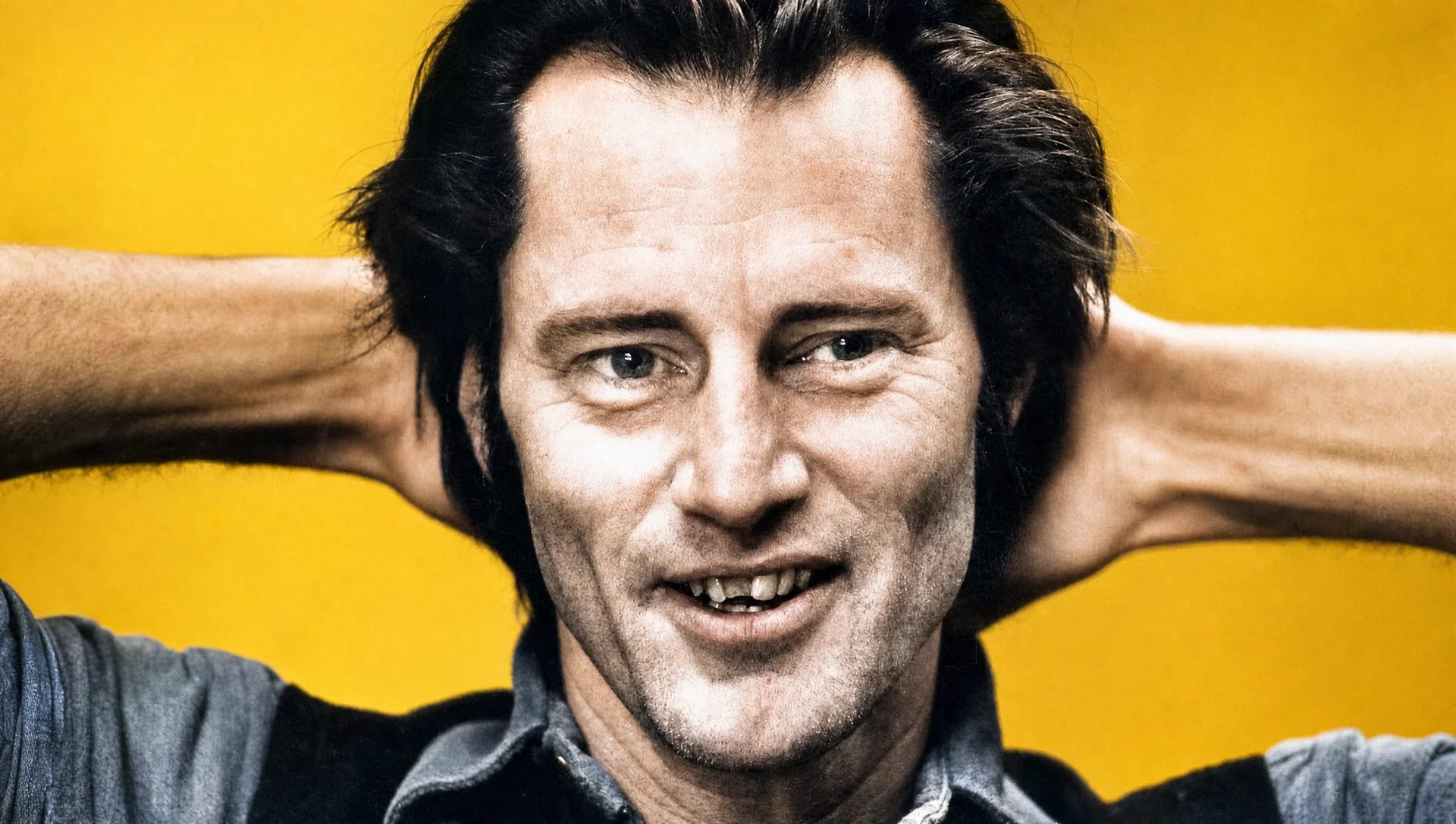
Sam Shepard’s crooked teeth were part of his legend.
A Pulitzer-winning playwright, Oscar-nominated actor, and the face of the American West on screen, he built a career on a smile that critics called snaggle-toothed.
Then, in his early sixties, he agreed to major dental work.
About a decade later, his health collapsed.
Coincidence? I don’t think so.
Who he was
Sam Shepard (1943–2017) had one of the more unusual careers in American entertainment. He was simultaneously a celebrated playwright, an Oscar-nominated actor, a screenwriter, and a director.
What’s particularly interesting is that he was actually much more accomplished as a playwright than as a Hollywood actor, even though many people today recognize him from his films.
He cultivated a distinctive image: the rugged, laconic American cowboy, often playing emotionally complicated men who seemed uncomfortable with modern society.
Shepard won the Pulitzer Prize for drama in 1979 for Buried Child and was nominated for an Oscar for playing Chuck Yeager in The Right Stuff.
He wrote dozens of plays, directed, played drums, and acted from Days of Heaven to Mud.
The teeth
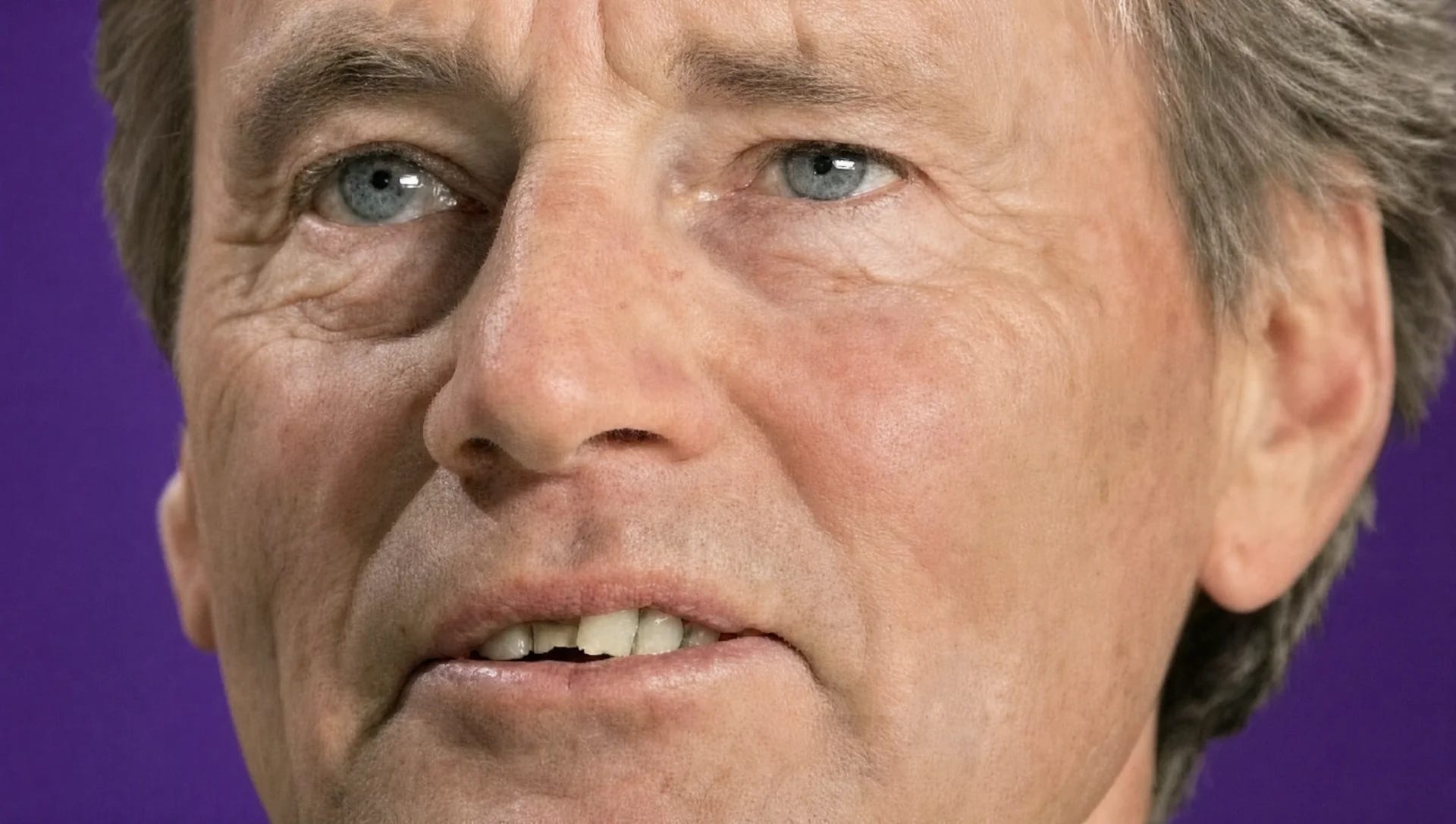
His teeth were famous.
In his own autobiographical writing, he describes a front tooth from childhood that was dead and brown and overlapped the broken one next to it.
A 2005 profile noted that his crooked teeth never seemed to get in the way of his acting career. Eva Marie Saint, who played his mother in Don’t Come Knocking, said she told him not to fix that crooked tooth.
For most of his life, he didn’t. Despite the fact that there must have been significant pressure to.
He always wanted the big smile
I found this one very interesting.
Sam Shepard wrote about his teeth in his 1982 book, Motel Chronicles, in a short autobiographical piece that is particularly revealing.
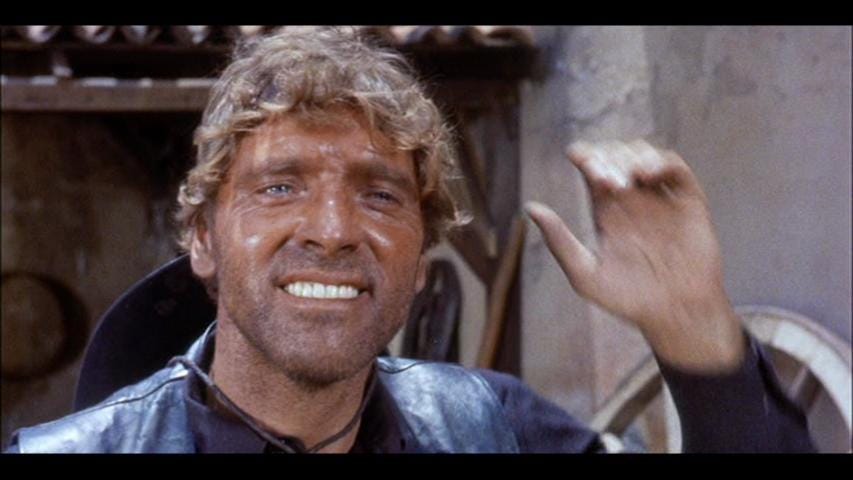
He described being fascinated by the smile of actor Burt Lancaster after watching him in the 1954 Western Vera Cruz, alongside Gary Cooper.
Shepard recalled spending days in his backyard practicing Lancaster’s big, confident smile.
Then he tried it out on girls at school. He wrote: “They would look straight at my teeth and a fear would creep into their eyes.”
He explained why:
“I’d forgotten how bad my teeth were. How one of the front ones was dead and brown and overlapped the broken one right next to it.”
He had become so accustomed to imagining himself with Lancaster’s beautiful smile that he temporarily forgot how his own teeth looked.
He continued:
“I didn’t want to scare anyone so I stopped grinning after that. I only did it in private.”
And the passage ends with a particularly poignant line:
“I returned to my empty face.”
The dental work
Around 2005 or 2006, when he was about 62, Shepard agreed to major dental work.
After six decades with the teeth he was known for, he sat down with a dentist to have his top teeth rebuilt.
He asked for them to be replicated, snaggly and uneven just as they were, but the dentist pushed for a more conventional, “nice” result.
We know this from his longtime friend and bandmate Peter Stampfel, who wrote about it in a tribute published in February 2018. Stampfel was going through a reconstruction of his own at the time, with implants in his entire lower jaw, and says the same thing was happening with Sam. The details of Shepard’s procedure aren’t public.
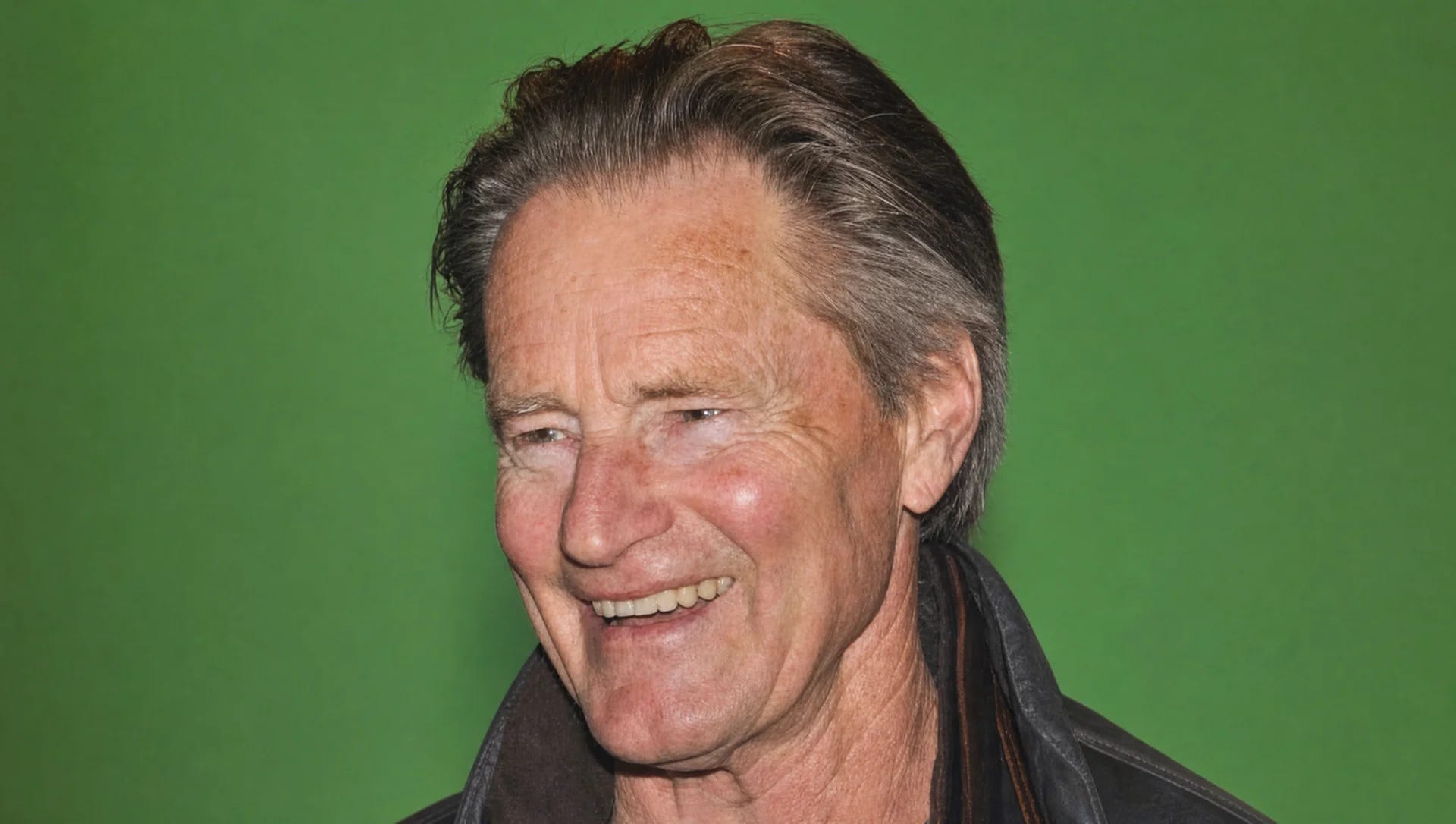
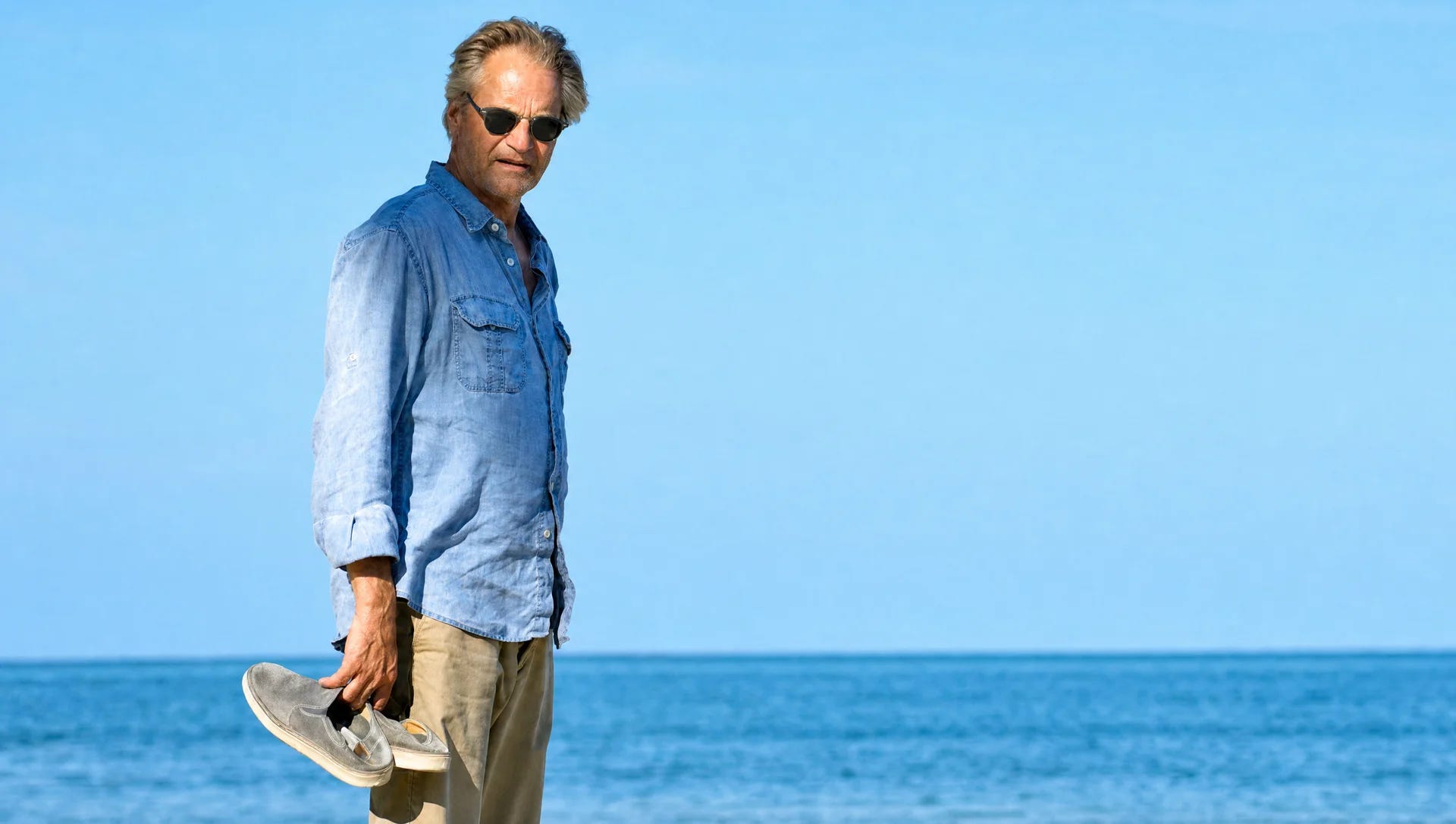
A few years later, a fan site noted in 2009 that Shepard had finally gotten his chipped tooth fixed, with a rumor that a horse had kicked him and sent him to a dentist.
This picture above, believed to have been taken in 2009, is a clear indication that he did end up having his teeth fixed/changed quite significantly.
The decline
Shepard developed ALS (also known as Lou Gehrig’s disease in his late sixties.
It is a progressive neurological disease that damages the nerve cells responsible for controlling voluntary muscles. And remember what I wrote here:

My hypothesis is that pretty much all neurological diseases are biomechanical in root cause. Because they are a function of the skull collapsing in on the brain.
Photos from 2016 already showed atrophy in his hand, a hallmark of the disease.
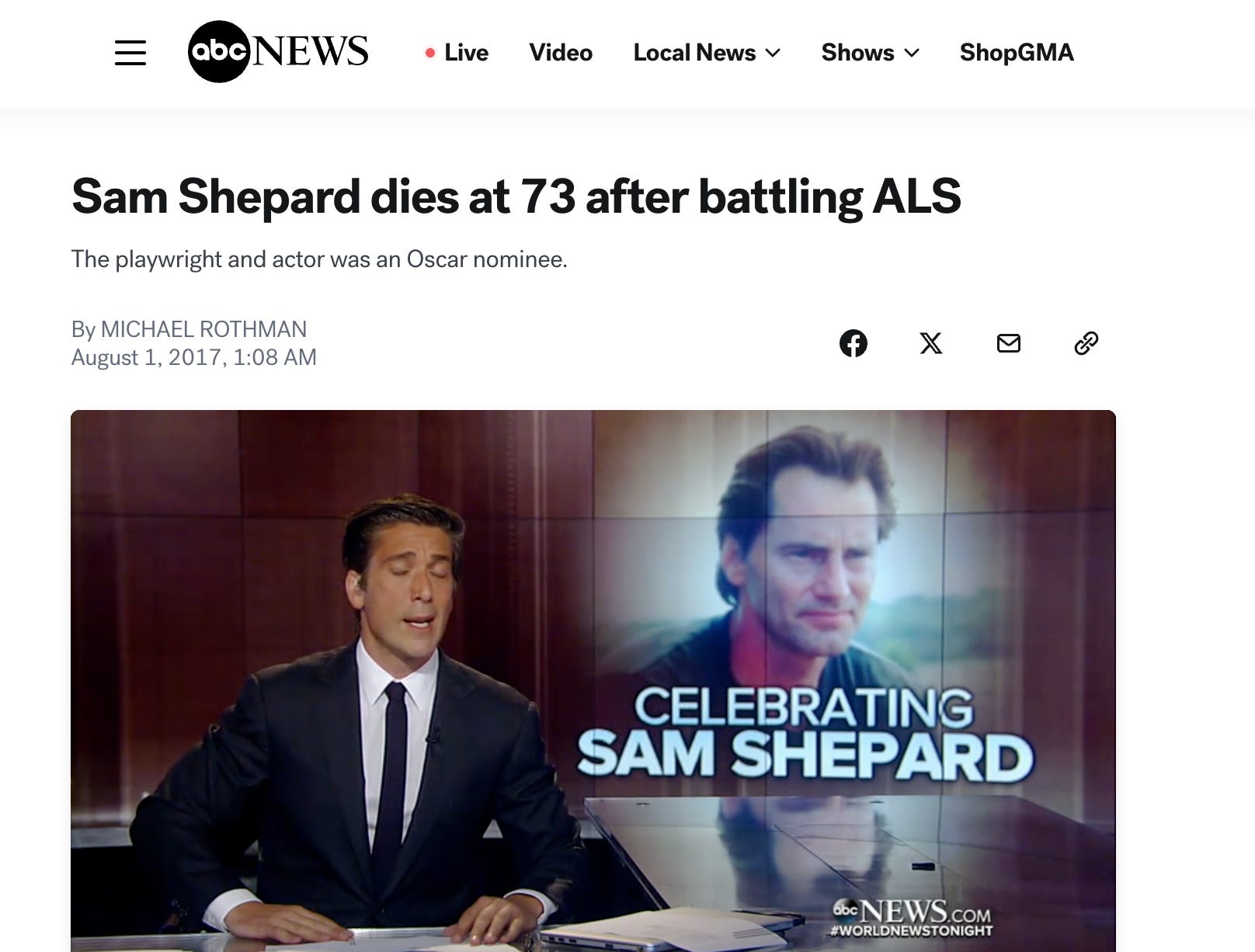
He kept working through it, including a three-season run on Netflix’s Bloodline and a final film, Never Here, that premiered a month before he died.
He wrote his last book, The One Inside, about a man losing control of his body, and he died on July 27, 2017, at 73. His illness wasn’t public until after his death.
The timeline
Put the dates side by side. Major dental work around 2005 or 2006, at about 62.
ALS developing in his late sixties.
Visible neurological decline in 2016 a decade after the dental work.
Death in 2017.
That’s the arc I keep seeing in other cases: a structural change in the bite, a delay of several years, then a decline that nobody connects back to the dentist.
I can’t prove that dental work caused ALS, and I’m not going to claim it.
The disease has no single known cause, but it usually starts between 55 and 75. Which to me screams ‘biomechanical collapse’.

Closing thoughts
What interests me most about Shepard is that he didn’t fix his teeth for decades despite it being a pretty major source of attention for a famous Hollywood actor.
He let it be part of his persona.
And that in fact kept him healthy and prolific as a creator until his mid-60’s.
So rather than remembering him for the fact that he finally succumbed to the dental work, I much prefer to remember him for the rugged character that shunned the ‘perfect Hollywood smile’ for decades.
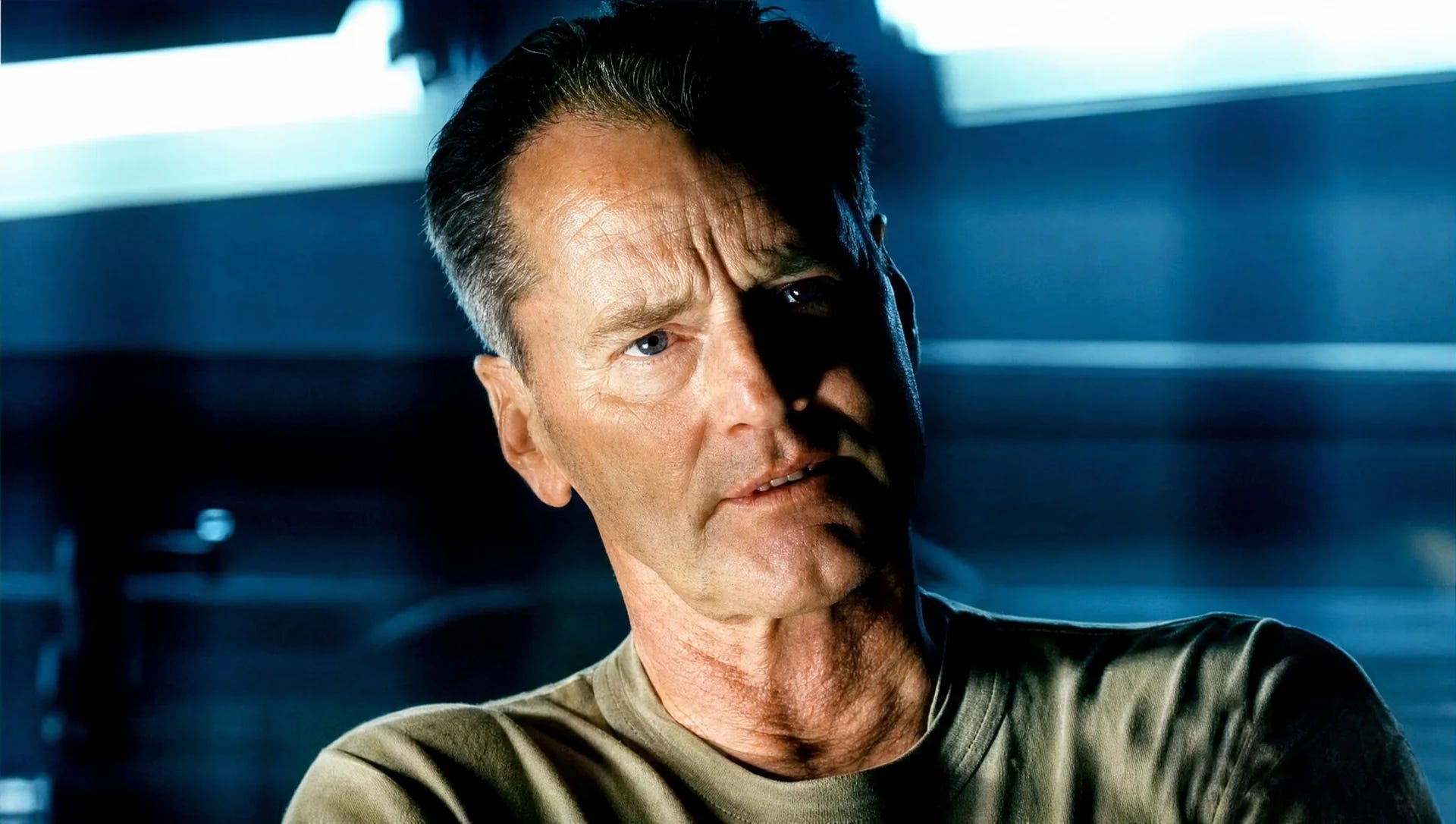
And with that let’s end with a quote of his from one of my favorite films of all-time… Black Hawk Down (2001):
"Good luck, boys. Be careful. Nobody gets left behind."
thank you for doing this bit of writing on the man. i’m listening to his biography and it hit me like a ton of bricks that his late life dental work could have strongly contributed to his swift demise. your work has helped me see so much more about skill collapse to the degree that all these dental shops popping up everywhere now gives me the shivers.and not the good kind.