

Youtube version
One story that never sat well with me was the death of Bruce Lee.
The guy had amazing biomechanics and was only 32 when he died of cerebral edema, an abnormal swelling of the brain.
It puzzled me… was he a hole in my theory?
But as I mulled that over in the weeks after I wrote the article… i started to realize what i think the culprit might have been.
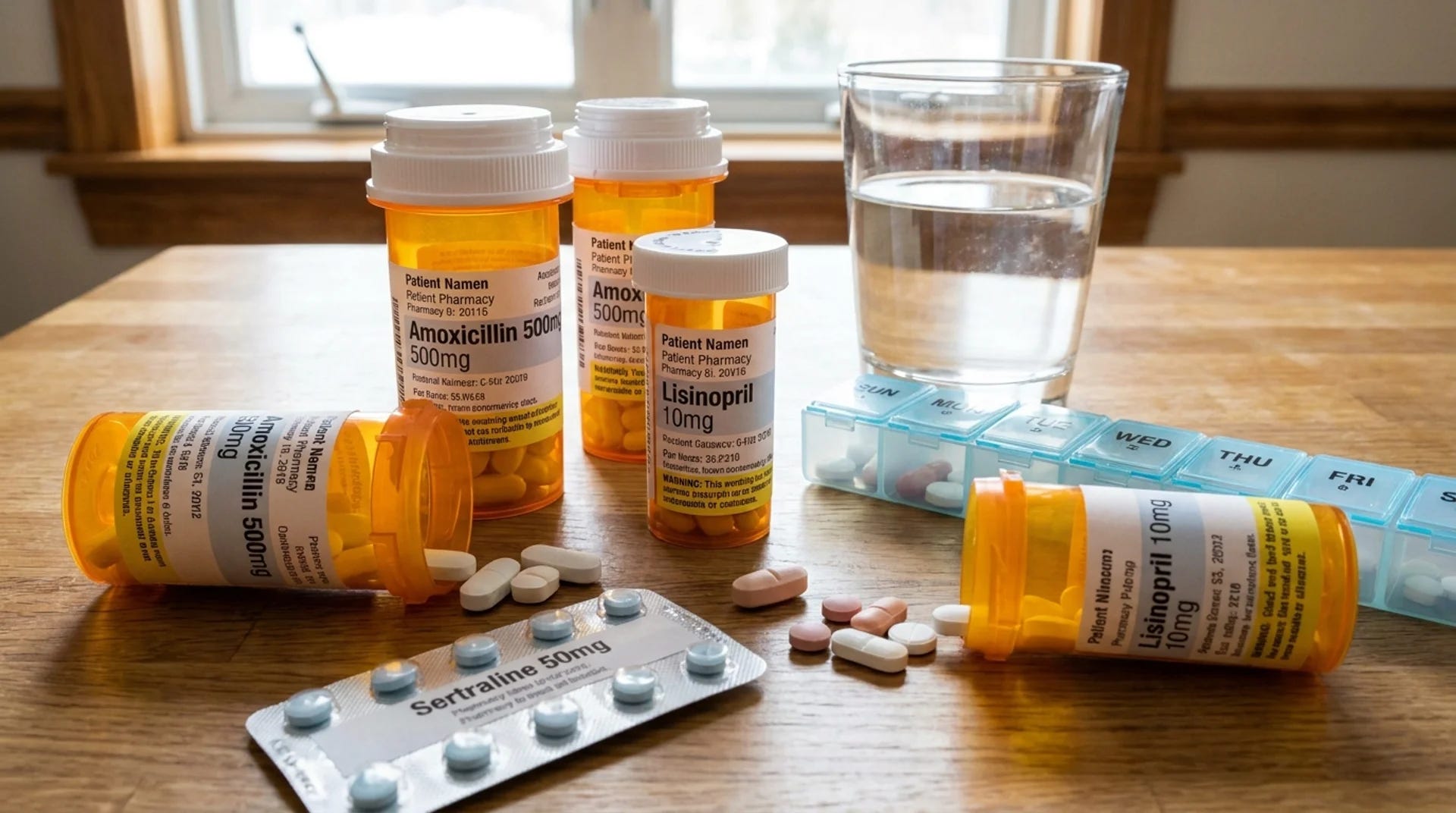
I think it was all the various presription drugs he was taking.
Some context setting
I want to be upfront about something before I get into this: I’m not saying medication is bad, or that nobody should take it. That’s not my argument.
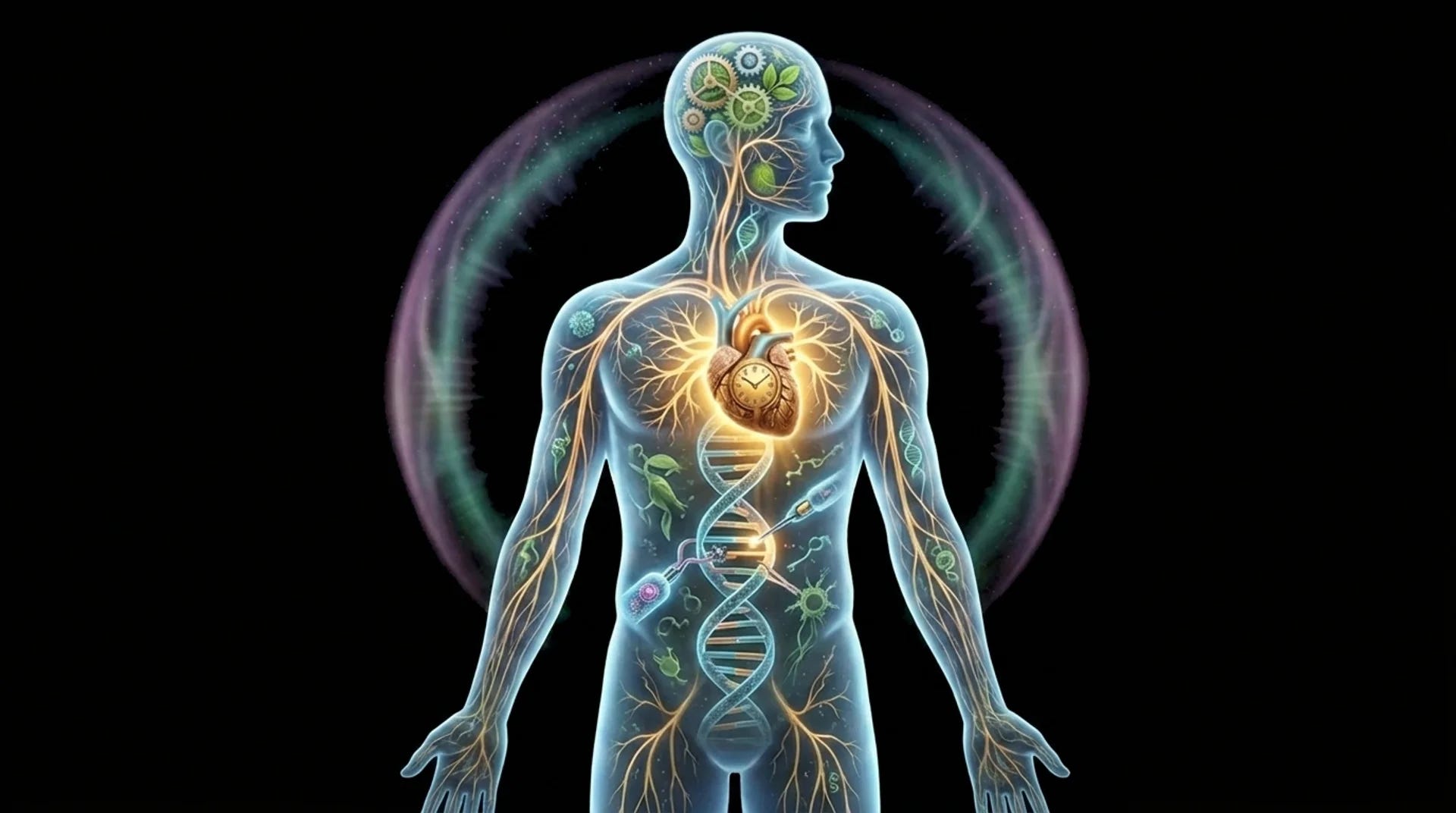
Rather what I’ve come to conclude is that the body is an extraordinarily smart compensator.
It’s constantly making thousands of tiny adjustments to keep you alive and functioning, even when something underneath is going wrong.
And I think medication, especially when stacked or overused, has a tendency to blunt that intelligence — to override the very signals and responses the body is using to protect itself.
When that happens, I think people die who genuinely didn’t have to.
The body is smarter than we give it credit for
I’ve written about this before in different contexts — the body compensating for a misdeveloped bite/skull, compensating for an injury, finding a way to keep functioning despite a structural problem that is destined to only get worse.
That same compensatory intelligence runs through every system in the body, not just the skeleton.
Heart rate, blood pressure, inflammation, pain signaling — all of it is the body constantly self-correcting in the background, usually without you noticing.
Pain, for example, isn’t a malfunction. It’s a message.
Inflammation isn’t just an inconvenience. It’s a targeted repair response.
When the body raises your heart rate or drops your blood pressure or triggers a fever, that’s not random noise — it’s a smart, adaptive system doing what it’s supposed to do in response to a real threat.
I particularly see this in how the body recovers
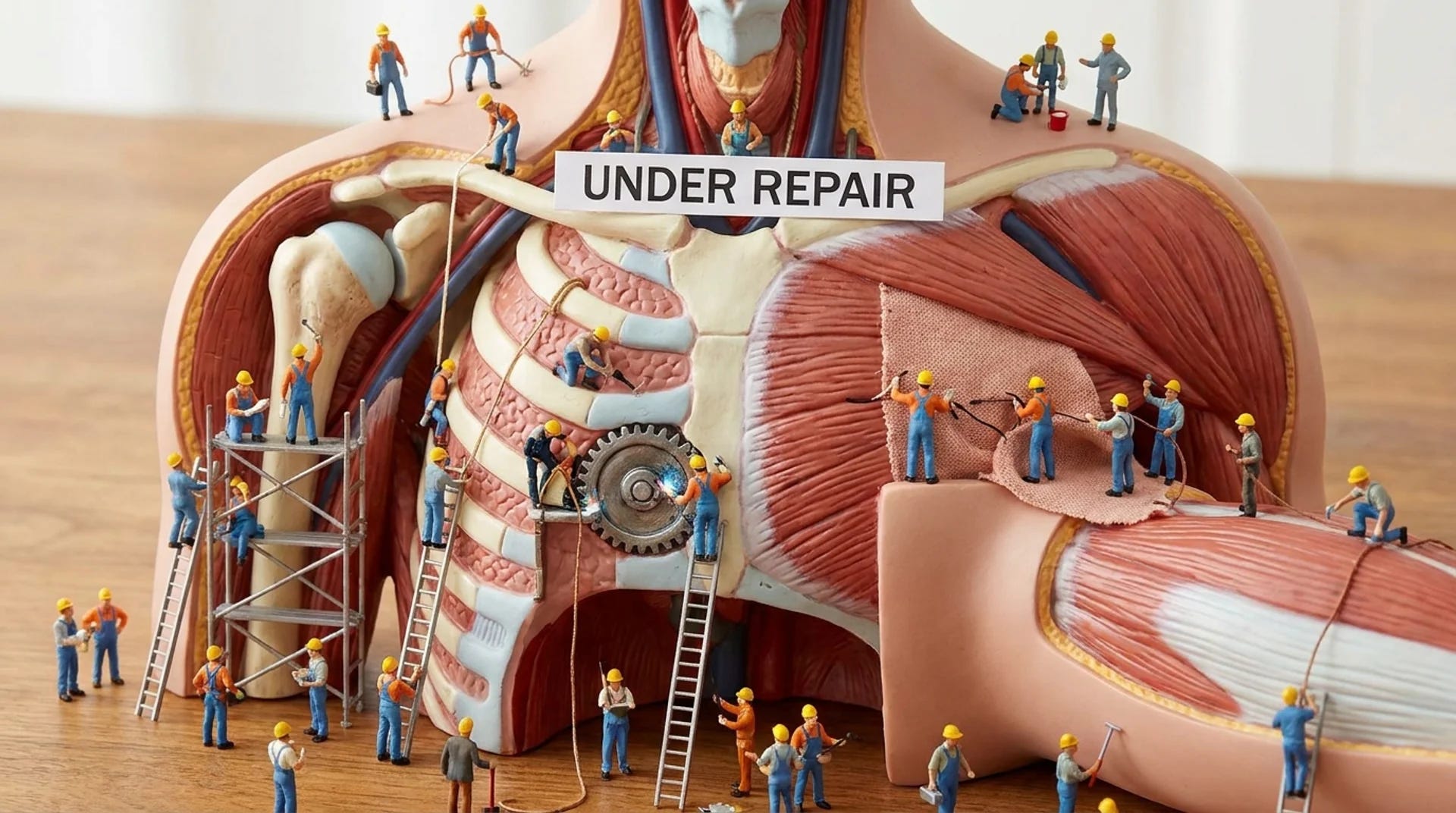
I am flat out amazed at how smart the body is during this biomechanical process of recovery.
It is changing tons of things all across my body to allow the skeleton to resurrect.
My senses are normalizing.
The shape of my skull is normalizing over time.
I feel like my lungs are being cleaned.
The skin and complexion are stretching and looking young and younger.
My mind and neurological system are bouncing back.
And a thousand other things are likely happening… only a small fraction of which I am aware of.
But think about how smart this body needs to be to be able to do all of this. And note that most of this stuff is the type of healing that it has never had any practice doing before.
Because on pretty much all human beings to this point…. biomechanics were a one way journey downhill. People collapsed over time and they never resurrected (ie. aging).
And yet the body still retains this intelligence to undo seemingly all types of damage.
I think that is just crazy given just how complex the human body is.
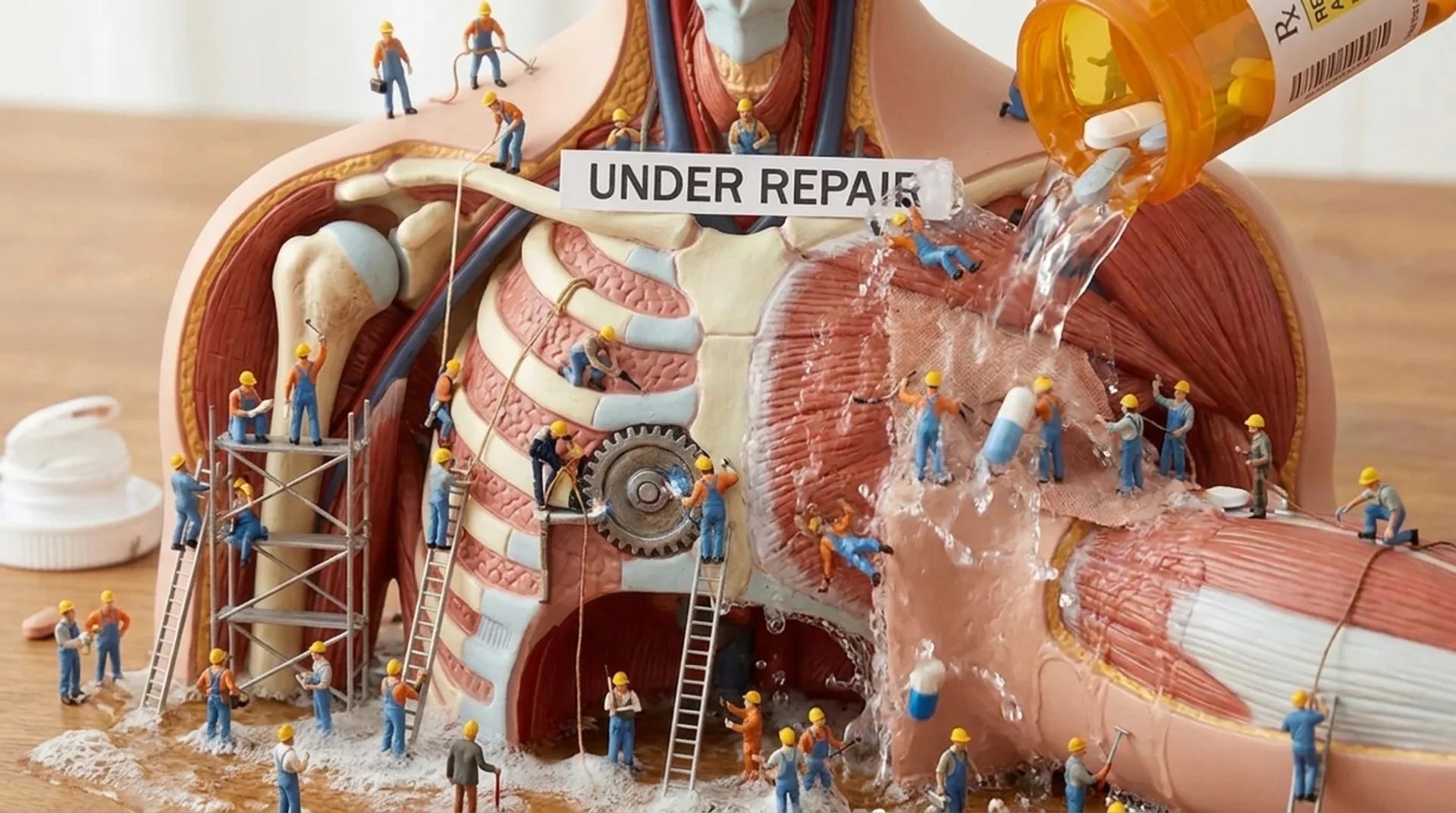
Medication overrides the intelligence
Here’s where I think the danger comes in.
A lot of medication — especially sedatives, painkillers, muscle relaxants, and combinations of the above — doesn’t fix the underlying problem the body is compensating for.
It mutes the body’s ability to signal that the problem exists at all.
Pain gets numbed instead of fixed at its root cause.
Anxiety gets sedated instead of addressed.
Muscle spasms — gets relaxed away by a muscle relaxant, removing a protective mechanism the body put there on purpose.
The person feels better. But “feeling better” and “the underlying problem being solved” are not the same thing. In a lot of cases, the medication has just turned the volume down on the body’s own alarm system.
And when you stack multiple medications — which happens constantly, especially with people managing chronic pain, anxiety, or insomnia — you’re not just dulling one alarm. You’re dulling several systems at once, often systems that were supposed to be checking and balancing each other.
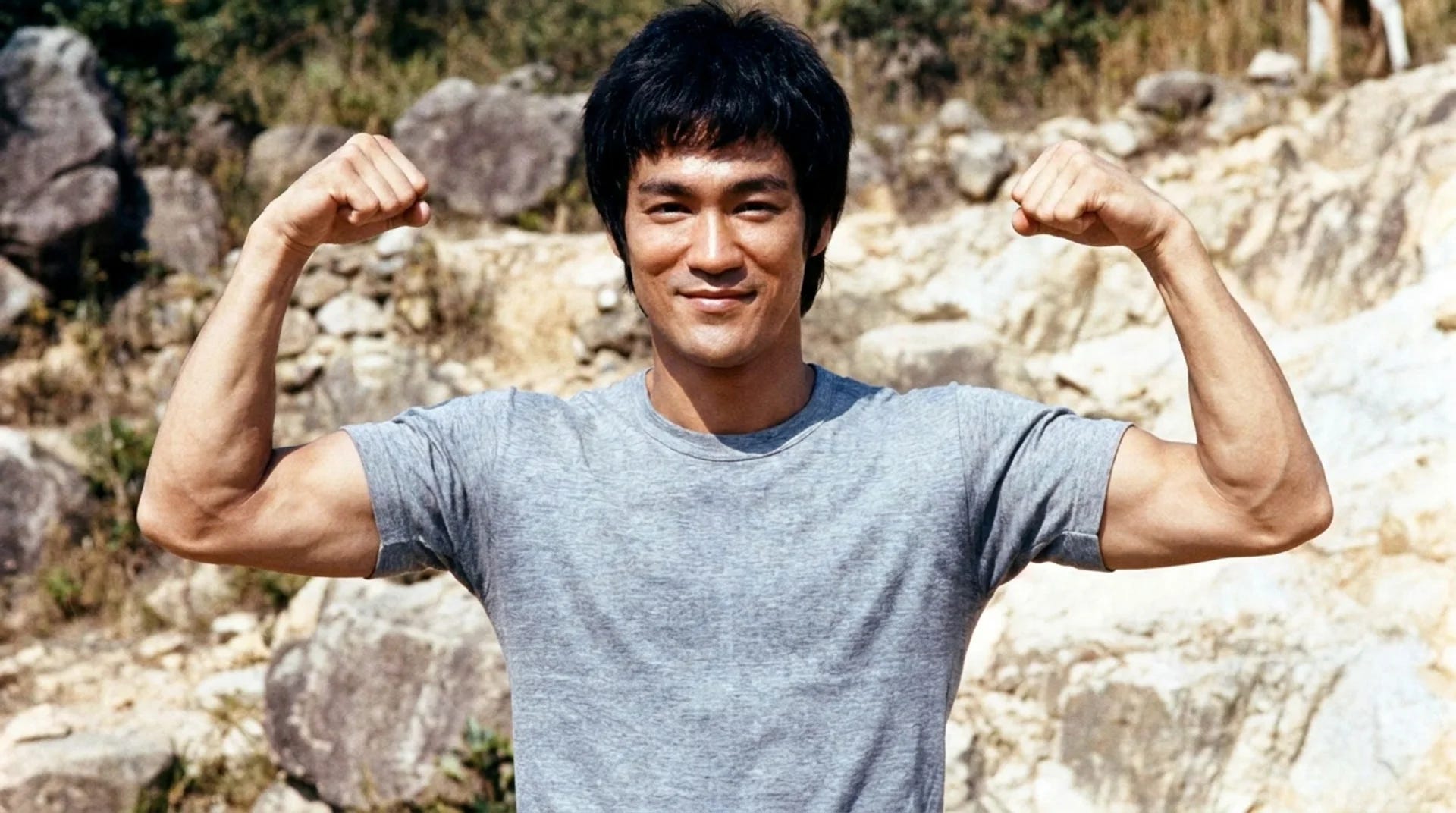
Let’s examine Bruce Lee’s death
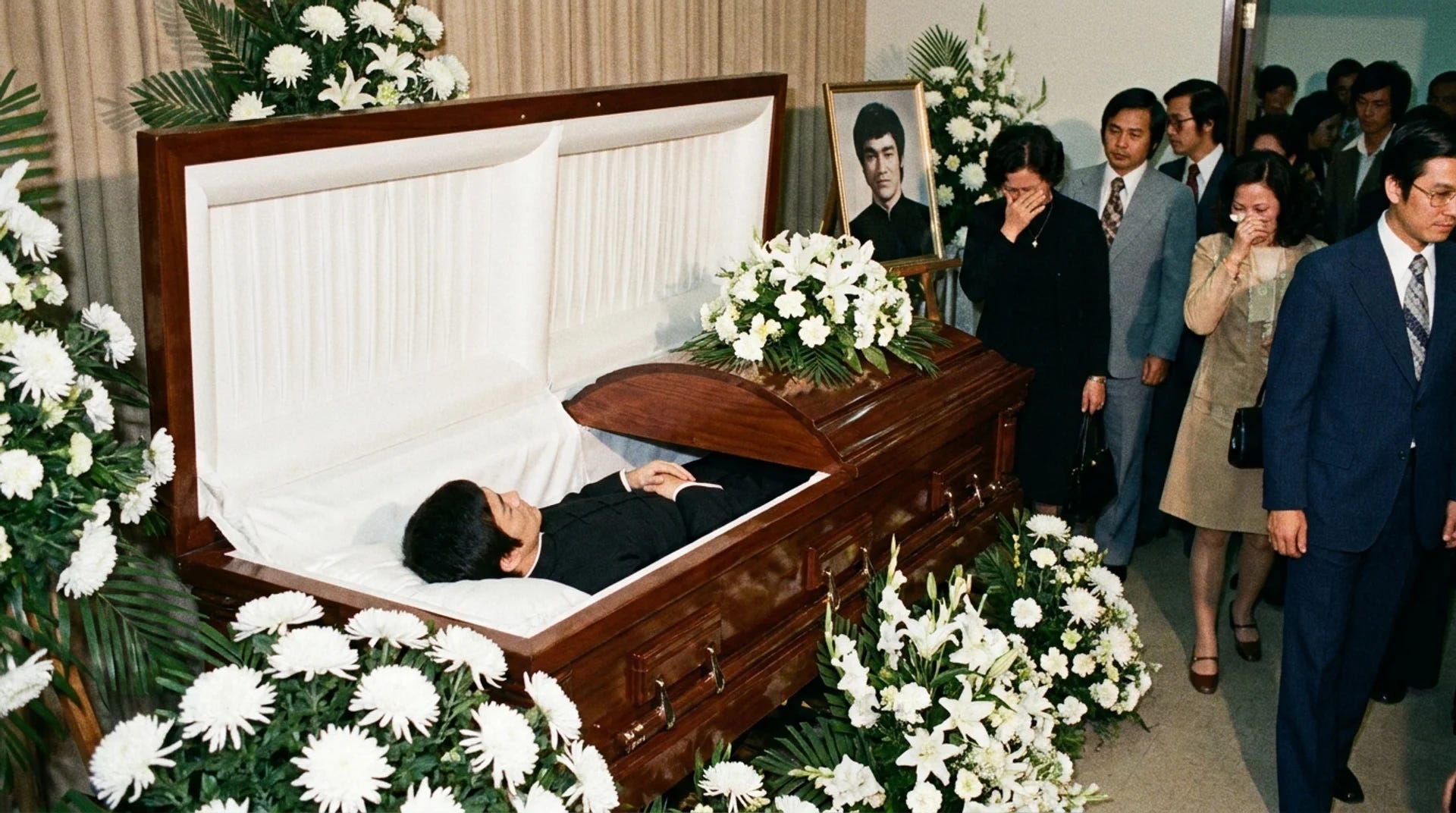
Bruce Lee died in 1973 at 32 years old.
Structurally, the guy was about as biomechanically sound as a human being gets — famous for extraordinary physical control, explosive strength relative to his size, and a body that looked like it was built to last decades beyond what it got.
The official cause of death was cerebral edema — swelling of the brain.
The leading theory, based on the toxicology at the time, pointed to a hypersensitivity reaction to meprobamate, a sedative ingredient in a headache tablet (Equagesic) he’d taken that day.
But aside from that, Lee was already managing a fairly heavy load of supplements and medications in the period leading up to his death, including substances used for pain and inflammation from a back injury he’d suffered years earlier.
A body with Bruce Lee’s structural quality should have been able to compensate for an enormous amount. And yet a reaction to a sedative, on top of whatever else was already circulating in his system, was enough to kill him in a matter of hours.
I don’t think that’s a coincidence of bad luck, rather I think it’s what can happen when you keep adding pharmaceutical inputs on top of a system that was already working hard to compensate for something else.
Until the compensation capacity runs out.

He’s not the only case that fits this pattern
Bruce Lee isn’t an isolated example to me.
It’s a recurring pattern — a person who, structurally, looked like they should have had decades left, whose death gets attributed to “an unfortunate reaction” or “an accidental overdose,” where the actual story is a body that had been compensating quietly for a long time while medication kept piling on top of it.
Anna Nicole Smith died at 39 with multiple prescription drugs identified in her system, including sedatives and sleep aids, at a time when she was also grieving the recent loss of her son.
Whitney Houston, an extraordinary vocal talent with a body built for a level of breath control most people never achieve, drowned in a bathtub at 48 with cocaine and heart disease both cited as contributing factors, on top of a long, documented history of prescription and substance use.

Michael Jackson died at 50 from acute propofol intoxication, administered alongside other sedatives, after years of managing pain and insomnia through an increasingly heavy medication regimen.
In every one of these cases, you have someone who — at their structural peak — represented an extraordinary physical specimen.
And in every one of these cases, the actual cause of death traces back not to the body simply failing on its own, but to a pharmaceutical load that the body’s compensatory systems couldn’t keep up with anymore.
My own experience with this
I’ll add my own small data point here, for what it’s worth.
I have not taken a single prescription drug in well over five years. I actively avoid them like the plague — not out of some rigid ideology, but because of exactly what I’ve laid out above.
I don’t want to mute whatever my body is trying to tell me, and I don’t want to mute its compensatory intelligence.
And in that entire five-plus year stretch, I haven’t been sick once.
I just trust the body’s intelligence and if it sends me a message I wanna hear it. Not block it out.

Closing thoughts
My view is that the deaths I mention above aren’t really about “the body giving out.”
They’re about the body’s warning systems being quieted faster than the underlying problem was being solved.
Pain gets masked. Anxiety gets sedated. Muscles get relaxed. Sleep gets forced instead of restored.
Each of those interventions individually can feel helpful in the moment.
Stacked together over months or years, they add up to a body that’s lost its ability to tell you, clearly, that something is wrong — right up until it’s fatally wrong.
I’m not telling anyone to stop taking something a doctor has them on. That’s not my place, and this isn’t medical advice.
But I do think we’ve built a culture that reaches for pharmaceutical solutions to biomechanical problems. And that is often not going to end well.
Oh my gosh, I absolutely love this! Modern medicine has always just been a Band-Aid. They don’t ever fix any problem that you have when you go to the doctor they just Band-Aid it. They don’t even talk about nutrition. A lot of times the body is missing nutrients, and that is putting the body in a state of dis ease. I’m hoping and praying that this is a turning point for our nation to figure out that our body was made by a creator that made us in his image.
Definitely agreed as I seen what it does to people and all our bodies are different and it’s not one medication fix all and once you start it’s difficult to stop