

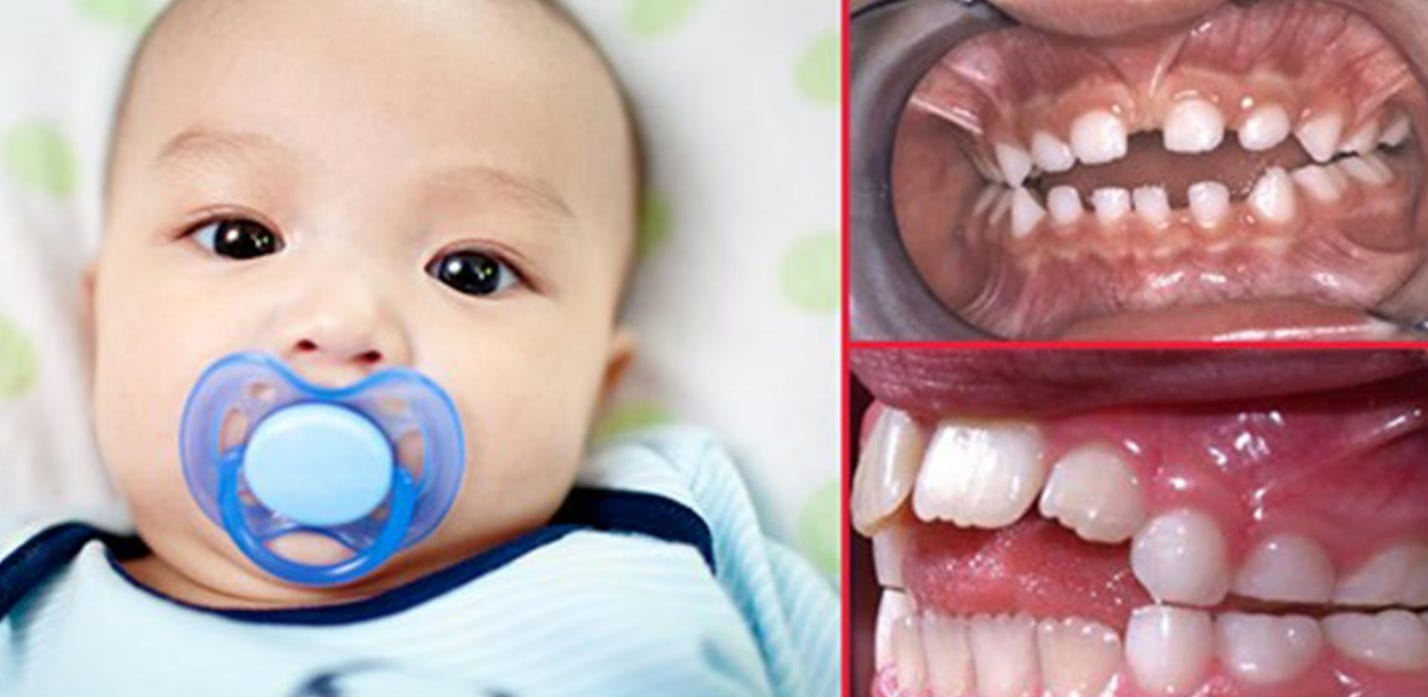
A guy in my community hit me up recently and concluded that the root cause of his structural issues were the pacifier that his parents had given him as a baby.
Because he’d watched this video by ‘T Carney Bowles’.
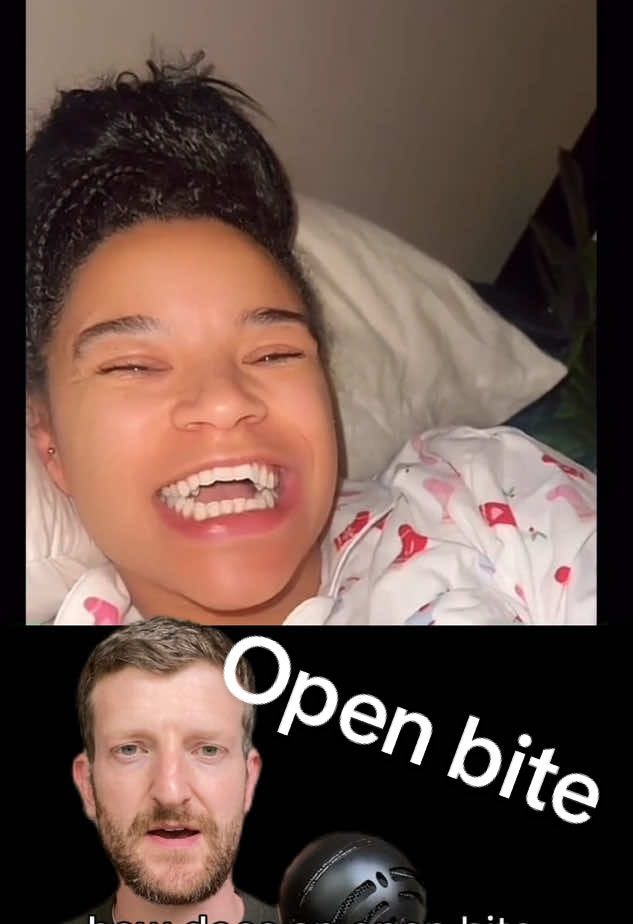
 Tiktok failed to load.
Enable 3rd party cookies or use another browser
According to his logic they’d given him the maloclussion that his parents then needed to close with braces later on.
And it was after the braces that he had lots of health issues and his aesthetics took a nose dive, which he’d also sent me some pics of.
But before the braces he was a very good looking, well-functioning child. And he’s sent me numerous photos in the past testifying to that fact.
So obviously this happened despite the ‘evil’ impact of the pacifier.
So maybe it actually wasn’t evil after all?
Maybe the pacifier actually had a beneficial effect?
From what I’ve learned about how the body compensates very smartly to keep us alive these past years I am very confident that that was the case.
And today i’m going to make my case.
Dentists love to make pacifiers out to be evil
Walk into any pediatric dentist’s office and you’ll hear the same warnings echoed over and over: pacifiers cause malocclusions. The dental establishment has created an almost religious doctrine around this belief, making parents feel guilty for allowing their children to use them.
Dentists routinely attribute narrow dental arches, crossbites, and open bites to prolonged pacifier use.
They point to children with these conditions and ask parents about pacifier habits, creating an easy narrative of cause and effect.
The American Dental Association warns that pacifier use beyond age three can lead to dental problems, and orthodontists use this as yet another justification for their interventions later in life.
The conventional explanation goes like this: the constant pressure of the pacifier against the roof of the mouth prevents proper palatal development, leading to narrow arches and misaligned teeth. They claim that this mechanical interference disrupts the natural forces that should be guiding jaw growth.
This narrative fits perfectly into the dental industry’s playbook – identify a “problem,” warn parents about it, then profit from fixing the supposed damage years later with braces and orthodontic appliances.

But are they really evil?
When you actually look at the documented health effects of pacifiers, the picture becomes much more nuanced than the dental fear-mongering suggests.
Research has shown that pacifiers can actually provide significant benefits.
Studies have demonstrated that pacifier use during sleep SIGNIFICANTLY reduces the risk of Sudden Infant Death Syndrome (SIDS) – arguably one of the most important protective factors parents can employ. The American Academy of Pediatrics recommends pacifier use at naptime and bedtime for this very reason.
Pacifiers also provide obvious comfort and stress relief for infants. They satisfy the natural sucking reflex that babies are born with, which can be calming during periods of distress or discomfort.
As for the dental concerns? The evidence is far less clear-cut than dentists would have you believe. While some studies suggest associations between prolonged pacifier use and certain dental conditions, these studies NEVER account for what the child’s dental development would have looked like without the pacifier.
Because it is impossible to know ‘what would have been’.
They assume correlation equals causation without considering alternative explanations.
I am confident pacifiers are very GOOD
Here’s where my hypothesis diverges completely from conventional dental wisdom.
I like to start with the assumption that the body is extremely intelligent. Far more intelligent than we give it credit for. The body doesn’t make random mistakes – it compensates and adapts based on the conditions it faces.
If a child wants to use a pacifier extensively, it’s likely because the child’s body is telling them to do so. The body isn’t stupid. When an infant or toddler seeks out that pacifier constantly, there’s probably a very good reason that goes beyond simple “habit.”
My view is that pacifiers may actually be serving as a primitive form of biomechanical correction. Think about it – what does a pacifier do?
It puts vertical height between the teeth and unlocks the occlusion. So essentially it satisfies my two rules for ‘inflating’ the skull.
I view thumbsucking the same way. I don’t think a child sucks their thumb purely as a ‘bad habit’ because that would assume that our bodies are stupid. And I never view that that is the case because the body gets far more data inputs than we do and is very smart.
Rather I think thumbsucking and pacifiers offer the child structural support for a compensated skull that is collapsing in slightly.
Meaning that both pacifiers and thumbsucking are essentially a survival mechanism.
And preventing a child from sucking their thumb or using a pacifier is to me the same level of stupidity that the whole concept of retainers is based on.
Retainers assume teeth revert back to crookedness after braces because our bodies are stupid.
I assume the opposite… our bodies are very smart and the reason the teeth want to become crooked again is to provide structural support to the skull (because the stupid braces ruined the support that should be there during jaw retrusion and protrusion - see article).
It boils down to what ‘would’ have been?
That is the key question to me that proves who is right… me or the dentists that think pacifiers are evil.
Rather than causing the narrow arches and malocclusions that dentists love to blame them for, pacifiers might actually be the child’s attempt to minimize the damage. Things would likely be worse if the child hadn’t used the pacifier at all.
Take my friend that I started the article with as an example.
He was a good looking, well functioning kid after all that pacifier use. But he had an anterior open bite.
I am willing to bet that if they prevented him from using the pacifier (and sucking his thumb) he would have been far worse looking and functioning.
His skull & face would have probably been more assymetric. His skeleton more twisted.
Because the pacifier was doing something for him not too different from what our Reviv mouthguard is doing for thousands of people. It was inflating his skull and trying to reverse the collapsing force that was put there (probably from birth).
So what was the root cause of why his body felt the need for this pacifier?
I think you probably need to look no further than the compensations his mother had when he was born as I explain in this article:

Closing thoughts
So before you feel guilty about your child’s pacifier use based on what some dentist told you (or based on what the illustrious T Carney Bowles has said), consider my alternative explanation.
That the body doesn’t seek out compensation mechanisms randomly.
If your child is drawn to a pacifier, their body might be onto something the dental establishment has completely missed.
Because let’s be honest… Reviv is already showing that their track record for getting things right (with braces, aligners, retainers, TMJ splints, etc.) is pitiful.
The truth is, I think we’ve been looking at this pacifier thing backwards all along.
And the fact that pacifier use dramatically decreases the probability of SIDS (Sudden Infant Death Syndrome) is strong support for the fact that I am probably right.
SIDS is a cover story for vaccine death. Virtually all children that die of SIDS were recently vaccinated (within a week or two. Just like SADS is another cover story for deaths caused by the more recent jib-jab). Only have to look at the populations that don't vaccinate their children, such as the Amish and some Jewish populations. They don't have a problem of their children dying of SIDS like the rest of the America does.
Lol ok this is just not true. With a pacifier, the tongue can‘t stay up on the palate. That‘s all the explanation you need. Yes it adds vertical and unlocks but the tongue and swallow point is crucial.