

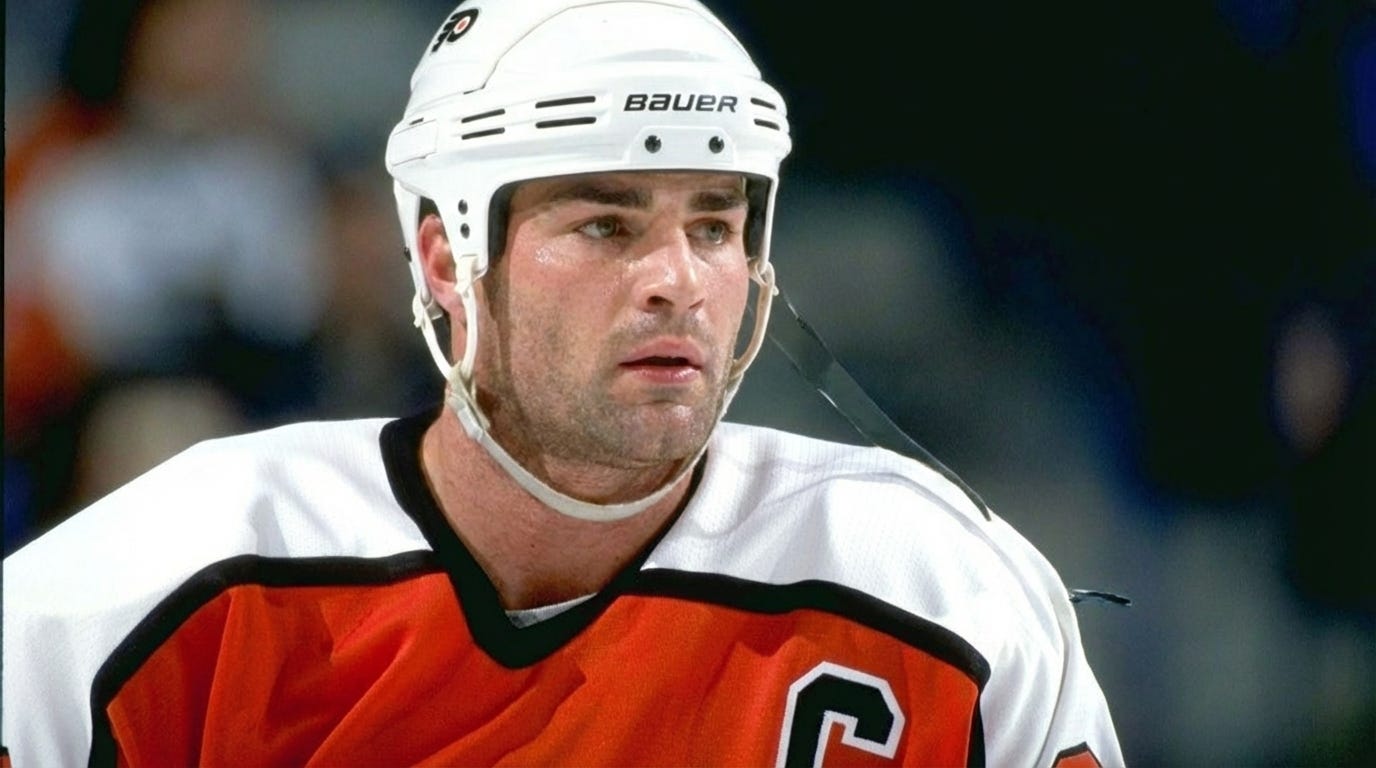
I was watching Youtube when I came across this video below.
It intrigued me because I’d remembered Lindros when I was in high school in the early 90’s.
I wasn’t a huge hockey fan like my older brother, but I was sort of an Islanders fan and enjoyed watching the occasional game on cable TV.
At that time there was massive hype about Eric Lindros whose rookie year was in 1992. So i’d caught a number of his games and he was an exciting player to watch.
But then there was entire stretch of time starting in 2001 where I basically didn’t watch almost any hockey for nearly two decades. I’d moved to Japan and then Europe and then to Russia, etc. And watching sports just wasn’t a priority at the time.
So I never really followed what happened to Lindros but vaguely remembered hearing about concussions.
So when I saw this video pop up it intrigued me to kind of see what happened to his career as i’d never really followed it.
And it was a bit sad to see how it evolved… but it also immediately made me think of biomechanics and gave me the impetus for this article.
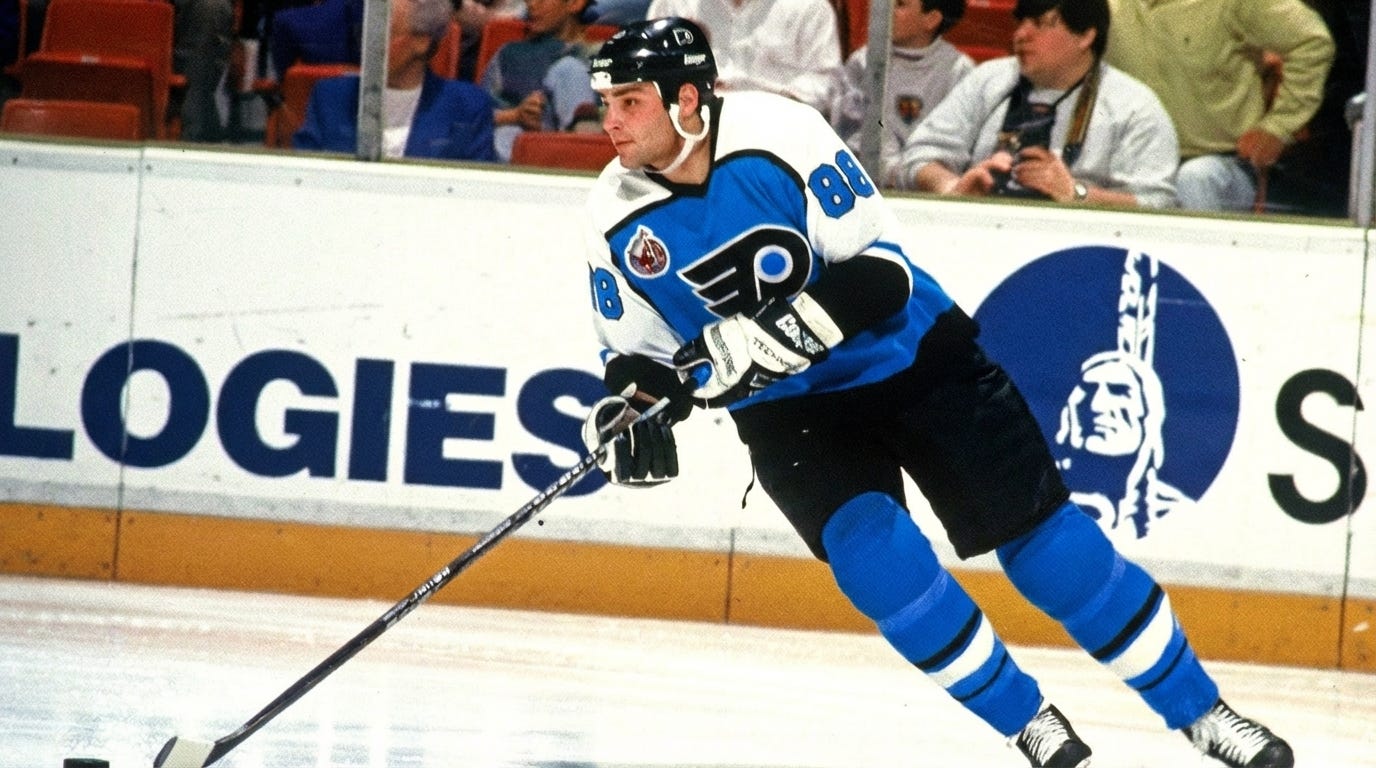
Who Is Eric Lindros?
Eric Lindros was supposed to be the greatest hockey player of all time. Not just a great player — the player.
Before he played a single NHL game, he was already being called “The Next One,” a nod to Wayne Gretzky’s iconic nickname.
At 6’4” and 240 pounds, Lindros combined the size and physicality of a bruiser with the hands and hockey IQ of an elite scorer. He was a physical specimen unlike anything the NHL had seen before.
Born in London, Ontario in 1973, Lindros came up through the OHL with the Oshawa Generals, absolutely dominating at every level. He was so hyped that he famously refused to play for the Quebec Nordiques after they drafted him first overall in 1991 — a bold move that ultimately got him traded to the Philadelphia Flyers in a blockbuster deal that shook the entire league.
By all early accounts, Lindros had the structure to back up the hype. Wide-framed, powerful, athletic. The kind of physical baseline that should translate into a long, dominant career.
His Rise to the Top
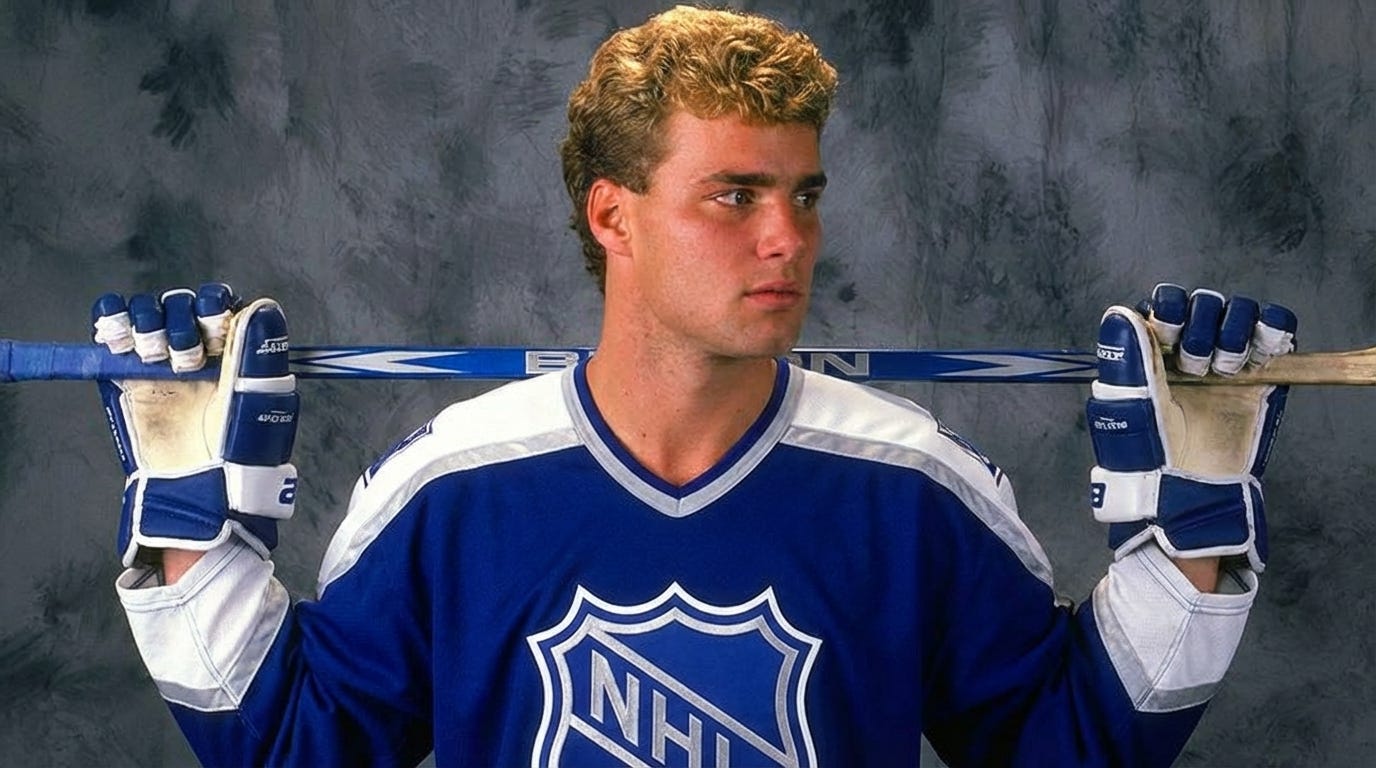
Lindros arrived in Philadelphia in 1992 and immediately looked like the real deal. By his third season, he was the best player in the NHL — winning the Hart Trophy as league MVP in 1995, leading the Flyers in scoring year after year, and being named captain at a very young age.
He was the centerpiece of the “Legion of Doom” line alongside John LeClair and Mikael Renberg — arguably one of the most physically imposing and productive lines in hockey history.
Lindros could score, hit, and dominate in all three zones. He played like someone who simply could not be stopped.
He was 23 years old and looked like he had 15 more prime years ahead of him.
Then it all came apart.
His Fall Due to Concussions
The concussions started coming in the late 1990s and simply didn’t stop.
By the time his career was effectively over, Lindros had suffered at least eight diagnosed concussions — a staggering number, even by hockey standards.
His 1998-99 season was wiped out almost entirely. He’d come back, get hit, and go down again. The cycle repeated itself relentlessly.
Doctors and sports medicine experts at the time largely attributed the concussions to the physical style of play Lindros chose — essentially arguing that he played too aggressively, put himself in dangerous positions, and took too many high hits.
The implicit message was that this was a consequence of how he played, not anything deeper going on structurally.
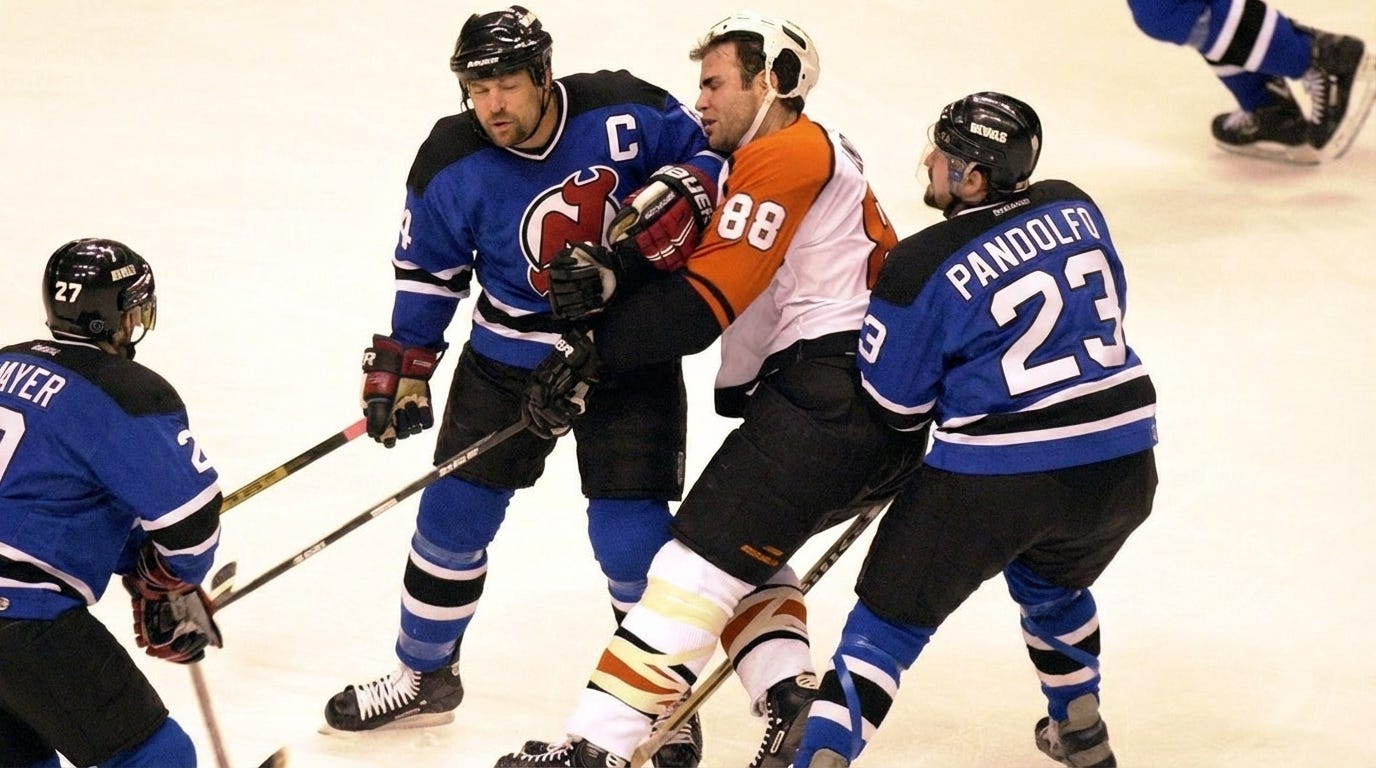
The most infamous incident was a Scott Stevens hit in the 2000 Eastern Conference Finals that sent Lindros crumpling to the ice and essentially signaled the beginning of the end. The medical community focused on helmet safety, hit protocols, and recovery timelines.
His career limped along. He played for the Rangers, the Maple Leafs, and the Stars before retiring in 2007. He was inducted into the Hockey Hall of Fame in 2016, a recognition of his peak brilliance — but one tinged with the melancholy of what could have been.
Was It Biomechanical?
That’s the question we are here to ask right?
I’ve tried to look on Google Images of photos of Eric Lindros across his career and while there aren’t a lot of good photos… I do think I saw a pattern.
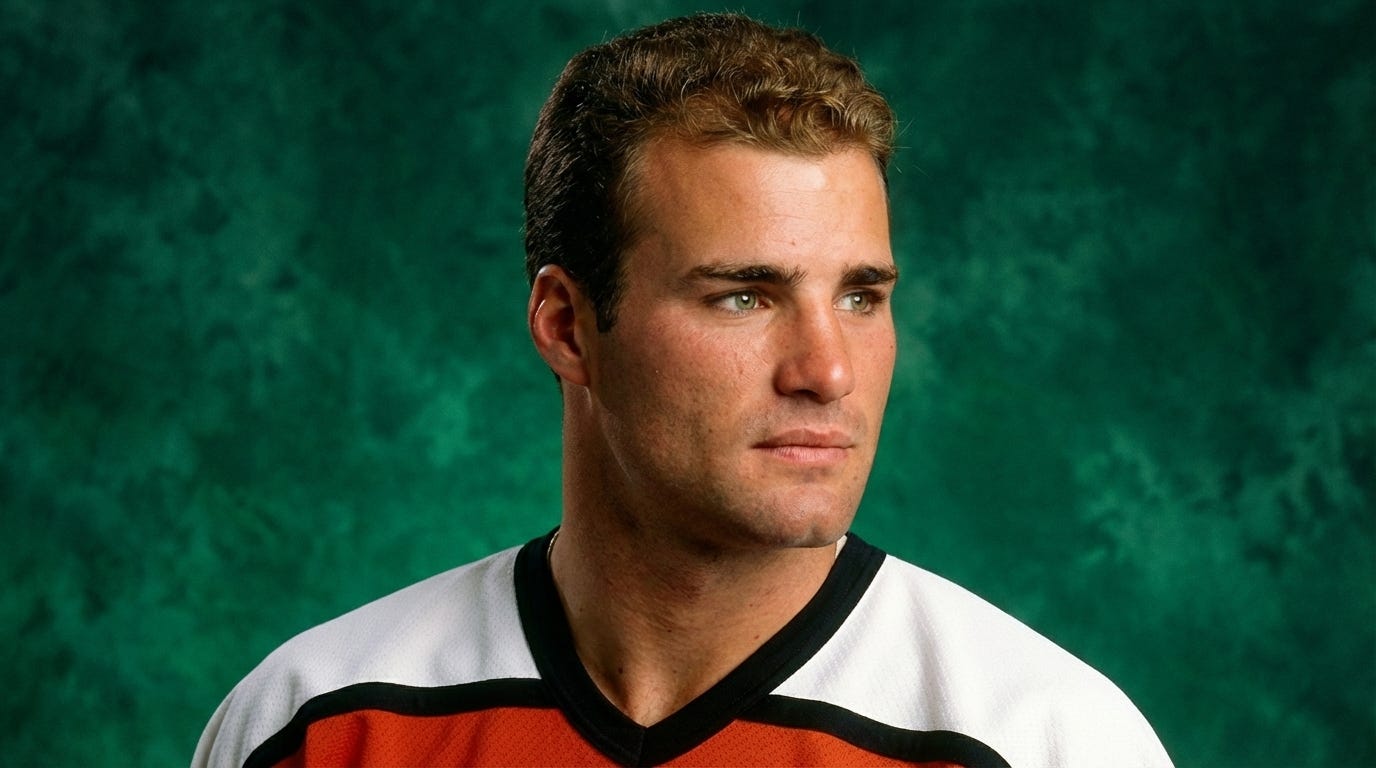
In his early Flyers years — early-to-mid 1990s — his facial structure looks solid. Good profile, decent symmetry, the kind of wide-framed skull that goes with being an elite athlete (as you see above).
But as you track him across the late 1990s through to the mid-2000s, things start to change.
The lines of his face soften and his profile begins to change as you can see in this photo below.
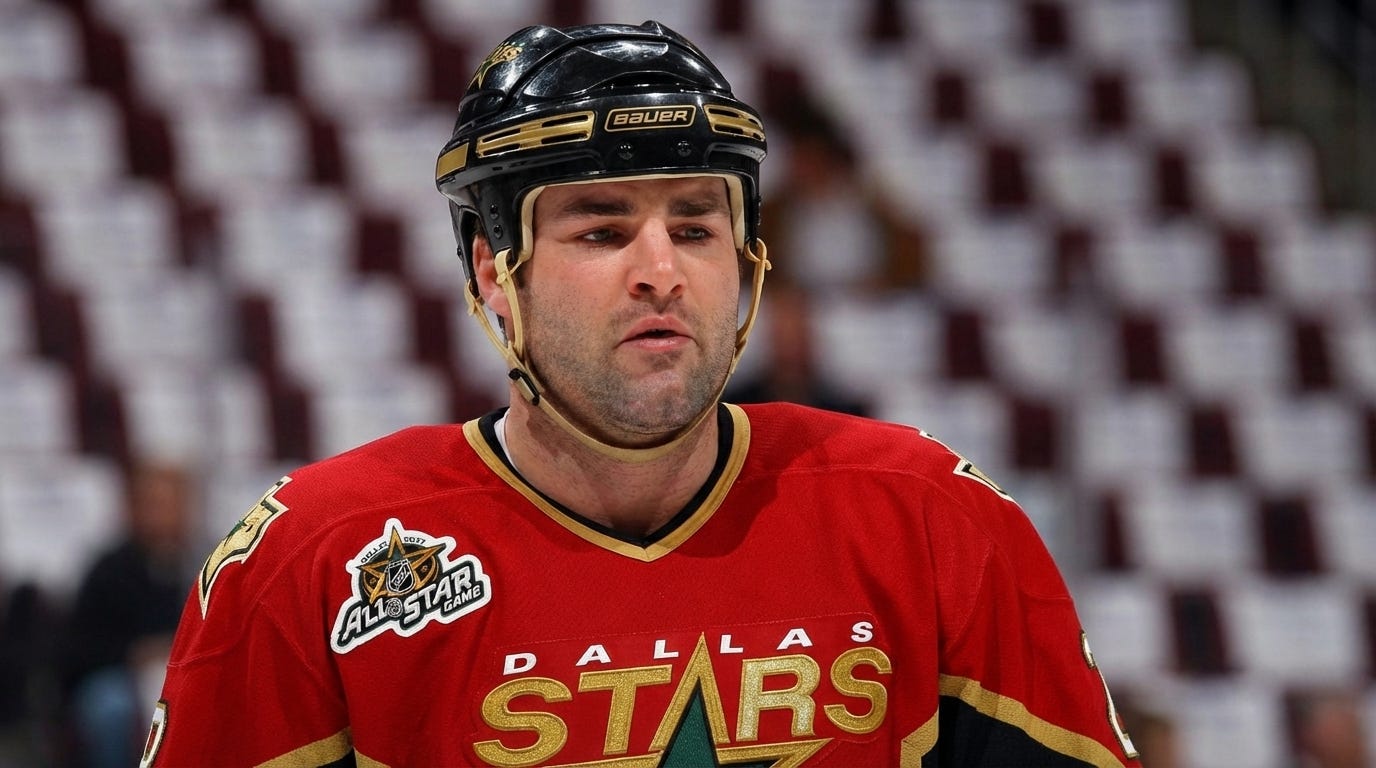
Note he played for the Dallas Northstars at the end of his career in 2006-7. He officially retired in 2007.
Do I think his bite changed artificially at some point?
Yes. But I don’t think it was from anything cosmetic like veneers, etc.
Rather I have a feeling he cracked/broke some teeth earlier in his career (perhaps even pre-NHL) and had dental work to fix it. Probably it is related to the fact that he didn’t wear a mouthguard in his early career and has been quoted saying numerous times that he regrets that.
Any reconstruction of his bite — even well-intentioned work done after an injury — would likely have screwed up some of his jaw positions that I talk about in this article:

And that would have sent the skull caving in and the skeleton twisting.
When I look at him more recently I see a person that is more collapsed at his age than a star athlete should be.
But I do not see clear signs of artificial dental work. ie. I don’t think Eric was a victim of his own vanity like Brett Favre and some others

.
For example in this photo above his teeth look quite natural and he now has a diastema, which he didn’t have earlier in life.
Which is a sign to me that things are still moving and evolving. Probably more rapidly than they should be.

Closing thoughts
I enjoy reflecting on some of the athletes that never panned out quite like they were expected to.
Because it almost always points to a biomechanical root cause in my view.
What else could it be? Think about it….
Genetics? Obviously not. Concussions are 100% not genetic in my view.
Aggressive style of game? Poor excuse.
Shitty luck? Not logical.
No, in my view it was collapse.
And one day I think Eric is going to understand it correctly…. rather than the BS the doctors have probaby fed him.
Typically I see a diastema as a good indicator of things opening up but maybe it isn't in this case because its from hockey injuries. Everyone that I have seen with a natural diastema is naturally strong and intelligent